
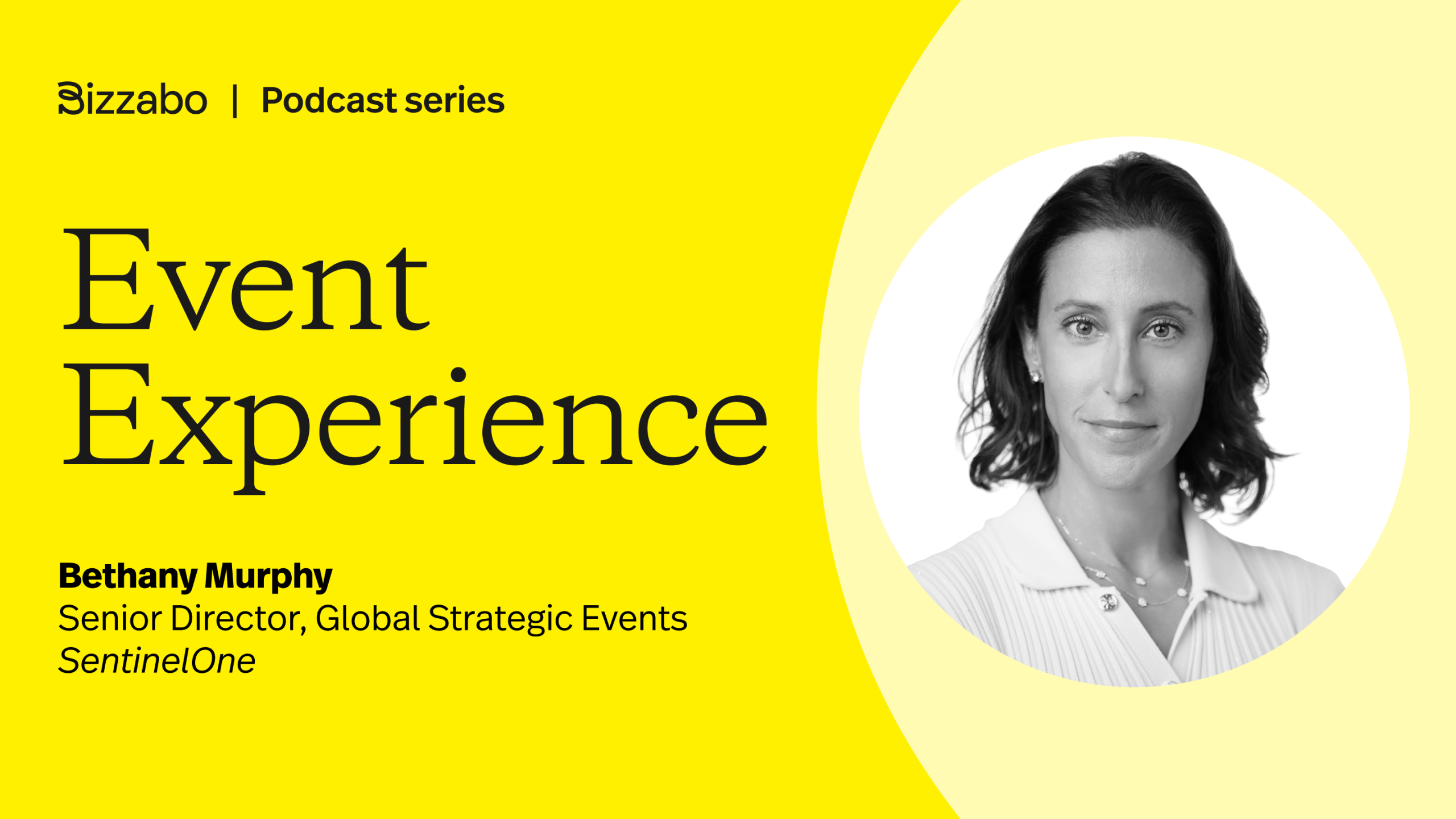
In this episode, Bethany Murphy, Senior Director of Global Strategic Events at SentinelOne, makes the case that the sharp drop in networking effectiveness from nearly half of organizers rating it effective to just 15% in 2026 (Bizzabo 2026 Benchmarks Report) is a design problem, not a demand problem. Drawing on 20+ years in the tech sector, she argues that passive networking formats no longer work and that event teams need to move toward curated, facilitated experiences to meet attendee expectations. Bethany also covers how portfolio thinking helps teams prioritize spend, why show services costs are increasing 10 to 15% year over year, and how event professionals can use AI as an operational tool without being displaced by it.
Event networking effectiveness dropped from nearly 50% to just 15% between 2025 and 2026, according to the Bizzabo 2026 Benchmarks Report, and Bethany Murphy, Senior Director of Global Strategic Events at SentinelOne, has a clear view on why. In this episode of Event Experience by Bizzabo, Bethany returns following her appearance on Bizzabo's 2026 Benchmarks webinar to expand on the data and share what enterprise event teams should actually do about it.
Bethany brings more than 20 years of experience in the tech sector to the conversation, currently leading strategy and execution for SentinelOne's proprietary events and tier one industry events, including RSA and Black Hat. Her perspective is grounded in the realities of running large-scale B2B events with flat budgets, rising show services costs, and growing pressure to demonstrate pipeline impact.
You'll hear why she believes under-designed networking is responsible for the effectiveness decline, and what curated formats like facilitated roundtables, interest-based breakouts, and intentional badge activations actually deliver. You'll also learn how she applies portfolio thinking to her events calendar, distinguishing flagship investments from scalable, repeatable field formats, and why she's questioning whether a 40 by 50 booth on the trade show floor is always the right answer.
On AI, Bethany is practical rather than promotional. She uses Claude internally at SentinelOne for content workflows, cross-referencing, and building toward personalized agenda recommendations, but is clear that accuracy checks are non-negotiable and that the real risk is not being replaced by AI, but being replaced by someone who knows how to use it.
The budget section is especially candid: Bethany describes absorbing a 10 to 15% year-over-year increase in show services costs while holding budgets relatively flat, working through vendor relationships built over 25 years, and recalibrating where event investment actually drives measurable business outcomes versus where it generates atmosphere.
For event professionals building the case for events internally, managing multi-event portfolios, or trying to make networking actually work at scale, this episode covers the strategic and operational thinking behind one of the most experienced event leaders working in enterprise technology today.
"I don't think networking is necessarily broken, but I think we're just not; it's under-designed. We're not giving people the personalization. We're not matching people with the folks they wanna be talking to." — Bethany Murphy
"I don't think AI is gonna replace our jobs, but I think if we cannot use AI, someone who can will replace us."— Bethany Murphy
"High-performing teams need to stop trying to make every event do everything. Each event should have a clear role, a clear audience, and a clear outcome." — Bethany Murphy
"We're estimating a 10 to 15% year-over-year increase in show services, and that's pretty significant when you're spending hundreds of thousands of dollars." — Bethany Murphy
"Success is not just who showed up, but what is moving business-wise as a result of the folks that did show up." — Bethany Murphy
Enjoyed this content? Subscribe to our newsletter and get insights like these delivered straight to your inbox.

Bizzabo's 2026 Benchmarks data shows networking effectiveness fell from nearly 50% to just 15% year over year. Bethany explains why the problem is structural, not cultural, and what formats are actually moving the needle.
Rachel Moore: Welcome to Event Experience by Bizzabo, the podcast where we bring the best and brightest event experience leaders together to share stories, tips, and lessons learned from creating some of the world's biggest events. I'm Rachel Moore, your podcast host. In this episode, Bethany Murphy from SentinelOne returns to us after being a panelist on Bizzabo's annual Benchmarks webinar for 2026.
As a senior events leader with over 20 years of experience, she shares insights on event networking, budgeting, and leveraging AI to improve event planning. In this constantly changing industry of event planning, we'll take all the help we can get to level up our Event Experience.
Rachel Moore: I'm excited about today's guest because she is a returning guest. You have probably seen her on a webinar or two for Bizzabo, and now we're welcoming her back to expand on some of the topics we talked about there. Today's guest is a senior events leader with over 20 years of experience in the tech sector. As senior director of global strategic events at SentinelOne, she leads the strategy and execution of proprietary and tier one industry events, including RSA and Black Hat, driving alignment to business goals and measurable impact. I'm very excited to welcome back Bethany Murphy to "Event Experience." Bethany, thanks for joining us again.
Bethany Murphy: So excited to be here with you, Rachel.
Rachel Moore: Me too. It's great to share screens with you always. You're awesome. And I'm excited too because I did mention you were on a webinar. Every year we do, and I'll get more into this as we get into the guts of this interview, but we do this benchmarks webinar, you know, and in a webinar you've got a few panelists, and you just have, like, very brief time, right? You've gotta kind of, compress everything. We've got some more time with you today, so that's gonna be awesome. Before we get into all that stuff, though, we'd like to do some get to know you questions. So I always ask our guests when you're looking at, like, you're facing a full day on the ground at an event, right? What are your go-to on the ground event day shoes that you prefer to wear?
Bethany Murphy: Yes. I know how I answered this last time, and I said my Golden Goose, which I've worn for years and I love. But my team and I just bought these really fun purple Hokas that we're gonna be trying out for Black Hat actually in August. So gonna try really fun Hokas. I've never had a pair of Hokas, but I've heard they're awesome, so super excited. They look like very-- They look like clouds, so
Rachel Moore: Oh, well, I actually-- My daughter bought some Hokas after getting-- We got a recommendation from another guest on this show, and I said, "How about Hoka?" She's like, "I'm totally gonna try them," and she loves them. So I think you're, I think you're in for a treat. Your feet are at least in for
Bethany Murphy: Yeah.
Rachel Moore: That's good.
Rachel Moore: Is there anything that you're listening to, watching, or reading these days that you can't put down? And it doesn't have to be events related.
Bethany Murphy: Mine is not events related. I just finished the new season of "Sweet Magnolias," and it's just such a heartwarming, great show about friendship in this little town and and I love it. So I just binged the last season.
Rachel Moore: I like that. I find too sometimes I have to return to some shows that just make you feel nice inside 'cause we need that. And so, yeah. Hey and that's a good recommendation for someone who might be looking for that kind of escape, so thank you for that.
Bethany Murphy: This was season five, I think. It's a great, it's a great show. Highly recommend.
Rachel Moore: And is there a particular social post or maybe a piece of media or a hot take even about events lately that you found interesting?
Bethany Murphy: I always love Michael Dominguez from ALHI. I just think he's always got his hand on the pulse, knows what's happening in the industry. He does these weekly calls that started actually in COVID and he still does, and I join when I can. Although it's hard it's hard to carve out the time. But I just think he's so great and so passionate and such an advocate for the events industry. So anything Michael says I'm listening to.
Rachel Moore: Awesome. I, and I love hearing that kind of stuff too. I think I-- there are times, you know, like sometimes we'll skate away into other topics and your feed starts like, "Hey, yep, we're going in that direction." You're like: But wait, I still need the stuff that I normally look at. And so it's always a good idea to be like, "Let's go, let me go follow somebody new and make sure I get their perspectives in my feed." So I appreciate that recommendation. So hopefully everybody-- let's go follow Michael Dominguez. It'll be good. All right. Well, let's get into the guts of this interview because and I always do, I love that the Bizzabo content team does this, you know, where we have a webinar on a topic and every year Bizzabo does their annual benchmarks webinar at the start of the year, close to the start of the year, really kind of trying to look at stats that are mattering. You know, what has actually been unfolding. It's all based on surveying actual event planners and attendees. And so we're able to kind of look at that and then compare it to reality, and also our predictions for what's about to happen. So, if any one of you listening missed that webinar, do go check out on bizzabo.com. It's available. You can watch it for free on demand, and of course, see Bethany there. But Bethany is here with us right now. Some of those benchmarks were a doozy or were doozies, rather, plural. So the fact that we're revisiting these now about halfway through the year when we're "Okay, w- where are these things gonna take us?" Is timely. So, first up we went from nearly half of organizers the year prior saying that networking was very effective. For 2026, that dipped down to just 15% of them saying that networking was being effective. That's a huge drop. It just feels like almost like it kind of fell off a cliff there, which is kind of a big deal considering networking is a big ROI point for a lot of attendees when they're deciding where they're gonna be showing up for events or even where event planners are going to bring and execute their activations and whatnot. So considering that where is this breaking down for this year's events, and what are you seeing with regard to networking?
Bethany Murphy: Yeah. I mean, what I would say is like everyone wants personalization, right, in everything. And so I don't think it's that networking is necessarily broken, but I think we're just not-- it's under-designed, right? We're not giving people the personalization. We're not matching people with the folks they wanna be talking to. And look, like that takes a lot of time and energy, right? It's way easier to just throw a reception and say, "Find your own people." But I feel like that's not really working anymore, right? And so we really just have to find ways to facilitate, ways to staff and really deliver the networking that people are asking to. And I don't know the an- I don't really know how we do it, right? I think part of it is like, you know, can we integrate some AI tool in our potentially our event app that, you know, figures out people's backgrounds and matches them? Like I'm sure that exists. But I just think, you know, the volume without the intent, like it's just not, it's just not hitting the mark anymore. And the, you know, again, like no clarity who should meet who, like it's just, it's not working. So I think again, like figure out how you can match people, potentially do smaller, maybe it's like, you know, by industry receptions or by segment or however you can figure out how to break down your audience. Because I do feel like those like actively hosted the round tables, the curated one-on-ones, like that's what people are asking for. And again, it does require more effort. But but I think clearly like from the data, it's something that planners really need to be thinking about.
Rachel Moore: Yeah. It's-- I, I-- You, you brought up a memory for me. I was at an event in the last year they did a networking thing I really enjoyed. It was like around lunchtime and they-- this required some space, but they had they had round tables, but at each table they would say like it was a one particular thing. Like one might be video gamers the other one might be Gen X which was me. The other one might be you know, B2B marketers. But they-- and it, they k- they, there was not really any kind of rhyme or reason to them. Like it was just kind of peppered all throughout. So you obviously people are, you know, they drive in multiple lanes, so it's like they didn't have to be like, "Oh, well, I can only, you know, I have to be at all these tables." They're just like, "Oh, well, I'm feeling this one. I'll go over here." And it did let them organically kind of, "Okay, let me find some commonality here and meet someone I wouldn't have normally known, but at least we could talk about video games or whatever," right? But you're so right because that does take, it's instead of just throwing a reception and everybody get some drink tickets and just go, "I assume you're all extroverts and go find your people." You know? It does take more intention, like you said, to just well wait, you know, we gotta give them a little bit more here and put a little more effort into this so that again, 15%, only 15% are saying that it's effective. We don't want that number. We want people to come back and keep building that network, right?
Bethany Murphy: Yeah. And it makes me think, like a couple years ago when I was at 6sense for our user conference, we did, at registration, everyone had their, you know, got their badge and got a lanyard, and then we had containers of all these different pins, and they were like cooking, books, outdoors, like biking. Like they were all these fun, like not work-related things, right? And then people went around and like customized their lanyard, put all these pins on, and it was just something to talk about, right? And again, not like what you do for work or whatever but just something really fun to encourage networking. I feel like I should bring that back.
Rachel Moore: You should. Well, also 'cause it's a throwback to Office Space. Hello, that's flair. But no, I love that too. And again, it kinda-- Because I think we all-- We're, we know we're going to talk about work eventually, right? But the-- when you do get into that more personal stuff, that's instantly something someone's gonna be passionate about because it's like, "Well, that's my life," you know? And, "Yeah, I struggle with this," or, "I'm proud of this," and whatever. And so, you know, getting people together for that is... And that's great to just give them that visual. I mean, we're all looking at each other's badges anyway and the lanyards, so go where the eyes are traveling. But I lo- that's such a great idea. But again, just that little bit more of intention you know, it's, it is a lift, but worth it obviously.
Bethany Murphy: Yeah. And like very low cost, right? I mean, it was low cost. Like we bought some, you know, fun, clear, different containers on Amazon. But I think again, it gave people something to rally around and something to talk about.
Rachel Moore: All about that rallying, absolutely. Well, yeah, great ideas and obviously yeah and again, I know we came up with these in the webinar as well, but th- this is something obviously 15%, we can't leave it there. You know, everybody's-- we need to strive for better when we're talking about networking, especially since it's such a main component o- of the events that we put together.
Bizzabo's 2026 Benchmarks show event teams running roughly 25 events a year with tighter agendas, shorter sessions, and near-zero lead capture beyond registration. Bethany walks through what the data means for how teams should structure their event calendars and measure success.
Rachel Moore: Some additional insights from that benchmarks report relate to how event teams are actually executing their work. So here are some of the findings for-- and I'm recapping in case anyone hasn't seen the webinar yet or had the report that the, of the benchmarks report that Bizzabo ran. So, event teams are running about 25 events a year, which makes me want to pass out with, but with tighter agendas. So they're running about 11.8 hours on average, seven and a half sessions per event. And 85% of sessions are 60 minutes or shorter, which I found interesting. It also said that nearly half of attendees are using community features when they're designed intentionally. Man, that word just keeps popping up, the intention. Also that most events-- this was surprising. Most events have zero lead capture forms beyond registration. Like, they're like, "One and done. You registered for the event. We're not gonna pursue you anymore." But when teams do add lead capture after registration, they're averaging about 91 submissions per form. That, and that's nothing to sneeze at. That's pretty m-amazing, you know, whatever the size event you're talking about. I know I just threw a bunch of stats at you, but I know you're somewhat familiar with these too because they were in, in the benchmarks report in that webinar. Bethany, help. What should event planners take away from these insights and these stats and stuff?
Bethany Murphy: Yeah. I mean, I think for me, like this like really validates portfolio thinking, right? Like high-performing teams like need to stop trying to make every event do everything, right? Not every event is the same, and I say this all the time, like every event is created differently, right? For different reasons, for different audiences. And each event should have a clear role, a clear audience, and a clear outcome. So I think how this shows up in your d-day-to-day again is thinking about all of your events as a portfolio. What are your flagships, right? What are the few events that you're gonna focus the most budget, the most effort on the higher stakes events, and really make sure that you're driving those, you know, those outcomes that you're trying to drive. And that for us is generally pipeline, right? We sit within marketing. We're event marketers. We're trying to drive pipeline and business. And so I think success, like again is how are we moving the needle, right? And not just who showed up, but like what, what is moving business-wise as a result of the folks that, that did show up. And I think again, like, you know, we look at our field events. I don't own field marketing, but I work really closely with our field teams. And we're looking at like, what things can we do that are repeatable, right? That are scalable. Everyone is like trying to do more with less, right? I think we hear that all the time. I think, you know, shorter agendas to your point, like people don't have the t- there's just so much going on. I was just telling you earlier be- when we were catching up, like it's the end of school and my kids have sport, you know, so many things like even outside of work that like, how can we make things easier? How can we scale? And then again, like how can we make networking more facilitated and less passive? And I think, you know, again, thinking about like we're going into planning for our user conference and thinking about our session formats. Like people don't want to sit in sessions for an hour, you know? It is just too long. So how do you make those kind of short focus sessions like aligned to people's attention spans or lack thereof and really design your agenda thoughtfully to keep people's attention. Which again is challenging 'cause everyone's like, "Yeah we gotta have the hour keynote, and we gotta have our product sessions, and we gotta have," right? But I think we really need to start thinking like, what do our audiences want versus like what do we want? 'Cause those things aren't always the same.
Rachel Moore: No that's so good that you said that too. Like, and I think about, oh gosh, especially if you're, you're going to an event for work, right? You have work back at your office that's competing with that. Like, you-- it's not like your whole schedule is just out the window and It's very rare for someone to be like, "Yes, I can shut that all down so I can focus on this event." Usually you're juggling both. So you're not only competing with just like the attention in the room and attention of all the different agendas and the choices maybe, you know, the buffet of agendas that you're putting in front of someone, where do they wanna go in, in your event, but you're also dealing with the fact that they're contending with Slack or Teams messages and, you know, and their calendars and what have you. But I can definitely attest to, I mean, very anecdotally I did not respond, you know, I was not a survey respondent for the benchmarks report. But yeah, just the kind of faster hits are way more meaningful. It feels like too, if you're doing a shorter session that's under 60 minutes, I mean, this episode is under 60 minutes. It's more digestible. And also you're able to really focus in and you're not like, "Well, we gotta fill a whole hour and let's just keep chitter-chattering," whatnot. But it does seem like that does kinda meet that demand that, like you said, what are the audiences out there telling us that they want and they're responding better to? And it does seem to be those tighter sessions, right?
Bethany Murphy: Yeah. People like the TED Talks, you know? I mean, that's been a thing for years, but it definitely keeps your attention.
Bethany shares how SentinelOne is actively building internal AI fluency using Claude, where AI creates the most operational value in event workflows, and why accuracy validation remains a non-negotiable part of the process.
Rachel Moore: We're back with the next segment with Bethany Murphy, brought to you by the letters A and I. We are seeing a common thread here, the intentionality that you're do-doing clearer events. Again, like you said, they're not cookie cutter. They're not all supposed to accomplish the same thing. And so really going into that and paying attention to what is the purpose of this event and designing it with that intention is important. And something else you mentioned too is about like, you know, we're all trying to do more with less which leads us to the next topic, which we have to bring up just on every about everything is AI because we just can't go a whole full day without, a full day without discussing AI, it seems like. But I know the question still stands for so many event planners how can we be using it instead of being replaced by it? And alludes a little bit back to what you said about doing more with less. We're all being prompted to, yes, I-- pun intended there to use AI more. So what's your take on that, on, on how do we avoid being replaced by AI, but instead actually make use of it to do our stuff better?
Bethany Murphy: Yeah. My husband every day is like, "You're teaching Claude to do your job for you." And I'm like, "No, I mean, I hope I'm not." You know, I think like, I mean, I hope, right, as event professionals, we're not gonna be replaced by AI, right? AI isn't gonna replace like creating an event strategy, but it does replace some of the friction, right? And it does help on the operational side, the post-event side. I think you know, how can we again use it to personalize, right? I think that's like a huge thing that I'm trying to figure out, like how can we take our agenda with, you know, 70 breakouts and say, "This person works in this industry, in this segment. Like these are the sessions that we recommend for them. And they use X, you know, these two products of ours. How can we customize and personalize an agenda?" I think if we could figure out how to do that, sales would be like, "This is amazing," right? Like create custom agendas for all of our attendees. Amazing. I think that's one of the ways, like prioritizing follow-up, right? Figuring out you know, ABM has kind of started this, but like figuring out the right people. How do we prioritize follow-up with our higher engaged attendees? I think that's a good way to use it. You know, we all use it for content, right? And writing. And I think that's like a good use, right? And we're teaching Claude a lot of things internally at SentinelOne so that we can, you know, it understands what we do here and can help us do our jobs easier. I think you know, how can you use AI to better your workflows? Like, I think that for me is like, you know, events, there's a lot of like spreadsheets and cross-checking and all the thing, right? Like Claude is great for that, although you do have to like triple check that what you're getting out is accurate, 'cause sometimes it's not, right? But how do we embed AI into our workflows? How do we, you know, connect it potentially to our CRM and help us again with the sales motions? And we have to be careful, right? It's, we're putting a lot of data in, we're getting a lot of data out, and I think it's just making sure that is accurate before, you know, you really can't just like copy, paste, and send. You really have to be reviewing it. So I think it's, you know, it's scary. I think we're all just trying to figure out, you know, and I think again, like I don't think AI is gonna replace our jobs, but I think if we cannot use AI, someone who can will replace us, right?
Rachel Moore: Yeah, absolutely. No
Bethany Murphy: that's what I'm trying to like get my team to learn as much as we possibly can,
Rachel Moore: That's a great point. Yeah, I, I-- absolutely correct because, I mean, you know, we talked earlier about what are audiences looking for. Well, guess what? What are some of these companies and these brands looking for when they are trying to decide on, like, who's gonna be u- you know, we need to compensate somebody to do our event strategy. We wanna know how efficiently you're using your time which the subtext of that is, are you using AI? And they're outright asking, you know, like, "How are you using AI? How do you know how to use it, and what are you using it for, and how is it impacting your, you know, your ability to do this job and efficiency and whatnot?" So you're absolutely right. Knowing about it and how to use it is crucial right now. I-- and thank you for bringing that up, too, about the accuracy part, because obviously it's great when you, like, just throw a ton of spreadsheets and data and, you know, databases at something and be like, "Okay, I need you to go figure this out." Which does take a lot of legwork off of your plate, but you're gonna have to go back and be like, "I just need to double-check your work," 'cause yes AI will makes thing, make things up, and you'll need to be caught once bef- yeah, you get burned.
With show services costs increasing 10 to 15% year over year (per Bethany Murphy) and budgets holding flat, Bethany shares how she tracks ROI at the campaign level, evaluates trade show investments, and pushes back on the assumption that a bigger booth always means better results.
Rachel Moore: Before we start to wrap up today, too I really wanna get your insights because we talk about all these things. We talk about the events, the am- amount of events people are doing you know, spending more time, maybe being more intentional about networking. We're talking about well, are we doing not cookie-cutter events, but being more clear and, you know, our, the clarity around the purpose of the different events we're doing. That all sounds great, and then even using AI, which, you know, is supposed to be more efficient. Another through line through all of this is money which t- which leads to budget. And I know you have thoughts about this, and I definitely wanna hear from you about it. Like, why, where do you land on, like, how we should be considering budgets and, like, and I'd love to hear whatever you're willing to share, kind of where are you thinking about your budget and how is it impacting how you're approaching events?
Bethany Murphy: Yeah. You know, I love talking about budget on every podcast and webinar that I do. You know, I think, I mean, first of all, like I'm looking at every dollar and tracking ROI on it, right? So really figuring out and prioritizing where we spend and what we're spending on, like, you know, at RSA, I'll use as an example. It's like our biggest third party show. We do ancillary events. We host, we buy out a restaurant for three days and host a meeting space. We have a 30 by 40 booth on the trade show floor. We're doing dinners. Like, we're doing all these things, right? We used to do a party like two year, two years ago, we had Marshmello DJ our party, and it w- it was really freaking fun, right? It was awesome. It was cool. But when you look at it from an ROI perspective, it's like, okay, like we're spending X on this party and like we're really not like having conversations with these people. It's like an EDM concert, right? And so really looking like campaign by campaign and analyzing you know, what pipeline are we directly sourcing, what are we influencing, and what is the percentage you know, based on the spend. And that's kind of the starting point for how I figure out our plan for the year, right? And I think it's hard because our sales cycle is longer, so oftentimes we're asked to re-sign for a show before the show even happens for that year. That's really hard because we're like, "Ugh, you know, I don't really know." Like, we don't know how it's performing. So some of it is like really thinking almost like two years out. And this made me think, 'cause I-- we're coming up to Black Hat, which is a huge show for us. It's in August. We have a 40 by 50 booth, and it is so expensive to get the booth onto the show floor. Like, aside from the sponsorship dollars to have that space. It's like, I can't even say the number out loud. I mean, it is astronomical. The rigging, the labor, the internet the show ser- like all the show services, right? And so when I look at that on top of, you know, show services cost plus sponsorship costs, like it's really hard to have good ROI from that. And do we, you know, again is the sole purpose ROI? No. Right? There's some brand awareness in there. There's, you know, that we get and there's other thought leadership. You know, we have sessions as part of our sponsorship, right? So it's not the booth alone. But I think it's becoming harder and harder to justify that when like you're looking at other brands and even shows now like RSA and Black Hat they realize that not everyone wants to be on the show floor or needs to be on the show floor. So they're starting to sell restaurant, like every restaurant in Mandalay Bay for Black Hat, you can buy out for, you know, a takeover and meetings and whatever you wanna do in that space. And it's expensive, but it's way less expensive, you know, than having a monstrosity of a booth on the show floor. So I think it just, it's making me think about our portfolio and how we're showing up at these shows and, you know, do we need to always be the biggest booth? Like maybe not, right? Do we need a presence on the show floor? Probably, maybe, I don't know. But it's just like with transportation and labor and all these things like going up and up and our budget's like really not, right? Generally like staying pretty flat. I think we j- we just really need to look closer at, you know, what we're doing and how we're spending money. And that goes back to like, you know, prioritizing and not doing so many, right? Doing fewer
Rachel Moore: Mm-hmm.
Bethany Murphy: higher quality events, right? And spending our time there. So, I think it's just it's really hard with rising costs to, to manage that and like manage executive expectations like, you know, year over year, like them wanting more and cooler and better and it's like, yeah, but everything is more expensive. So, you know.
Rachel Moore: I feel like we could do a whole podcast episode about executive expectations and how event planners have to like-- Actually, that's a really good idea. We should do that because it's like, how do you navigate that? You know, I mean, report, just reporting. Reporting alone on like how, what was their ROI on this event and how did we do? But then also trying to make them understand, be like, "Okay, we can only go so tight on this budget for the, you know, you seem to like want the sphere from Las Vegas and but you only gave me this much, so I, you know, there's only so much I could do." But yeah that's a big one. And I'm sure a lot of our listeners can relate to that too, 'cause they're contending with that, and they're, they are trying to do more with less. But at the same time, it's like, well, there's only so far you can go with that, you know?
Bethany Murphy: Yeah. I mean, 1,000%. And I think you know, y- I always say, like, this is a relationship industry, so building those vendor relationships, like that helps, right? But they're not able-- Like, we have a great exhibit management house. We've worked with them for years. Like, the rates for labor are what they are, right? Like, they're not negotiat- Like, it's a lot of like union labor and all these things, right? Even vendors can't control. So I think again it's... A- and like knowing, like I started here, I hadn't done a 40 by 50 trade show booth ever in my like 25-year career. Like, I was like, "Oh my God, that's how much it costs to get this up?" Like, you know, like I bl- mind blown. And now like going into year two, I'm like, "Okay, this is how much it costs." We're now like still estimating, and we're estimating like a 10 to 15% year-over-year increase in show services, and that's pretty significant when you're spending hundreds of thousands of dollars.
Rachel Moore: is. Wow
Bethany Murphy: being aware and like planning for that I think is really important.
Rachel Moore: Ab-- Well, yeah, absolutely. It's the budget is where we all start and stop, you know? And it's like a, you know, we're waiting for, to hear what it's gonna be and know what it can be, and that's what's able to set the stage for us to set the stage actually, literally. But no, I appreciate that.
Bethany closes with her single most important piece of advice for event professionals: that relationships with vendors, partners, and peers are the compounding career asset that no budget cut can take away.
Rachel Moore: This has all been great and really appreciate you know, you going through this with us too, because it is, it's always great to like, you know, we kinda, kinda skim the surface in these webinars we do, but then we're able to dig deeper into all this stuff. And great too to hear about your passion about, especially about budget. So everyone make sure you do follow, you know, follow Bethany, like wherever she's like speaking about this because yeah. Well, and we'll have to have you back on. I mean, when is budget not a good topic to talk about that everybody's-- It is, it's always that like, ugh, we know we need to talk about it, but it's very necessary because it's on everybody's mind. Well, Bethany, as we wrap up with you the final easiest question of all where can our listeners find and follow you online, especially if, like, learn all these places where you're talking about budget and events and stuff like that?
Bethany Murphy: LinkedIn. I try to, I don't know, sometimes my LinkedIn email is like a black hole, but I try really hard. It's just sometimes can't keep up with it, but LinkedIn.
Rachel Moore: To help you and me and all of us level up our events, Bethany's advice is about that human factor we all personally need.
Bethany Murphy: Build relationships, right? This is a relationship industry. We all are better when we have better partners, right? When we have partners that we that we respect and we enjoy working with, and I think that's something I absolutely love about this industry. Like, I've spent 25 years developing relationships, and a lot of my vendors are, like, good friends of mine now. And so I think you know, that takes time and that takes-- I think you gotta go to networking events, which sometimes my husband gets annoyed with me about. But you have to do these things, right? You have to go to conferences. You have to put yourself out there because that's really how you how you network and build relationships. But I think it's super, super important.
Rachel Moore: Thanks again to Bethany Murphy for joining us on Event Experience, and thank you for listening. If you're enjoying the show, we'd love to hear it. Connect with us on social and subscribe, rate, and review us wherever you're listening. Also, don't forget to share the show with your colleagues and friends. You can find transcripts of each episode and key takeaways on bizzabo.com/podcast. On behalf of the team, thank you. We'll gather again soon for a new episode of Event Experience.


