
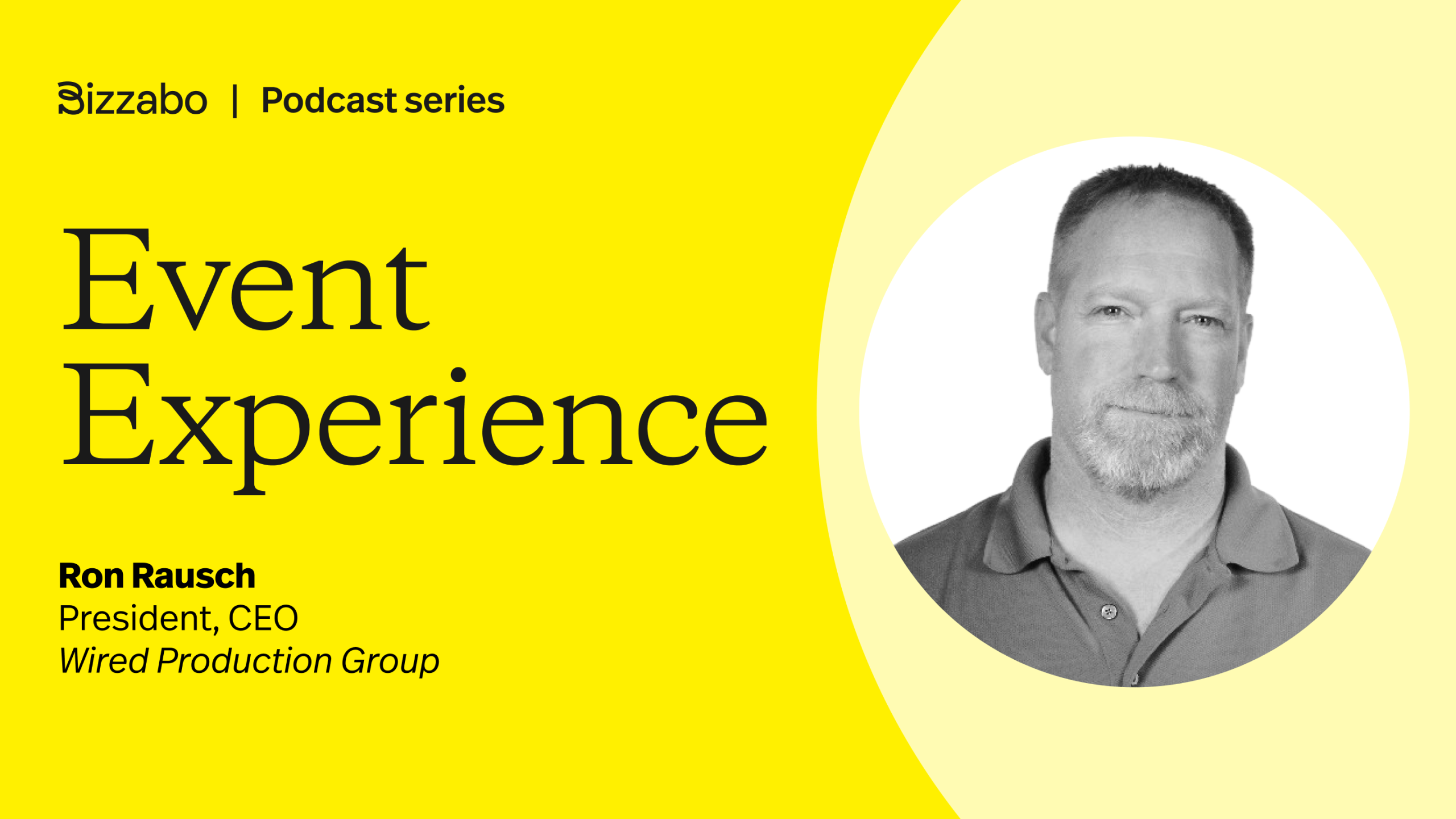
In this episode, Ron Rausch, owner of Wired Production Group and The ARC Collaborative, explains why the traditional nonprofit gala format, heavy on long speeches from leadership, no longer holds an audience. Drawing on 25 years running Wired Production Group and two years building The ARC Collaborative for academic, healthcare, and nonprofit clients, Rausch argues that events need to be edited down to tight, three-to-five-minute storytelling moments rather than built around who gets to speak. He walks through recent campaign launches for Wheaton College, the University of Memphis, and the University of Arizona to show what that looks like in practice. For event professionals building the case for donor or employee engagement internally, this episode covers how to sustain momentum across a multi-year campaign and where AI genuinely helps versus where it gets in the way.
Nonprofit event storytelling runs on a different clock than the corporate keynote circuit, and Ron Rausch has spent 25 years figuring out where the two overlap. Ron Rausch is the owner of Wired Production Group, a full service live event production company, and The ARC Collaborative, a production house focused on campaign launches and fundraising events for academic institutions, healthcare organizations, and nonprofits. He joins host Rachel Moore to talk about what changes when the audience is donors instead of shareholders, and what corporate event teams can still borrow from it.
You'll hear how Wired Production Group grew from a small video shop into live production and entertainment divisions, and how The ARC Collaborative came out of a long-term nonprofit training client that got absorbed into a larger company two years ago. Rausch describes the traditional nonprofit gala format, the one built around back-to-back remarks from the president, the provost, and the top donor, and why that structure is losing its grip on audiences with shrinking attention spans. His alternative is what he calls mining for gold: cutting hours of donor and recipient interviews down to tight, three to five minute segments that carry the emotional weight instead of the title on the podium.
You'll also get a look inside three live campaigns his teams are running right now. A six-city roadshow for Wheaton College uses experiential centers and a national touring act to keep donor momentum alive between a campaign's public launch and its close. A University of Memphis event flips a familiar format by building a mock podcast set around the president's existing campus podcast, and pairs it with a staged illusion of musicians appearing to float during a cocktail reception. A University of Arizona campaign close ties a donor gala to homecoming weekend, extending the same storytelling to students, faculty, and the public through an outdoor tailgate.
Rausch also gets into where event technology is actually heading. He's direct about AI: useful for staffing, budgeting, and efficiency, but not a substitute for the human connection that makes a donor or an employee feel like they belong. That distinction matters as more teams look at event technology trends and try to figure out which tools are worth the investment and which ones are just noise.
For enterprise event organizers building the case for events internally, this conversation is a reminder that the format built for a rubber chicken dinner also doesn't work for an all-hands or a customer summit, and that the fix is usually less about better technology and more about editing your message down to the story that actually lands.
Here's what you'll learn
"We're mining for gold, and so we need the message to be poignant and quick and clear." — Ron Rausch
"AI is a very powerful tool and a very scary tool at the same time... I just caution people it's a tool, not the solution." — Ron Rausch
"Human connection's still very important, and we have to make sure we don't lose that." — Ron Rausch
"If you care about the people you work with and you care about the projects, success will come." — Ron Rausch
Enjoyed this content? Subscribe to our newsletter and get insights like these delivered straight to your inbox.

Ron Rausch traces how Wired Production Group grew from a small video business into live events and entertainment, and how The ARC Collaborative was spun off from a long-term nonprofit client.
[Speaker]: Welcome to Event Experience by Bizzabo, the podcast where we bring the best and brightest event experience leaders together to share stories, tips, and lessons learned creating some of the world's biggest events. [Speaker]: I'm Rachel Moore, your podcast host. We're all here for the profits most of the time, right? Today, go with me into the realm of nonprofit and fundraising experiences with Ron Roush, owner of Wired Production Group and The ARC Collaborative. Ron shares insights from over 25 years in event production focused on storytelling, innovative engagement, and the future of event technology, especially in nonprofit and corporate sectors. [Speaker]: The story is the thing for everyone's event experience
[Speaker 2]: [00:01:00] Welcome, everyone, to a new episode of "Event Experience" by Bizzabo. Today, our guest is a live event production leader and the driving force behind Wired Production Group, a full-service production company helping organizations deliver seamless, high-impact events. [Speaker 2]: We all love those. That's, That's our bread and butter. He also owns The ARC Collaborative, serving academic institutions, healthcare organizations, and nonprofits as they turn mission into measurable impact. So we're gonna talk more about that today as well. With decades of hands-on experience in audio, video, lighting, direction, our guest specializes in transforming complex event visions into polished, memorable audience experiences for Fortune 500 companies, music festivals, and more across the globe. [Speaker 2]: And he's made time to be with us today. I'm really excited to welcome Ron Rauch to the episode. Thanks for joining us, Ron. [Rausch]: Thanks, [00:02:00] Rachel. Glad to be here. That's quite a bio there. Holy cow. [Rachel]: Hey, you know what? You put it out there and I go dig it up and [Rausch]: my God. Yeah [Rachel]: it into the fore. But as, as awesome and comprehensive as that bio was, I know we are just scratching the surface, and so I do what I always like to do with our guests. I'm gonna toss it back to you to give you an opportunity. [Rachel]: Ron, tell us a little bit more about yourself, your, what your day looks like and things. Just give us all the 411 please. [Rausch]: Yeah. So Wired Production Group, I've had that company for 25 years now. So I started that, it was small little company. I was doing video work, and then it just kind of exploded into content creation. Then we got into doing live events. Then we got into doing live entertainment concerts. So we have different divisions that do that. [Rausch]: And then as recently as a couple years ago, based on a spinoff of a client that of ours, it was a long-term client that we had, was getting absorbed, and that was the birth of The ARC Collaborative, which was a client of ours. So we did all of the nonprofit fundraising production side of the [00:03:00] things. Now we have the content creation, design, storytelling aspects of that business as well under one roof. [Rausch]: So busy place. Uh, lots going on. You know, I got a, a large family. I got seven kiddos that are also keeping us hopping all over the globe. My three of them are in college or out of college, and another one going to college, and still three at home. So yeah, it's never, never a dull moment here, so [Rachel]: Well, it's not like you're busy or anything, and [Rausch]: right? Exactly. [Rachel]: this makes it even more impressive. I'm so glad we get some with you today to talk about all this. But yeah, I think all event planners, regardless of family, personal, and professional situation, super busy. Well, we do wanna get to know you a little bit more before we dive into some more of like, you know, the kind of the professional and event all that stuff questions. [Rachel]: My first question for you, I ask all of our guests, what are your go-to on the ground event day shoes? Those days when it's like, you know, gonna be 10 to 14 hours on the [Rausch]: Oh my God, every day is 10 to 14 hours it feels like. It depends. If I'm working in the production side of it you know, we- a [00:04:00] lot of times we're backstage dealing with, you know, tripping over cables and stuff all over the place, so I've got some nice steel-toe Skechers that I've had that work pretty well, that are pretty comfortable for long days. [Rausch]: And it depends. Sometimes, you know, you gotta dress to the nines, right? So I've got some nice Sorel boots that are pretty comfortable I use. Hokas are great. They're the best tennis shoe out. Like, I-- we should do an ad for them. Um, But yeah, those are really comfortable too. So yeah it's a variety because we're in different places, right? [Rausch]: And sometimes you gotta look the part and feel the part, and sometimes you can be like, "I'm hidden backstage. I can wear whatever." Be comfy. So [Rachel]: I've often joked, gosh, with as many people who have answered Hoka on this question, [Rausch]: Yeah, you should have a ad in the corner, a little bug in the corner that says, "Sponsored by Hoka." [Rachel]: They're could be [Rausch]: we get some free shoes for all everybody on this sh- y- these shows, right? [Rachel]: saying. I mean, obviously, you know, a lot of event planners out there. I'm just saying, target audience, rich market. [Rachel]: Is there anything that you're listening to, watching, or reading these days that you simply cannot put down? And it doesn't [00:05:00] have to be events or work-related [Rausch]: You know, I listen to a lot of stuff. I don't read much. I read a lot of it feels like RFPs a lot, which those are a pain in the butt, but, you know. I get absorbed in those a lot. let's see. NPR, I'm a big fan of NPR. I love Jon Stewart. I love SmartLess. Those are all my favorite, you know, podcasts for those guys. [Rausch]: NPR, I get absorbed and sit in my driveway half the time at night listening to Finish the Story. History Docs, I don't know if it's just because we're coming up on the, you know, the 250 years, but I've been... Really, US history stuff has been fascinating. And you know, the world's a crazy place now, and I haven't lived through a lot of that crazy times in the past, so looking at that gives me a little hope that we can come out on the other side of this better and stronger like we have in the past. [Rausch]: So, yeah. So it's lots of variety [Rachel]: I love that. it's so funny that you mention that too. I was just listening to my daily or my weekly Jon Stewart [Speaker 2]: uh, [Rachel]: video this morning. I know. And then I actually too, it was funny I don't remember where I was going. I think I popped on, And of course I love how they do this. They [00:06:00] put the first episode on YouTube, and then you've gotta pay for the rest of it, but which sense, of course. [Rachel]: But anyone marketing out there [Rausch]: to America, monetize everything [Rachel]: that's right. But the American Revolution and that's been really fascinating too. So I'm probably gonna pony up for the rest of that because it was really interesting. So I love [Rausch]: It's crazy. I- it's just... and you see just how interesting and tumultuous our history has been, and just like, "And these guys were leading the..." Oh my gosh, they were not great people or great leaders necessarily. [Rachel]: Yep. Imperfect. Absolutely. [Rausch]: None of us are, right? So [Rachel]: interesting to, like, look at all that stuff. Well, again, if anyone else is identifying, you know, you know, holler out on social on these episodes and we'll all commiserate about it. Also, so is there a particular social post, maybe a piece of media or a hot take even about events that you might have found interesting lately? [Rausch]: You know, I get a lot of ideas from social media. I have I like to see what other people are doing in production and how we could maybe take a nugget of this or a nugget of [00:07:00] that, and how do we weave that into how we deliver a message or tell a story. I struggle a little bit. There's so much AI-generated content now. [Rausch]: You're like, all right, the dogs are not really lighting fireworks and the cats aren't talking and dancing, and it's like, but, you know. And but now that's coming into, like, those are funny, right? But now it's coming into our world of like, is that a real event and a real production, or is that-- So I take it all kind of with a grain of salt, but it's a good idea generator for us, I think. [Rausch]: And always looking at new technology and seeing the new tech and being heavy in the tech in one side of our business is, you know, how do we take that and how do we use that in delivering story and messaging, and how do we use that to engage people, right? I've done so many shows over the last 30 years that are one-way delivery, that are long days and long spe- how do we make this so that it's two-way, that it's more interactive, that it's more engaging? [Rausch]: So coming up with those ideas and seeing some of that on social media. I just had one the other day that we pitched to a client and they loved the idea, was I saw these musicians kind of [00:08:00] floating in front of this backdrop, right? And so at a lot of our fundraising events, you might have a cocktail reception pre or post, right? [Rausch]: And a lot of times on campuses we use the arts that they have on campus, right? So they might have musicians, and so I saw this way. Traditionally, we'll have like a quartet playing, you know, pre-reception music. So now we've saw this visual of like they're floating in space, and so we pitched that concept and they love it. [Rausch]: Now we've got, you know, some folks in the shop back there going, "How in?" Scratch their head. "Was that real? And how are we gonna do that?" And so they're coming up with ideas, but that, you know, that's the kind of stuff that I, I kind of gravitate towards in the social media stuff. [Speaker 2]: I love that. Well, I mean, gosh you obviously are finding those ideas, and I know so many of our listeners and our audience do that as well. I mean, sometimes that inspiration comes from the feeds, and as also maybe AI slop, but hopefully mostly it's authentic stuff, right? But but and I love this. [Speaker 2]: This kind of segues us into what we wanna talk to you about today bec- first of all, you're the type of guest I love to bring on to our audience because we're telling the truth here, [00:09:00] we're often talking about the world of for-profit event planning. We just are. I mean, Bizzabo is a for-pro- profit company.
Rausch explains how The ARC Collaborative came out of a nonprofit training client and describes the connection-driven mission behind nonprofit fundraising events.
[Speaker 2]: It just stands to reason. But nonprofit and fundraising groups are just as deserving, if not more so, to get some airtime when it comes to creating experiences that matter. So I'd love to learn, like, how did you first get into working with nonprofits and fundraising organizations from, you know, the event planning capacity or even if it was before that? [Rausch]: Yeah. So 26 years ago, we had a uh, client that was doing change management for corporations, for the profit industry of their business, and they were talking to, you know, voices of customers and these kinds of things. That resonated in the nonprofit world, and so they had some connections there, and next thing you know, we're designing training that has a lot of voices from donors, from recipients, and telling those stories. [Rausch]: And so spinning off of that then comes, well, we have this large event where we wanna bring in a bunch of donors. We're gonna have a [00:10:00] campaign launch, and we wanna take that same storytelling and message that we use in our training to train our foundation folks on how to make those engagements, how donors think, how they perceive things, how to you get that message across. [Rausch]: And so that launched us into doing these campaign launches. And so hundreds of shows, 20-some years later just two years ago, that company was getting absorbed by another training company much larger, and of course, as acquisitions often happen, we don't need the entertainment side of it. We wanna focus on the core business of what we do of training and so that was spun off. [Rausch]: And having that long-term relationship with those folks, we brought them in-house. President of the company came with that, started as our president to run that business and so here we are two years in its infancy stage as ARC Collaborative, but we've been doing these shows for, you know, 20-some years, so... [Rachel]: That's amazing. I love that, gosh, that's a good, a good happy outcome. Sometimes those acquisitions can be hit or miss, bag, [Rausch]: Right. [00:11:00] Yeah. Yeah. So it was great. You know, and being that vendor partner that I've been involved in a lot of those training videos over the years and understanding that philosophy and understanding that storytelling just really... That with us having the production element side of it was just a really good marriage to bring them in, but keep them separate so they can go do and have that expertise in that field, so [Rachel]: Yeah, and I'd love to talk a little bit more too about Arc Collaborative because it's like, can you describe the mission for it? Because I think that'd be really interesting for [Speaker 2]: our, [Rachel]: our audience to [Rausch]: Yeah. It's really making the donor connections to the institution and what motivates them, how do we connect with them, and how do we do that in a storytelling way and to, and to move them to action, right? At the end of the day, they know, we know that, you know, philanthropy is important and that supports and fosters the growth and innovation that we have in colleges, universities, and the healthcare industry. [Rausch]: And so it's [00:12:00] really interesting to find out the connections that people make back to their institutions, whether that's through an experience they had with them, whether it's a healthcare industry where someone in your family was touched by that and you support that because of the service and care that you were provided, or it's something along the lines of like, "I met my spouse there, and I have this nostalgic feeling of the history and where it got me to today," or, "It helped me get successful. [Rausch]: I launched my business because of something I learned, and I wanna pass that along." [Rausch]: Or, "I have a passion towards something," or, "I just wanna, I wanna help the next generation be as successful as I was." And so it's finding those connections, weaving those stories together, and having that representation in our events so that they can make that connection. [Rausch]: I can either see myself as that donor. I was that student who got scholarships, and it's important for me to give scholarships because I wouldn't be where I am today without that [00:13:00] help, and so I can kinda pass that along, right? It's that move it forward kinda mentality. And so I think I enjoy that because it's, you know, puppies and kids and dogs and stories, and it's just, it's how do we take them on a journey where we make them laugh, we make them cry, you know, we motivate them to action, all of those things. [Rausch]: And I think that's kinda what's missing in the corporate world. We don't get that culture, that community, that feeling. It's, you know, eight hours of eye charts and financials and goal setting and, versus, you know, what's the end customer think, you know? How do we bring that stories?
Rausch breaks down why traditional nonprofit galas built around leadership speeches are losing audiences, and why events now need to be edited down to short, high-impact storytelling moments.
[Rachel]: Yeah. you're actually laying up my next question for you perfectly.I love the way this, you know, kind of just organically winds up in the right, in the place that I wanna go next with you because I know [Speaker 2]: with, [Rachel]: with both Wired Production Group and The Art Collaborative, you know, as you just mentioned, you focused on [00:14:00] storytelling, on creating that connection. [Rachel]: And I think you're talking about something that every single event planner who listens to this podcast and is out there doing their day-to-day, they're just like, "Yes, if I can connect with our audience through what I do with this experience or event, I've done my job," and that's, that's what we're meant to do. [Rachel]: Now, it might be an assumption any of us might make that it might be easier for nonprofits and fundraising to make that connection through storytelling. Are we wrong to assume that? And if we are, why are we wrong? But also, what can we learn from that kind of connection and storytelling? [Rausch]: I think there's a transitioning happening in that, though. I, I think traditionally, even in the non- because I've had experience in both and I've done events in both. Traditional events, even in the nonprofit world, were, you know, it's the rubber chicken dinner. It's we've got to hear from the president for a half hour. [Rausch]: We got to hear from the provost. We got to hear from the foundation leadership. Maybe the biggest donor we have, you know, is making a [00:15:00] substantial gift. And there's all of the, I don't want to say the political, but there's all of the we got to have these are all the people that have to be part of it, right? [Rausch]: And it balloons into this two, three-hour extravaganza, right? We see that in the corporate world, too, right? We see that we have to have the president speak. All the leadership has to come out and give their messages, and the finance and the marketing and sales and all of the different pieces, right? [Rausch]: And I think what we need to do is really we've been trying to transition that into we're mining for gold, and so we need the message to be poignant and quick and clear and don't make the president carry all the water. They're important. They're an important key message. They're important leader. [Rausch]: They're important in setting the mission and the drive and all of the things. What can we do with other folks to help carry that water, to help deliver that same message, to make that connection? Because I might not be able to relate as an employee as a participant in an event to the top leadership. [Rausch]: They're just it's so far, right? That's a big mountain [00:16:00] for me. I can't get up there. I can't relate to them. But I can relate to this person here, and I can emulate that or be like them. So how do we take that into short messages and stories? I think, too, that, you know, most of our events when it comes to the core meat of a show, it's very theatrical. [Rausch]: It's very much a journey of a lot of involving your sensories, whether you're engaged in part of it, whether things happen in the audience, whether things happen on stage, whether it's a music entertainment or it's a, a spoken word piece, or it's a demonstration by someone weaved into speeches and multimedia. [Rausch]: Everything is bits of like three to five-minute bits, but they're gold. You've mined for that. You've gotten that message. So it's like a 30 second or 15 sec- now it's 15 second ads on our $8. They can get their-- Every brand can get their message across to you in 15, 20 seconds. So how do we do that to keep-- Because listen, everybody's [00:17:00] attention span is [Rachel]: Oh yeah. [Rausch]: See it, swipe, move, right? [Rausch]: And so fast-forward, our generation, my generation is going to be, like, gone out of the workforce, and how do we communicate with the next generation, [Rachel]: Mm-hmm. Mm-hmm [Rausch]: And they're gonna wanna be entertained. They're gonna wanna feel like a sense of culture, a sense of belonging, a sense of storytelling. So doing that and having that happen in a corporate world is, I think, the challenge. [Rausch]: I've seen some success with that when we hear voices of customers, when we hear, I work for an avionics company that, you know, they've had a pilot come in that used their ejection seat and they had the folks that make the ejection seat for the fighter planes in there, and it's like, "Okay, I s- I saved that guy's life. [Rausch]: I made a difference," right? And so when you can make that connection, it's like, what's that old story of, like, the, the ask the janitor at NASA, "What do you do?" And I help put people on the moon," right? He's sweeping the floors. And so that's the challenge, I think, in the corporate world, is how do you make that connection so that [00:18:00] I feel like I make a difference, that I belong, that I have a sense of being, a sense of culture, [Speaker 2]: I love that you connect saying, of course you've gotta do all the things, and every single event planner knows this. [Speaker 2]: You've got the hierarchy, you know, the people, stakeholders, different titles, and people are like, "Oh yeah we have to include them, include this." But they're all really realizing that, yes, but not everybody is that person, and how do I broaden our reach really, and also really make that person who's doesn't exactly relate with that stakeholder or with that C-level or with that president, but how do I make the person that I can influence into that meaningful connection? [Speaker 2]: How do I do that? I'd love to ask you, about any example event experiences that you helped or you helped out with or, you know, executed with your team this year. Can you share with us any of those things that you worked on just to give us some more insights. [Speaker 2]: We love your ideas that you're giving us.
[Speaker]: We'll be right back with more Event Experience after the break. [Speaker 5]: Ever wished your [00:19:00] event badge did more than just display your name? Whether you're an event organizer, exhibitor, or attendee, Bizzabo's Klik Smart Badge transforms the event experience. From interactive networking to real time attendee insights and lead capture, the Smart Badge is the ultimate game changer. Visit bizzabo.com/click, that's B I Z Z A B O dot com forward slash K L I K to learn more about the next generation of wearable event technology. Bizzabo, your partner for building conferences that captivate.
Rausch walks through three live campaign projects, showing how touring roadshows, staged illusions, and homecoming tie-ins keep donor storytelling fresh across a multi-year campaign.
[Speaker]: We're back with Ron Roush for some real-life examples of innovative storytelling in events this year. [Rausch]: Well, there's one of the big things we're doing now with a lot of the college and university campaign launches, we're working on, like, four of them currently. We're on the road with one Wheaton College out of Wheaton, Illinois, and we're doing a roadshow tour with them where we're hitting six cities And so it's kind of a [00:20:00] unique situation. [Rausch]: They did a campaign launch and then traditionally college and universities will do a silent phase of maybe five years of raising money, and then they do a public launch and then that goes for maybe three to five years, and then they reach their goal, and then they have a campaign close. Well, that journey in between is also we've gotta keep that momentum going, right? [Rausch]: It's not just the 45 minute, the one evening where we bring in our biggest and brightest and best donors and have this big event and go, "Okay, check the box." Hopefully we hit the number at the end. There's a lot of activity that needs to continue on. And so we're working with Wheaton College and they, they are on the road going. [Rausch]: We've gone all over the United States and they have an event where we've built these experiential centers, and so we have folks from the university that is th- that are there talking about raising money for the new library expansion, and we've built this virtual hall that you walk into, and it's the renderings of the old and the new and overlapping and telling the story and the need and so forth. [Rausch]: And there's, you know, one's [00:21:00] on athletics and one's on scholarships and so forth, and there's a brief message and then they're bringing in, it's a Christian college, so they're bringing in a Christian national act, and we have experience with that. And so part of the evening culminates with a, an entertainment or the concert for, you know, an hour, 90 minutes. [Rausch]: And so that's been fun and challenging, and we take all of these ideas and set pieces and move them around the country and set them up in these different venues. And we're in, we're in DC close to the Smithsonian, and we've been in, you know, at the Mile High Stadium in Denver for the, where the Broncos play, your backyard. [Rausch]: We're at Skirball in LA, and so that's been fun to bounce around on that. University of Memphis, I mentioned a little bit, the floating musicians, that's for University of Memphis. We're doing a thing in their theater which is gonna be fun. That's ironic 'cause we're taking a twist on how we tell the story there of utilizing [Rausch]: The president has a podcast, and it's a pretty famous on-campus type podcast. And so we're actually building a set piece and doing a mock podcast. That's how we'll do our, some of our [00:22:00] conversations on stage. So it's not, it's getting out of the norm of just presentation speech. It's like we have the presence of the right people in the right places, but it's a different way to deliver the message and s- and tell the story. [Rausch]: So that's fun. University of Arizona, I just got back from Tucson a couple days ago. We have a big campaign close for them. We did the launch for them in '22. We're doing the close here this fall. They coincide that around homecoming, so it's a, a lunch and gala event with, again, the experiential centers that we then move out to an outdoor mall area that's part of their weekend tailgate. [Rausch]: So not only exposure with the donors, but then talk about what the campaign has done and have that opened up to the community, the public, the students, the faculty and staff that can also experience that Along with, you know, some tailgate events and messaging and so forth. So lots of fun stuff, but you always gotta think outside the box. [Rausch]: How do we do it differently? What technologies make sense? Not just use the tech to use the tech, [00:23:00] but how do we use it to tell the story,
Rausch and Rachel discuss how pre-interviews and careful editing help production teams find the unexpected story inside a group of speakers, even in corporate settings with tight timelines.
[Rachel]: [Speaker 2]: Yeah. [Rachel]: gosh, as you say think outside the box, my immediate thought is like, well, literal boxes as in booths at trade shows is what a lot of our, a lot of our event planners, you know, whip up and like work in all the time. But yeah, I know they're always trying to think of that too. [Rachel]: We highlight a lot of those things on this show, including what you just shared, where it's like, how do you like just flip the script a little bit or just add some new aspect of it that is unexpected or, you know, crosses that boundary between what people imagine in their brain. Like, you know, when we're on this podcast right now and we're talking and stuff, but when you can actually put that like studio feel on a stage and be like, "Oh, I'm in a podcast, but I'm also on this st- in this [Rausch]: The little on air sign will come on [Rachel]: So cool. [Rausch]: you'll set the stage and it just kind of puts you in that environment. But it's just the thinking about it's, it, it-- And I think that's the art of this, is when we work with our writers and our producers, when they do the pre-interviews of the folks that are gonna be, you know, the, the cast of characters as we put them, what [00:24:00] is unique about them? [Rausch]: What can we use to deliver their message in a unique way, whether they're a good storyteller, whether they have a podcast whether they do a, a weekly session with their students every week or faculty. W- what are the bells and whistles that we can take that piece and say oh, you actually are a scholarship winner, too. [Rausch]: We could weave in your story of how you got to where you are because you're a first generation," or whatever that connection is, right? And so it's, it's again, it's mining for that gold. It's-- And I think that comes from being in the video industry for a long time. You capture hours and hours of footage, and you gotta finish it down to a two or three-minute video and, you know, how do you do that? [Rausch]: 'Cause it's all so good. But it's just, you just keep chipping away and chipping away to go, "Huh, tighten it up. Tighten it up." [Rachel]: Yeah. I okay, two analogies there. One, when you, we talk about chipping away, I don't remember which sculptor or artist it was where they're like, they see the marble and it's just a big block of marble, but they already see inside of it what the statue [00:25:00] is gonna be, and their job is to remove everything that isn't the statue. [Rausch]: Get everything out of the way so I can see the statue, right? Yeah. [Rachel]: Someone listening to this is yelling and saying, "I know who that is!" And I'm sorry I know I don't who that artist was. But I remember too I, I didn't watch it, but it was the I think it was Ryan Reynolds and his partner bought a football club and was it Wrexham or whatever? [Rausch]: yeah, yeah, yeah [Rachel]: And I remember, so I did get to see him at an event where he was talking about the thing you're talking about, where it's like stories, you know, and telling the story is always the thing, and that's how you come up with these ideas that are compelling and memorable and, ooh, just make you kinda go, "Ooh, stop and listen." [Rachel]: And he mentioned, like, there was a... I think they were talking to the staff there or something at the football club and, "Oh, we don't really have any cool stories here." Meanwhile, then somebody just comes up and says, "Hey," and they start talking about, like, "Yeah, our caretaker who's been here since he was a boy and struggled through all this stuff, he's going through this thing over here. [Rachel]: Should we get something together for him?" "Yeah, let's do that." And Ryan Reynolds is going, "I'm sorry, there's a story [00:26:00] right there. Who is this guy? I gotta meet this guy." And so... But you're so right, 'cause yeah just taking that time to suss out what is the unique thing here. there is a story embedded everywhere and everything. [Rachel]: Even, like, if we're talking about B2B, for-profit marketing and stuff, there is a story in there, and to try to go dig it out and just be thoughtful and take that time to figure out what that story is and then how to use it to connect to people sounds like that's your superpower, which is [Rausch]: It is, and I think it's a challenge in the corporate world. It just is. Timeframes are tight. Um, Generally you're working with multiple people. It comes down to managing logistics more than anything, right? 'Cause you got such a heavy lift and a short leash, and putting that all together that I feel like the content is always-- Even when we get content, it's like it's the day before we're finally getting the content from whoever's gonna be on stage, or minutes before they go on stage. [Rausch]: We just finished it. It's like [00:27:00] everything is so last minute that to make that leap to what we're doing, which is a fully tightly scripted event, [Rachel]: Mm-hmm. [Rausch]: it seems like an impossible lift. [Rachel]: Yeah [Rausch]: However, I do think there are opportunities to inject small moments of that to bring people along the way. You can't necessarily take, I think, a corporation and ask them to do this kind of a lift. [Rausch]: Very few will do that. I think there are some that probably do it and do it very well, and they're already out there and they're successful. But I think the traditional events that we have done in the corporate world, that's a heavy lift. But can we take those stories and those moments and start bringing them a little bit at a time? [Rausch]: "Hey, just do this one piece. See what you get out of that." "Wow, that, that resonated the most out of the whole week was that story with so and so," or when we had all the customers in, or we did the team building event and gave back to the military that we support, or whatever those things are. [00:28:00] Are those the moments, and then how do we do more of that?
Rausch shares his perspective on event technology trends, why AI is useful for efficiency but risky as a creative shortcut, and why human connection remains the deciding factor.
[Rachel]: Yeah, absolutely. Well, We talked about thinking outside the box. I love that you've mentioned use tech. Tech is out there, and we absolutely can use it to just change up and deliver these experiences a little differently just to, so it is that out-of-the-box experience. [Rachel]: So my question for you is, where do you see the future of your companies their experiences that you create going? And I think what- whatever you share is gonna be s- pop off some light bulbs for people too. But yeah, where do you think we're gonna end up here? [Rausch]: You know, AI is a very powerful tool and a very scary tool at the same time. And I think there are some really cool things you can do with it. I think for me it's more engaging events and how do we get everybody in the room to participate in something, whatever that immersive kind of feel is. And you see that in certain spaces. [Rausch]: You go to The Sphere or something, it's like, wow, I'm totally engaged. how do we see more of that kind of thing in events? I think AI's gonna be a big tool. We use it a lot already. Staffing and [00:29:00] expenses and budgeting and all of those things get tighter and tighter every year. It's a great way to offset some of those costs with efficiencies. [Rausch]: So, I mean, I just caution people it's a tool, not the solution. [Rachel]: Exactly [Rausch]: and it's not always right, and it won't always be right. But there's also, I think there's a cautionary tale of human connection's still very important, and we have to make sure we don't lose that. And I think that's the success in all those things in the storytelling. [Rausch]: Technology changes every week. It's really hard to see where this is gonna go. I mean, it used to be easy to put a three to five-year plan together. Now it's like I got a six-month plan, and then five months in it's like, oh my God, we saw something really cool or we're gonna-- We go that way. I mean, that's the beauty of being small, is you're agile and you go, "Oh, we were gonna go left, but that looks really cool." [Rausch]: Shiny object. So that's probably the challenge is that tech is moving so fast, and the world of professional and consumer is just, like, smashing together in all this technology, right? And so how do we use that to our [00:30:00] advantage to still do-- tell great stories, engage people, make those human connections, ' cause that's what really matters. [Rausch]: That's why people come to events. And I think people can lose sight of that with just paying attention to the almighty dollar and profitability, and you need people.
Rausch closes with career advice built around valuing your team and clients, and shares where listeners can follow his companies.
[Rachel]: Absolutely. Yeah. And then I have the final easiest question of the [Rausch]: Oh my God [Rachel]: now that I gave you the hardest one. But where can our listeners find and follow you and your companies online? [Rausch]: Oh my God. So wiredproductiongroup.com is where we live and then the arccollaborative.com are the two websites. And of course, there's links to all of our social media platforms and all the places to kind of follow us along. We're out there showing off our shows and events all the time. So I'd love to engage with anybody who wants to just brainstorm or shoot the breeze or catch up. [Rausch]: It's that'd to just collaborate with people, so.
[Speaker]: Ron's Skill Up advice is also great advice about just being a human being. [Rausch]: I guess the thing that has always made me successful is take care of the people that are around you. The one piece of advice is value your team. I mean, it's vitally important to take care of people, and it's important to take care of your team. It's important to do the extra thing for a client. [Rausch]: It may be outside the box, but if you make them look good, you're gonna get return business and things are gonna work out fine. I've often just got up and do the right thing every day. Take care of people and good things will happen to you... I think if you do those two things, [Rausch]: I think it's just integrity. It's if you care about the people you work with and you care about the projects, success will come [Speaker]: Thanks again to Ron Roush for joining us on Event Experience, and thank you for listening. [Speaker]: If you're enjoying the show, we'd love to hear it. Connect with us on social and subscribe, [00:32:00] rate, and review us wherever you're listening. Also, don't forget to share the show with your colleagues and friends. You can find full transcripts and key takeaways of every episode on bizzabo.com/podcast. On behalf of the team, thank you. We'll gather again soon for a new episode of Event Experience.


