
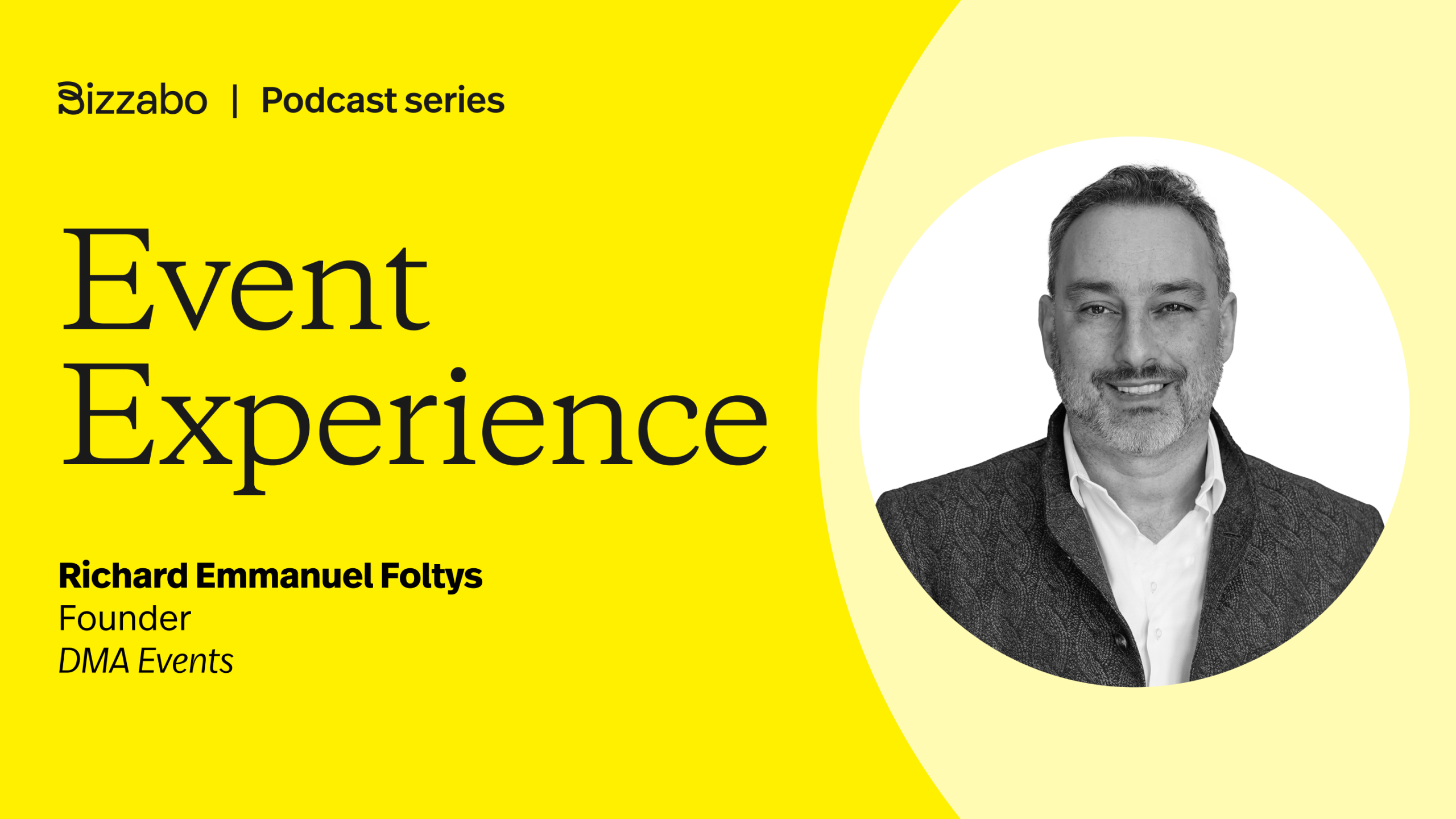
In this episode, Richard Foltys, founder of DMA Events, explains how AI-powered activations and robotics are reshaping trade show engagement for brands like Red Bull, Disney, and FIFA.
Drawing on his agency's work across more than 1,500 brand activations, he explains that AI-driven versions of activations like personalized trading cards and fashion sketches can scale output from around 12 to 15 pieces an hour with a human artist to 40 to 50 an hour, without sacrificing quality. He also cautions that novelty-driven activations like robots have roughly an 18 month window before audiences stop finding them fresh, and explains why booth staffing quality often makes or breaks engagement.
For event professionals planning trade show or gala activations, this episode covers how to use QR code based activations to remove space and staffing bottlenecks and scale lead capture to thousands of attendees at once.
AI-powered trade show activations only work when they are built around a theme and a clear user journey, and Richard Foltys has spent years turning that idea into a business. Foltys is the founder of DMA Events, an experiential marketing firm that has produced brand activations for companies including Red Bull, Disney, Barbie, and FIFA. He got his start in photography and cinematography, including work with the royal family and NATO, before building a photo booth business that grew into full scale experiential marketing. He joins host Rachel Moore to talk about what is actually working at trade shows right now, and where AI and robotics genuinely add value versus where they are just a novelty.
You will hear how DMA Events built a personalized AI trading card activation for FIFA, where attendees choose a team, get dropped into a game day photo, and walk away with a printed, foiled card they treat like a keepsake. Foltys walks through other AI-generated formats his team is testing, from a Red Bull wing suit flying sequence to a Porsche driving scene built from a single photo, and explains what separates a compelling themed activation from a gimmick. He also gets into robotics, including a robot that challenges attendees to a game of chess for a gift card, and shares his prediction that augmented reality glasses will be the next major shift in how attendees interact with a booth. For enterprise event organizers deciding where to put next year's activation budget, this conversation is a grounded look at which trends are worth chasing and which are just noise.
"You don't sit at a trade show unless the aisles are dead." — Richard Foltys
"Everybody's gonna want three things. They want a house, a car, and a robot." — Richard Foltys
"People live in urgency state only." — Richard Foltys
Enjoyed this content? Subscribe to our newsletter and get insights like these delivered straight to your inbox.

Richard Foltys traces his path from photography and cinematography work with the royal family and NATO to founding DMA Events, and shares his go-to advice for long event days.
[00:00:00]
Speaker: Welcome to "Event Experience by Bizzabo," the podcast where we bring the best and brightest event experience leaders together to share stories, tips, and lessons learned from creating some of the world's biggest events. I'm Rachel Moore, your podcast host. From photography to events, our guest, Richard Foltys, shares his journey leading DMA events.
Speaker: We're about to explore innovative activations like AI-powered experiences and robotics at trade shows, and discover how these cutting-edge strategies can transform your event experience.
Rachel: Welcome back to a new episode, everyone. I'm excited about today's guest. This is gonna be right up your alley, most of you, because this is your bread and butter every day. Our guest founded DMA [00:01:00] Events, a powerhouse experiential marketing firm that's been behind 1,500, actually over 1,500 brand activations for companies you might recognize: Red Bull, Disney, Barbie.
Rachel: He specializes in using AI-powered activations and social-driven strategies to transform live events into memorable brand experiences that are gonna generate leads and drive measurable attendee engagement. Those are two things every one of us wants. I'm thrilled to welcome Richard Foltys to Event Experience.
Rachel: Rich, thanks for joining us here on the pod.
Rich: Hey, Rachel. Good to be here
Rachel: Great to have you. And I always, for every guest, I compress you into two little sentences at the beginning of this, so I wanna be fair and offer the mic back over to you. Rich, tell us and our audience a little bit more about yourself, your day-to-day.
Rachel: What is it like to be at the head of DMA Events? What's your day-to-day?
Rich: Sure, it'd be my pleasure. So it all started with photography. It was my foundation. Went to university to get a degree in media arts, [00:02:00] which was photography, video, film, and computers. Started doing cinematography, movies, and realized that there's a lot of moving parts. And back in university and when I made my film, the sound guy messed up a little bit, and the whole movie fell apart.
Rich: And so I s- thought to myself, " You know what? Maybe I'm gonna go into photography because it's me, it's one person. I'm the only person to blame at this point." So that's how it started. And then you know, I really pushed the envelope in photography. Some of my friends went the whole celebrity route photography, and I somehow got into working with government organizations and ended up working with uh, the royal family, working with NATO, which is very, very rare.
Rich: So we got a lot of... Yeah. Yeah, that was really wild, and we could talk about stories working in those type of environments. You're talking about high-pressure, high-stress environments. You have Secret Service, you have MI6, You have everybody there. every piece of equipment is like, "What is this?
Rich: What is [00:03:00] that?" You know, so working in these high-pressure environments, actually, now when I'm in the corporate world, it's, like, easy-peasy, you know . I have been in environments that, you know, you would tremble in, but I did it. And they still call me actually. I still do work for organizations through NATO internationally, all over the world, doing photography and doing films and all different activations.
Rich: So that's kind of my, as you could say, my foundation. And being a photographer and even in cinematography, you realize every detail is important in the frame. It's not just the person in the foreground, it's what's in the background, what's in the foreground. So that's kind of m- where I'm coming from.
Rich: The whole photo booth thing was, you know, it actually started, I was doing destination weddings for clients, and they wanted photo booths, but back then, they were really not aesthetically pleasing. Let's just say it nicely, okay? They were bulky, they were big. So I literally took a napkin, and I drew up what I [00:04:00] thought it should look like, and that's how it started.
Rich: And then I realized you know, doing the whole social thing people were handing over their emails like, like, "I want that photo. I will jump through a hoop of fire. Get me that image, and here's my email, and it's real." And I said, "Oh, well, you know what? Corporate needs this." And that's how it all started.
Rich: And so it all started, you know, helping brands with their, you know, branding and then helping with lead generation. And that was pretty much kind of how the whole foundation started for DMA
Rachel: That's amazing. I know we-- you said you started off kinda like with movies and then like went a different way, but I mean, God, you bring up like "Secret Service" and "MI6," my brain immediately goes to like, "Well, those are, they're movies, like action films." So But it, this sounds so fascinating.
Rachel: I love that we have you on today because what a great origin story to get you into everything you're doing today.
Rachel: Before we do talk about that, though, we always like some get to know you questions. So, my first one, and we always get the best shoe recommendations out of this question. If you're spending an entire day, 12, 14-hour day on the [00:05:00] ground what are your go-to shoes that you're gonna be wearing?
Rich: Comfort. Oh, I'm all about comfort. Uh, I will try, I was just at a store, at the Nike store, tried on five pairs. I'm like, "Whatever's the most comfortable." So
Rachel: Yeah, exactly. I mean, that, that's what we're looking at, right, everybody? And like I said, been getting great recommendations, so Nike seems to be one of your go-tos
Rich: Well, you know, funny enough, I have those Yeezys and they don't look great. They look very sci-fi. My daughter convinced me to get those, and they're on the top of the list of comfort. They're light, they're airy, but they're not aesthetically pleasing to my eye. Now people are more used to uh, the whole concept of the, you know, they're bigger and wider.
Rich: But yeah, that's-- that would be my go-to. Something comfy and it's got a little bit of aesthetical would be a nice combination
Rachel: Yeah, absolutely. That's the way to go and gotta save our feet. I still remember one, of our guest's advice too. She's like, " wear a different pair of shoes each day, like alternate." And I was like, "That's brilliant." I actually used [00:06:00] that we went to Japan recently and I'm like, I just switched every day.
Rachel: I like did a different my best walking shoes and it was winter. So like I said, we're always providing really good advice and recommendations here with y'all, what you're actually doing in your, you know, as you're actively doing these events. Not necessarily event related, is there anything that you're listening to, watching, or reading these days that you cannot put down for any reason?
Rich: I'm a big fan of house music. And the funny thing was I was at a party recently and the DJ was not doing a good job. And I asked a friend of mine, go, "Please, can you go DJ?" And he just was not in the space. So I said to myself, "That's it. I'm creating my own playlist." And so now I'm curating playlists, so the next time this happens, I'm ready to go.
Rich: DJ Rich House is in the house.
Rachel: All right. So, y'all, you heard it here. If you happen to see Rich out in the wild and you're like, "We need something better," he's got it on his phone. So make sure you bring him over and be like, "Hook us up. Let's get some tunes going." Well, then I wanna find out, is there a particular social [00:07:00] post or a piece of media or even a hot take about events that you might have found interesting lately?
Rachel: Anything come to mind?
Rich: Right now I'm all into robotics. It's new, it's sci-fi. People have only seen it on TikTok. They haven't really experienced it. So I'm all about, you know, looking at different activations we can do that are using robotics, whether the robots are walking the CEO into the room or they're doing martial art demonstrations or making a coffee for you, or robot dogs or anything robot-related is kind of where I've got my eyes on these days
Rachel: Well, you perfectly teased up what we're gonna-- one of the things we're gonna wind up talking about in this interview.
Foltys breaks down which AI-powered activations, from personalized trading cards to branded mini films, are driving engagement at trade shows in 2026.
Rachel: We're gonna get to robots in a little bit, but first I wanna set the stage for today's topic. So, I think we've all seen this meme. Imagine the "Toy Story" meme where Buzz Lightyear puts his hand on Woody's shoulder and gestures above them, and for this one, the caption is, "Trade shows.
Rachel: Trade shows everywhere." Because I feel like we're in the middle of trade show season because [00:08:00] everybody's at them and doing them right now. It's the season right now. And our audience of event planners are either executing at trade shows or attending them for ideas, possibly both. Some of y'all are doing this, like even two in the same week.
Rachel: It's wild. Rich, I wanna ask you, 'cause I know trade shows are a big mainstay, big pillar of what you do. From your experience and what you're seeing and trying out in the trade show space what, from your perspective, what's working, and also what isn't working when it comes to trade shows?
Rich: It's a great question, Rachel. I just was-- had meetings on it all morning. We've got a bunch of trade shows coming up. I have one trade show where I'm working with different vendors and I'm trying to be fair, so I'm trying to give everybody a different experience, too. So I don't wanna give everybody the same experience.
Rich: So these are the kind of calls we're getting. So right now what's trending is we love to do activations that are experiential. So you know, the idea of having a photo booth that can do a little bit of AI or, you [00:09:00] know, anything AI related is incredible. We're doing a lot of trading cards, which are really hot right now.
Rich: So you could personalize, it could be sports related, it could be superhero related. It's fully customized. So the user journey is they take a photo, they can choose... Like for example, we just did stuff for FIFA that just finished. So that example, you choose your team, you take a photo, we take an image of you, it looks like you're a player on the team.
Rich: We personalize it with your name, we print it, put it in a hard case, and people hold on to it like a baby. This is like a prized possession which will never be thrown out 'cause it's personalized. It's got your name on it and it looks great.
Rich: well, first of all, I have a sample to show you guys of what the the cards look like.
Rachel: Oh, that's so cool.
Rachel: That is so cool. It's very authentic looking
Rich: fully transformed. We even add a little foil for au-we- authenticity. We put the name. You could see it's a hard case, and then you put the branding on the back. So for those who are watching, you can actually see what it looks like.
Rich: The other thing [00:10:00] is that we're also working... It doesn't have to be just people. If your clients are car companies or clothing companies, we're now making little mini commercials. So let's say you're a car company for Ford or Porsche. I could take a picture of you, Rachel, and then have a scene where it looks like you're getting into a Porsche and driving off on a racetrack and having a great time.
Rich: Okay? That is amazing for brands. That is high-quality content. Or if your client is, let's say, a retailer and they have clothing, you can just come in, I could take a picture, you can choose your outfit and see what it looks like on you and share it right away.
Rich: Right? So, um, there's so many different things that you can do with the AI stuff.
Rich: It's super cool. Those are trending. Then we've got glam bots, robotic movements.
Rich: The fashion sketch is hot right now. Trending. Trending. So basically So we have the human version of doing the caricatures, [00:11:00] but we can only do twelve to fifteen per hour. So now that we've made an activation, we can do now forty to fifty per hour and they're all perfect.
Rich: They all look amazing. And I find that for ladies and guys it's easy to upload because they're not looking at themselves and judging themselves. It's a fashion sketch version. They're elongated, long legs, cool fashion. I'm posting. And so that's instant shareability. Those have been really, really hot.
Rich: We've been doing the video testimonial booths as well, getting people to do a little bit of sound bites. Those are really cool. We've got some LED tunnels we're putting into the booth which is like eye candy. You see an LED tunnel, you're like, "What is that? What is going on?" People come there and then they get, they get to do like a little mini music video or a photo session with background music making them feel like a movie star.
Rich: These type of activations are really hot. You know, even the 360 booth to this day is still hot. It still creates that icebreaker. But [00:12:00] for trade shows it's photo booths merch. A lot of people have asked us, "Can you help us with merch?" So we're doing laser engraving. And so it's summertime right now. Luggage tags are hot.
Rich: And think about it, guys, once that luggage tag goes on, it's not coming off
Rachel: That's right.
Rich: True. And so, so luggage tags are personalized. We're doing a lot of hats. People love the idea of getting a hat and they can personalize it. But the trick though is, you know, not to just give away the free stuff.
Rich: You wanna have a user journey, which we could talk about a little later, about how to get people to, you know, learn about the service, learn about the product, then they get a, you know, a special ticket and then they can get these merch. So that is kind of what's trending
Rachel: Those are such good ideas. And I love that there's a bit of a theme there too. It's so immersive 'cause it is, it's putting each person into a persona or, you know, I love the trading card description, but then you've got, like you said, the [00:13:00] fashion illustration. You are putting them into this like, persona or environment, like here's you looked at a different way, and it is very personalized, like you said, but being able to do it at scale is brilliant.
Foltys points to booth staffing and signage as the biggest reasons some activations draw a crowd while others sit empty.
Rachel: I wanna ask though, is there anything you're seeing like at trade shows where, wow, crickets. There's literally nobody at that booth or activation. What's not working?
Rich: Having the wrong people in the booth. You could be the founder, you could be the CEO, but if you don't have what a brand ambassador has, which is uppity-up, answering questions standing, not sitting down, you don't sit at a trade show unless the aisles are dead.
Rich: You're standing. The brand ambassadors have to be really educated, dressed well and so that's crickets.
Rachel: Yeah
Rich: That is crickets. Bad branding, bad signage you know, that is crickets too. People associate what they see within a few seconds. I-- "That's not for me," So having that aesthetical appeal is very important.
Rachel: Thank you for that too. I mean, I think we've [00:14:00] all been there and some of us, ah, some of us have, have manned these booths or, you know, been at, at, you know, tried these activations and we are getting crickets and we can all, you know, look really introspect and look and say, "Well, what could we be doing differently?"
Rachel: I love that you bring up too, just even the people that you populate into the booth to staff it can really make the difference. So those are great. Thank you so much for those. Those are awesome ideas for what to do and also what not to do. And we teased it out. You even brought it up a little bit, too, in the last question.
Foltys explains why robots work as conversation starters, describes the 18 month novelty window he sees with robotics, and shares how DMA Events builds custom robot activations for clients.
Rachel: We need to talk about those robots, okay? So I'm gonna confess something. This is me, y'all. So if you're like me, then you'll resonate, this will resonate with you. Or you might be like, "Oh my God, you're so... No, this is, that this is so silly and you're not thinking broadly enough." when I think of robots, I immediately think of what I see on social reels.
Rachel: Like, robots that might look a little bit silly, you know, like ambling about with like the backwards joints and whatever, and it looks all stilted. And maybe they feel like they're being more eye-catchy. Ooh, it's a robot being more novel than [00:15:00] functional. And I'd love you to change my mind.
Rachel: Like, I probably am like just be- looking at that very narrowly. So let's start there and be like, what are you seeing and how are you using robot tech that's gonna totally change my perspective here?
Rich: Well, the robots is a funny story. When we first started people were calling us and they wanted it all over the world, and I realized it was very hard to find and very hard to source. Very difficult. So I made it my life mission to be able to create these activations experiences with different types of robots so people can have this kind of viral and almost it sets a tone.
Rich: If you're at a trade show, and even if you have a robot dog, just a robot dog on its own, it's like, "What is that? I've never seen it in real life." And all of a sudden there's engagement, okay? Purely non-functional, the robot dog, it's purely conversation starters. Now, the other robots, yeah, some of them are horrible, but we've got robots that are silky smooth, and these guys are doing like [00:16:00] Michael Jackson type of routines.
Rich: The- the-- they're doing dance offs, they're doing incredible martial arts. We could train them to learn everything about you, Rachel, or about the company. You could talk to these robots. And the thing about robots, you have an 18-month window Because right now it's new and it's trending and nobody's seen them before.
Rich: Um, Five to 10 years from now, mark my word, within 10 years, everybody's gonna want three things. They want a house, a car, and a robot. And that robot's gonna be cleaning your home, doing your laundry, doing your dishes. It's gonna give us, us humans more time, but then it's gonna be... It's not a novelty anymore.
Rich: So you have this 18-month window to y- you know, to create these experiences. Like I had one the other day where they wanted the robot to walk in with the CEO. We've got robots that have s- big screens on them, which could be used for directions and, you know, who are the speakers and what's going on.
Rich: We have robots that you could play games [00:17:00] against, like DMA will give you a $100 gift card if you can beat the robot in chess, for example, right? And so different robots for different experiences, usually to kinda get engagement. So I just had a call yesterday you know, of a s- a, a tech city that's at a trade show, and they just want the robot to hang out at the show. Conversation starter. You know, put a T-shirt on it. The T-shirt will be branded, so there's that branding. And people will take photos with the robot, which in t- turn is now a- adding more branding to the activation and to the client. So robots are for different people, you know, and different type of situations, but we've got a whole bunch of them, so you can take a look at on the site when you're ready
Rachel: Oh my gosh, that sounds so-- yeah, 'cause that sounds so interesting, and especially just thinking of different ways to use it. And you're so right. Listen if you're seeing a robot just at an event for one thing, but if I were to go, let's say I went shopping and ran my errands today, if I see a robot, I'm mentioning that when I get home.
Rachel: I'll be like, "Oh my God, I saw [00:18:00] a robot today, and here's what it was doing or what it wasn't doing." But I'll just mention that I saw it 'cause you're right, the novelty is still there. I think it's super cool that you mentioned the window for it, too. I mean, I can't imagine how many of our audience has a Roomba, you know, like in your house.
Rachel: It's like, yes, I just set it to go vacuum and, you know, or when I need it to. But you're talking like in 10 to 15 years that Roomba's gonna grow up into an actual you know, house helper that is gonna move around your house and help you. So that's just like first stage, but that is in the future, not too distant, right?
Rich: no, it's already there. No it's already there, Rachel. It's just not, it's not mainstream yet. I, I did such a deep dive in robots, I created a website just for that. I think it's called buyandrentrobots.com, just to give myself and the people around me to get ready for the future and what they can expect.
Rich: But going back to events it's novel it's unique, it's fun, and if you put a branded T-shirt on it and do some telepresence with them, I think you know, [00:19:00] it's a great activation for the right type of clientele. Usually more AI because there's a lot of events happening with AI, a lot of events about technology, and so this is one way...
Rich: It's a layer just to put it in there, right? But the AI booths are incredible though. If there's anything you guys want you know, learn about, I can help you with that
Speaker: We'll be right back with more event experience after the break.
Rachel Moore: Let's face it. Venting won't fix outdated overpriced event management software that lacks the support and features you need. But Bizzabo's Event Experience Operating System will.
Rachel Moore: Say goodbye to your frustrating legacy event software and hello to building more events that matter. Visit bizzabo.com. That's B I Z Z A B O.com to learn more about the Event Experience OS, KLIK SmartBadge, and more.
Foltys explains how AI-generated photo activations work behind the scenes, why theming and prompting matter, and how photographers can adapt rather than compete with the technology.
Speaker: We're back with Richard Foltys for a [00:20:00] question brought to you by the letters A and I.
Rachel: so again, you segued us perfectly into what I want to ask you about next is AI. Okay. And listen, I always add this caveat. We're all talking about AI. Like, I almost can't get through one of these episodes with a guest or one of our webinars on Bizzabo where it's like we're talking about AI at some point because everybody's talking about it.
Rachel: It's in the ether. It's also in our work the ways we work now and certainly manifesting in the events that we're planning, executing, and even attending, as we mentioned. So, every day, like every day, AI is advancing a bit further in capability. There's always a new release, there's a new feature there's you know, new stretches and ways that it can connect with things or do things for you.
Rachel: You know, you can text it and tell it to do things and whatever. Now I want to ask you, and o- obviously we're, we can broaden this, your answer out too, to really more expand into what you're seeing with AI. But in this industry of events that's very focused on human experiences, and I know we did just talk about robots, [00:21:00] but it's all still about human activity and human engagement how is AI truly creating immersive activations in trade shows?
Rachel: Like, how are you using AI to do that?
Rich: My favorite thing right now is AI, and it comes from me being a photographer. So being a photographer, it's very hard to create a beautiful portrait. You need the lighting. You need the composition. You need the good lens. You need the background. You need the person. It's difficult, and I've been doing it for my whole life.
Rich: With AI, it's incredible now. The lighting is not that great, you're still getting a great image. Uh, You can work with any theme, and it'll really create... So if you wanna do something from the past like a Western theme or the '80s theme, or you wanna do the future, it's incredible quality. Now, Rachel, back in the day when I first started, when DMA first started with AI, it was horrible, really rough.
Rich: It was a rough, rough road. Extra fingers, extra joints.
Rachel: Yep, I know.
Rich: It was a [00:22:00] rough road, but now, you know, we have our own proprietary way of doing it, where we're using multiple engines and it's not like ChatGPT, Gemini. There's like 10 different things we do to create it and different layers. So one AI, first image, I might take an image of you, replace you from the background.
Rich: Then I'll take another image and put a branded T-shirt on you. so there's multiple steps to make them amazing, but let me tell you the user journey, okay?
Rich: Check this out. People are standing around the photo booth laughing and giggling. Why? Because they can't wait to see how they turn out. And so it's important as an event planner to give a little disclaimer to say, "Hey, look, this is a fun rendition.
Rich: It might not look exactly like you." We can make it look exactly like you, but people wanna look a little bit better, a little bit more refined, you know? So when we tell people that, they can't wait to see it. And when they see themselves it's a [00:23:00] howler. They're laughing. Like, it's happening all the time.
Rich: Like, even our trading cards are using AI, and just the other day I remember seeing it, and I'm filming it, 'cause when you hand them the product and they see it, they are in pure joy. And that for an activation experience is what we want, right? We wanna create these experiences where people have an emotional connection to it.
Rich: They're around it. So to answer your question, AI is incredible because it looks good if done properly and prompted properly, of course. It looks good and its shareability are instant because people are addicted to Share, so they will share it instantly. So that's a majority of how we're using AI for activations in the most part.
Rachel: You hit on something just now that I think is key. 'Cause, you know, even when you're talking about, you know, you referenced you got started as a photographer, and then we, you know, we talk about AI. Your perspective is really unique 'cause I, I gotta tell you, you know, like, and [00:24:00] again, this is me, my anecdotal experience of seeing things online and how people are reacting to AI, and if I see photographers and artists and stuff, you know, they can have some very polarizing views about AI because they're like, "Well, what happens to, you know, me as an artist?"
Rachel: like you said with a photographer, you're like setting up the composition, taking care of the lighting, you know, really composing the subject and the scene and making sure you're coming out with a great picture. And then AI enters, you know, the, the world and everybody's like, "Oh, well it can do it just as well as a photographer."
Rachel: But I think the crux of it comes into what you just said. You're like, "Actually, no, it can't unless you're prompting it correctly." I mean, can you expound a little bit more on that too? Because you're a photographer, you're gonna know how to tell AI to do the job right, right?
Rachel: Versus like somebody... I'm not a photographer. If I tried to tell it to do it, you and I are gonna come up with vastly different results, right?
Rich: Yeah. So there's different subsections to that. You know, when it comes to prompting, you know, just in regular ChatGPT, you see how many times you're [00:25:00] making those adjustments, right? And so just imagine that for the image. You're creating it from scratch like an artist to a certain degree.
Rich: There's a lot of work involved, but the payoff is huge. You know, as a photographer though, you gotta get with the times. You cannot take a blind eye. You can't hide under the carpet. You know, it's sad. It is what it is, right? But you have to adapt so that's the first thing is it's a very, very technical um, you know, of creating it.
Rich: And you know, for the fashion sketches, for example, you know, we have humans doing it, but we can do 12 to 15 sketches an hour. Now w- now with the-- we employ the AI, we can do 40
Rachel: Yeah
Rich: And they're perfect, and they're amazing. And you don't have to lose out on that. You could do both. If you're an event planner, you could do both, right?
Rich: So you gotta get in with the times. You gotta do what's trending. [00:26:00] And the end goal is a great content and quality.
Rachel: Right
Rich: So yes, we can do that with photography, but if we can use our themed... AI is all about themes, though. Like, okay, when we do headshots, we let our clients know we could do a regular headshot clean photo, or we could do a touch of AI, maybe a little makeup for the girls, clean up the hair.
Rich: Maybe we'll give the girls an opportunity to be all in a white outfit or a suit, and same for the guys. So we don't change the face, but we may update the clothing and the environment and the background, right? So you have to have a feeling of when to use the AI to really make it work. But for events, if you have a theme, AI is a winner.
Rachel: Mm-hmm.
Rich: the theme is, whatever the genre is, we could put people into that environment. And what's hot right now, trending, is that we could take the photo and turn it into a movie. So, for example, I have a [00:27:00] city, another client, they wanted us to take pictures of their city and then make it look like somebody's sitting in a red chair in the city.
Rich: So it's like a red chair in the middle of fields or what have it. The issue was the city didn't have much landmarks. It was a little dry, let's just say. So I said, "Okay, why don't we do a picture and make it look like they're in a hot air balloon with the city in the background, and you shoot from a great perspective.
Rich: And now what about if we added a five to ten second cinema to it, and now the balloon is moving and you see the brand on the balloon?" So that's hot.
Rich: And then the other one we gave them was imagine they're in a Red Bull wing suit. I take a picture of you, Rachel, and all of a sudden it's you and a camera wraps around you and you're flying in a wing suit.
Rich: And all of a sudden people are like, "Is that real, Rachel? Did you actually do that? Or are you in a hot air balloon?" So you have to use your mind, you know, when you're planning, how do we create conversations? And [00:28:00] then the most important thing I realize that some planners are not thinking about is they're only focusing on the day of the event, and we like to focus on before the event, during the event, and post-event.
Rich: How can we use the technology and everything we've done to now promote it for future events, right? Like you have the images. How can we now continue the story,
Rachel: Yeah. Yeah. Yeah. It's, it's-- I, I think that's so important that you really paint the picture, no pun intended, of, you know, just how it really can help you. Again, it's, it comes down to, you know, being able to prompt it well. But the ways that you can like you said, add a theme to it, and that's the whole game there, right?
Rachel: It's not just to use AI for the sake of using AI. "Well, we used AI for this," but it's like, yeah, but be intentional about it, right? Where it's like, you know, we d- and this really kind of tangents off what you said earlier about all these activations that are successful at trade shows lately that are trending, they're immersive.
Rachel: They're putting that person into a scene, [00:29:00] so they're like, "Man I got something special that I wouldn't otherwise have. But because I visited your booth and your activation, now I have that." Same thing with using AI, which, you know, can be done in those examples that you mentioned, but it's like, it's helping you create that engagement that you so badly need.
Foltys explains why attendees willingly trade an email address for a personalized keepsake, and how compliant disclaimers keep the exchange legal across regions.
Rachel: And then if I could, my final kind of official question to you is, you know, I know you, you've talked about lead gen, which we did mention up front that, you know, I love that you tapped into the fact that like, man, I can create this photo for people. They're just gonna hand over their email to me like it's candy, you know, so that they can get what that picture is.
Rachel: All this, you know, we want people to engage and have that baseball card or have that, you know, that memorabilia there or have their fashion outfit, you know, that they're drawing. Are they giving you their emails in order to get that? Like, how do you kind of create that funnel there to say, "Yes, we can give you this amazing thing, and also, by the way, your email please?"
Rich: If you're a planner and your client wants to collect the data, then yeah, that's definitely something we [00:30:00] do all the time. You have to use compliance, so depending on what country you're in, every country has different compliances that you put into the disclaimer. So we can help them with that, and then you can legally use the data.
Rich: And it's like iTunes, you know? Nobody reads anything. It's like scroll, "Okay." Right? I'm not saying anything, but people will do the disclaimers. It's not a big deal. And yeah, so it's a really exchange of goods because you're creating something for them. They have this urgency.
Rich: They need to post something. They want something to post. we're living in an addiction society where people constantly have to post. So if we can create content for them, then that's incredibly, like, valuable. They will jump through a hoop of fire or two to get that. And it's a real email, otherwise they're not gonna get it,
Rachel: Yeah
Foltys introduces DMA Engage, a QR code based version of DMA's activations built to remove booth space and staffing bottlenecks and scale to thousands of attendees at once.
Rich: Now what we've found though is that we-- there are some bottlenecks in these type of experiences. So when at trade shows or galas or fundraisers or whatever, where it be, you could tech-technically see [00:31:00] about maybe one person per minute. So that's, you know, 40 to 60 per hour on average. And there's that lineup, which is great.
Rich: It creates a vibe. So we did come up with a solution though, okay? That's where DMA Engage comes in. It's the same concept, but no hardware. So if you say to me, "Rich, I got no room in my trade show booth. There's just no room. My whole gala, every square inch is used," no problem.
Rich: We're gonna create a QR code. You put it on a poster. People can scan it. They can make their trading card, they can make their AI card, they can make their cinema fully branded and executable, okay? So, so that solves space. Then the bottleneck, imagine you're at a stadium and you put the QR code, let's say, on the big billboard.
Rich: You can have 1,000 or 50,000 people at the same time scan it and create the experience.
Rachel: Yeah. Yeah.
Rich: So there are ways to do the lead gen and [00:32:00] maximize it using the right tools. So super exciting, and the quality's always the same, and we did it with less friction points, so you don't even have to download an app.
Rachel: Oh, nice.
Rich: Yeah, 'cause that could be a friction point for some people. They download an app and never use it again. And quite frankly, it doesn't have to be alone. Sometimes clients will do both. You can have an experiential activation where people line up, and you can have the QR code for those people who don't wanna line up or don't wanna wait, or you put the QR code by the bar, or you put it by the tables and let people have these experiences as much as they want without having to go to a particular space.
Rachel: Smart. Yeah. I think that's so smart what you said too, because you hit on something that is fundamental to humans. And really this is the task of all event planners, right? It's like, how do you create that urgency where this is such a good thing, this is gonna be so meaningful to you, like, yeah, I wanna share it right away, or I want that because [00:33:00] it's so exclusive feeling.
Rachel: You're not gonna find this, this particular thing anywhere else. And, you know, it's like when people, when you know, new iPhones come out and they got the lines going out because it's like, "I need to get it first." Everybody wants it first. And really playing on that fundamental need by humans, where it's like, "I wanna be the first to have that and show it off," and be like, "Look what I had made," you know?
Rachel: because I was here, I got this made for me." And yes now the, you know, the brand has the data, and they'll be like, "Yes, we gave that to you. Thank you so much, and now we can carry on our c- our conversation and engagement with that." But brilliant ideas. I know we're getting to the end of our time.
Rachel: I have one more question to a- ask you about advice, but is there any, any other questions I didn't ask you that you'd like, like to touch on really quick that you know, might be burning in your mind?
Foltys predicts augmented reality glasses will reshape booth interactions, closes with advice on tying activations to a lasting story, and shares where listeners can follow DMA Events.
Rachel: Okay, I want you to put your prediction goggles on here. Where do you think events are gonna be like? Is there anything you're predicting that will happen in 2027? I know we talked a lot about AI, robots, and stuff like that, so we're already thinking kind of forward.
Rachel: But what are you predicting for events and trade shows in 2027? What are we gonna see?
Rich: I [00:34:00] think that the augmented reality glasses are gonna be a big thing. You know, like how Ray-Ban and all these guys are doing, where people are-- will be able to go by the booths, and if your booth is already set up to be able to react with that kind of information, so they could know about you without even approaching you, right?
Rich: So that kind of agentic you know, they're gonna replace cell phones in the future. So in the future, your glasses will be your AirPods, everything. Everything... You won't even need to touch your cell phone. So I think kind of being ready for that yeah, and robots and robotics and finding ways on how they can help you.
Rich: You know, both AI and robots go well together, and so how they can help your business to go, whether it's doing the AI agents or, you know, or having a robot making cafes or... People will stop.
Rachel: Yeah. Yeah, they
Rich: I want the--
Rachel: Especially for
Rachel: the cat face. Yes
Rich: And you won't believe it. I've seen [00:35:00] world-renowned coffee makers and the robot company come together, and now the robot can make the coffee exactly to scientifically the way the coffee maker intended to do it.
Rich: So it's not just a fad. There is a lot to go with it. And whoever wants to continue the conversation about any of this, you're welcome to give me a ring, and I'll be happy to chat with you guys.
Rachel: Well, speaking of that, you brought me to the easiest question of the whole episode. Where can our listeners find and follow you and DMA Events online?
Rich: So, the website's digitalmirror.ca. On Instagram it's DMA Events Group. On LinkedIn it's 416Rich, I believe. But if you go to the website, it has all our socials there. We're always adding stuff to the IG to kinda see what's hot, what's going on. And the reality is we are working with incredible amount of clients you know, world-renowned, and it's so exciting to be able to create these experiences and see people smile, just like you are doing right now, Rachel.
Rich: That smile is contagious, by the [00:36:00] way, and that is really what kinda drives me to create these experiences so people have a good time at them
Speaker: Rich brings his former life as a photographer into his Skill Up advice for today's episode.
Rich: It would be, you know, taking the theme of the event and trying to create a story around that theme and let that theme and that story register longer than just the event. Find a way for a follow-up so that you can continue the story of why you're having that event for whatever that may be. And the other thing would be adding contests. If you can add a contest to an activation, you can add 10X engagement, know. As-- It could be as simple as a, you know, gift card to Starbucks or the Amazon store. But [00:37:00] People live in urgency state only. If you take a picture and you walk away, you may never post it.
Rich: But if you say there's a contest involved, they will do it right there, even if they're wearing Darth Vader gloves or some kind of, you know, Fan Expo, Comic-Con. They will remove it, and they will do it right there. So that is my tip. A little bit of engagement for contests and continuing the story using the theme
Speaker: Thanks again to Richard Foltys for joining us on "Event Experience," and thank you for listening. If you're enjoying the show, we'd love to hear it. Connect with us on social and subscribe, rate, and review us wherever you're listening.
Speaker: Also, don't forget to share the show with your colleagues and friends. You can find transcripts of each episode and key takeaways on bizzabo.com/podcast. On behalf of the team, thank you. We'll gather again soon for a new episode of "Event Experience."


