
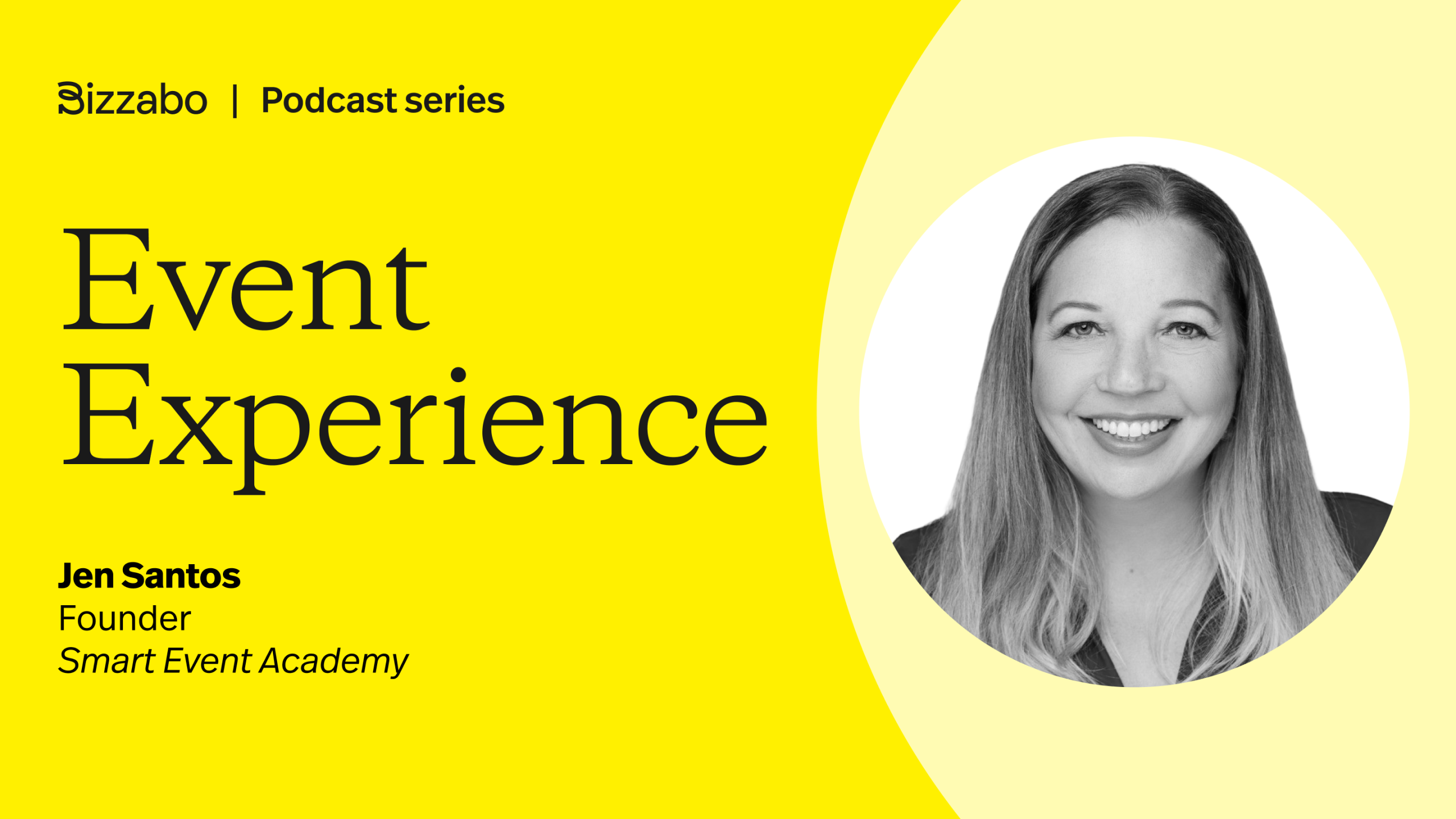
In this episode of Event Experience by Bizzabo, host Rachel Moore sits down with Jen Santos, Founder of Smart Event Academy, to unpack what truly drives successful events beyond just technology.
Drawing on her background in IT consulting and event tech, Jen explains why operational readiness is the foundation of every high-performing event. From detailed planning and documentation to pre- and post-event analysis, she shares how structured processes create the stability teams need to stay agile onsite.
The conversation also highlights the importance of building a collaborative culture across teams and vendors. Jen emphasizes that alignment, open communication, and shared goals are what prevent silos and keep events running smoothly, especially when challenges arise.
Importantly, Jen reframes how event professionals should think about ROI. Rather than focusing solely on financial outcomes, she encourages a broader view that includes time, energy, and attendee experience, ensuring every investment contributes to meaningful impact.
She also challenges common misconceptions about event technology, noting that most issues stem from people and processes, not the tools themselves. By adopting a mindset of curiosity and leveraging frameworks like Smart Event 360, event professionals can continuously improve and elevate their approach.
This episode is packed with practical strategies to help you strengthen operations, foster collaboration, and measure success in more meaningful ways.
Enjoyed this content? Subscribe to our newsletter and get insights like these delivered straight to your inbox.
<!--HubSpot Call-to-Action Code --><span class="hs-cta-wrapper" id="hs-cta-wrapper-564a8887-42c8-43f3-8d3e-3d7b4e5d20e0"><span class="hs-cta-node hs-cta-564a8887-42c8-43f3-8d3e-3d7b4e5d20e0" id="hs-cta-564a8887-42c8-43f3-8d3e-3d7b4e5d20e0"><!--[if lte IE 8]><div id="hs-cta-ie-element"></div><![endif]--><a href="https://cta-redirect.hubspot.com/cta/redirect/318095/564a8887-42c8-43f3-8d3e-3d7b4e5d20e0" target="_blank" rel="noopener"><img class="hs-cta-img" id="hs-cta-img-564a8887-42c8-43f3-8d3e-3d7b4e5d20e0" style="border-width:0px;" src="https://no-cache.hubspot.com/cta/default/318095/564a8887-42c8-43f3-8d3e-3d7b4e5d20e0.png" alt="Stay up to date with Bizzabo’s latest"/></a></span><script charset="utf-8" src="https://js.hscta.net/cta/current.js"></script><script type="text/javascript"> hbspt.cta.load(318095, '564a8887-42c8-43f3-8d3e-3d7b4e5d20e0', {"useNewLoader":"true","region":"na1"}); </script></span><!-- end HubSpot Call-to-Action Code -->
Rachel Moore: Welcome to Event Experience by Bizzabo, the podcast where we bring the best and brightest event experience leaders together to share stories, tips, and lessons learned from creating some of the world's biggest events.
Rachel Moore: I'm Rachel Moore, your podcast host. In this episode, we dip our toes into our first love on this podcast event technology with Jen Santos, Founder of Smart Event Academy. Buckle up as we chat about the importance of operational readiness, creating a collaborative culture within event teams, and understanding ROI beyond just financial metrics.
Rachel Moore: Jen also addresses common misconceptions about event tech, which you'll want to avoid for your very best event experience.
Rachel Moore: [00:01:00] Welcome back everyone. We are in for a new episode of Event Experience and I am your host Rachel Moore as always. And today's guest has a wealth of expertise over her career of project management. Of course, that is something that so many event planners have, whether they officially acknowledge it or not.
Rachel Moore: Project manage management is big marketing, but also event tech strategy. Having supported brands like Microsoft, BW Events Tech and T-Mobile. Today, she's the founder of Smart Event Academy. The place where event professionals skill up, collaborate, learn and share industry best practices to deliver world-class digital events.
Rachel Moore: You can tell I already love this because this is exactly what the whole purpose of this podcast and the show is. So we are gonna get along great. I am thrilled to welcome Jen Santos to Event Experience. Jen, thanks for joining us.
Jen Santos: Thank you for having me, Rachel. I am so happy to be here today and I love the wonderful introduction that you gave to me. Yes, I've been doing general IT consulting [00:02:00] for probably far longer than I want to admit, three decades and counting. And then I moved into event tech almost 15 years ago, cutting my teeth on, you know, little events like the tier ones at Microsoft.
Jen Santos: And they've never quite let me go since then. And then I have a lot of work. I have CES coming up really, really soon now this year. And I just, I believe that event tech is super, super powerful and is becoming more and more important as we go into further into events. And I also feel like it's a bit of a much maligned and misunderstood portion of events because events are marketing focused and techies are techie and right.
Jen Santos: We have like this language problem that is important to overcome and that's like one of my goals here with the academy and actually sitting here talking to you is to help with that.
Rachel Moore: I love that and you, you hit it spot on it, obviously, again, in, in, in more ways than one special place close to our heart. This podcast is hosted by Bizzabo, which is an event technology platform. So we are all about the people who make it easier for everybody to delve [00:03:00] into that world and tap into it, even if they're not particularly tech savvy.
Rachel Moore: But again, that's why we have you on the podcast. Real quick too, just I know we just shared, I shared a super brief bio about you and you gave us a little bit more insight about your background and stuff. What else kind of can you tell us about yourself, about your day to day, your role as the founder of the Smart Event Academy?
Rachel Moore: Just give us a little bit more info so our audience can get to know you a little bit more.
Jen Santos: Yeah, happy to. So I still do a lot of event delivery. I work on everything from, like, I still do a little bit on the Microsoft Tier ones, other tier one events. I mentioned CES, you know, 140,000 people, nothing small about that one. And so I still do a lot of event delivery because I really believe that even though I'm moving into more of an advisory role, you have to keep your feet on the ground.
Jen Santos: You have to know what's going on, this industry moves so fast. And then, when I'm doing the Smart Event Academy is that I've also seen particularly coming outta the pandemic that we lost so many people during the pandemic. So many good people that were like, I have to put food on the table and I have to leave the industry.
Jen Santos: And so we had this whole boatload, for lack of a better [00:04:00] term, a people that showed up. And they may be smart project managers, but they don't know events. Right? Or they know one portion of events, but they don't have the big picture. And I'm like, man, I'm like, I've been doing this for so long and I have such a passion for like the people side of it that I really wanna help these people like level up.
Jen Santos: Right. And so the Smart Event Academy is really based on creating this community, helping our event community through the lens of event tech, kind of level up so that we can deliver smarter events without us having to go to a wild amount of heroics.
Rachel Moore: Oh, I again, speaking the language, because that's what literally every person watching this show who's a fan of the show is like, yes more of that please. But thank you so much for sharing that too. And it's great to kind of hear, all the uh, expertise you're bringing to bear in your day to day, but also what we're gonna learn about on the podcast here, and you actually segued perfectly.
Rachel Moore: 'Cause I wanna get into some personal, a little more, get to know you questions here. And you talked about you know, hit the ground, you like to be on the ground and, when you're on the ground [00:05:00] for multiple hours on end, at any event, it kind of matters what's on your feet. So please enlighten us.
Rachel Moore: What are your go-to on the ground event day shoes that keep you going for hours on end?
Jen Santos: That's a great question. You know, being an event tech, we don't have to put on like the 500 miles that the regular logistics people do. So thankfully thankful that I have that role. But my go-to shoes are Sketchers and I know everybody gives me the side eye, but they're sketchers all the way
Rachel Moore: I am a huge fan of Sketchers and, and y'all, you can side eye us through whatever your device you're listening to this on. We do not care. We live and die by our Skechers fellow Skechers fan. Yeah, I love them. I, I still remember this again, personal anecdote. I've, like, had my foot recover from surgery all the way to like, I know I need to be like, again, maybe be on the ground for a work event, and I'm like, I'm wearing s Sketchers, I'm gonna be comfy.
Rachel Moore: And they never fail me. So endorsement from me, obviously, but I love that you brought that up. Thanks for that recommendation. And I know we've got some fellow sketcher fans out
Jen Santos: If we do, they may be [00:06:00] hidden, but they're there.
Rachel Moore: that's right. Comment.
Jen Santos: closeted. They're
Rachel Moore: us know. That's right. Let us know. We've got you. We got you. Is there anything that you're listening to, watching or even reading these days that you cannot put down, and it doesn't have to be events related?
Jen Santos: I am obsessed, beyond obsessed with the Emily Wild Series. It's cozy fantasy, and every time I talk about it, people look at me like I'm a little bit weird because I'm like, yeah, the book is called the Encyclopedia Fairies, and people are like, I didn't think you were a fairy person, Jen. I'm like, well, no, I'm not a fairy person, but it's just this,
Jen Santos: Emily, she is this researcher outta the UK who has been studying like other world creatures that live here on earth, but they're like these creatures that we never get to see and she's been devoted her entire career to it. And so she goes on these quests and to learn more about these creatures. And so it's like literally her and her field notes.
Jen Santos: And I just, I read the entire three book series and I found out last night prepping for this interview that a book four is coming out and I nearly lost it. So, [00:07:00] that's my favorite. And then do I feel like I should like and I don't, is the murder bot series? I have tried so many times and I can't get behind it.
Rachel Moore: Yeah, that's so real. Y'all, I'm gonna confess, I've tried breaking bad twice. maybe there'll be a time when I'm in a particular mood and I can push in past like the second episode. I can't do it. Maybe at least we're not right now. So please understand. You know, sometimes things are just not for everybody in a particular moment in time or something like that.
Rachel Moore: But I'm gonna tell my daughter about that Emily Wild series 'cause I think she would find that. Fascinating. That sounds, and, And who doesn't love an escape, right? Where it's just like, you know, let, let me delve into this world that you're, you're taking these notes on and, and just get into that.
Rachel Moore: So thank you so much for that recommendation too. Is there a particular social post or a piece of media or even a hot take about events that you found interesting lately?
Jen Santos: I think like the acquisitions freeze that are happening is a big one, right? I just see the Cvent / Goldcast thing was just this week, but the one that's really caught my eye is the Bending Spoons and [00:08:00] they're like whole suite of acquisitions recently, right? They've done Eventbrite that just happened a couple weeks ago.
Jen Santos: Streamyard, Hopin, MeetUp, Bright Cove. And I'm like, what are they trying to do over there? And 'cause they also have like Evernote, which it does not fit at all. And they have some other tools that really don't seem to fit at all and I like, like this is where skeptical Jen is like, I feel like they're probably trying to get into this event space.
Jen Santos: And having been an event tech professional for many, many years, you can't just bolt these things together and expect them to work, right? Like Bizzabo your whole thing is the event operating system, right? You can't just bolt together whatever badge provided with whatever CMS and whatever front end and just think it's going to work.
Jen Santos: And so, I'm really intrigued to see like two, three, even five years out, what Bending Spoons ends up doing with the set of acquisitions. And if they're going to try to like take on like you guys and Rain Focus and all those guys, or they're just gonna leave them as independent tools.
Rachel Moore: It is super interesting, especially like you [00:09:00] said, when you kind of see these separate platforms or separate apps or you know, tech that they're, you're like, all right. I'm trying to see the correlation here. What's going on? So, I, and gosh, I know everyone who's a fan of this show too. I mean, if you're paying any attention to social feeds, and I get it, you guys we're busy, so it's kind of hard sometimes to pay attention to what's, what all the chatter's about.
Rachel Moore: But yeah, seeing these kind of moves happening and wondering what the outcome's gonna be. And probably not immediate, but you know, you just never know. And so it is definitely something to kind of be on the edge of your seat about. Just be like, okay. And then sleuthing it out, trying to figure out, okay, what's gonna happen?
Rachel Moore: We'll have to like, have you back maybe in the next year or two, be like, okay did we find out like, what's going on? What was the end result for that? So, or what was the next. the next frontier for all these things. So thanks so much for that. This was great. Yeah, because uh, we just wanna like, kinda, you know, what's the buzz going on in your brain?
Rachel Moore: And speaking of which, let's tap into your brain for a little while here. You know, everyone listening to and watching this show wants to put on a successful event. I'm sure you know you Smart [00:10:00] Events Academy, those are the people you're running into all the time. They're like, we just wanna be successful at what we're doing whatever that event's respective goals might be. And we hear from guests all the time on what aspects they think makes for a su successful event. Would love to ask you can you share with us what things that you think are crucial pillars to event success?
Rachel Moore: Anything that stands out to you as like, these are the must haves.
Jen Santos: Like when I think about what makes an event successful, I mean, yeah, sure, you've got your tech and logistics and F&B and the venue and all that stuff, right? And that's all really good. But like if you go underneath that a level that's like where my brain lives and the first thing I think about is ROI.
Jen Santos: And that's a big thing in the industry right now, but it's like honestly, like why are we even doing this? Right, like what is the objective? And it shouldn't be 22,000 attendees. It should be like, what is the business driver that is making us hold this event? And what does success looks like? Like that is the big one for me when I think about our hosting organizations.
Jen Santos: And then when I think about how [00:11:00] we're gonna create these successful events, the next place my brain goes is really around the culture and the people that are putting on the event, right? I feel like A, we tend to get a little overlooked in terms of having a great attendee experience, but it's super important because if we are relying on heroics and totally burned out. We're never gonna put on an exceptional event. It might look good on the surface, but we're leaving things on the table we could have done because we didn't have the bandwidth, we didn't have the culture that we needed. We didn't get the right inputs at the right time to deliver the event that we know we could have delivered.
Jen Santos: And that just guts me every single time. And then the third one I will give you is very much related to that, but I think of it as operational readiness, which again, which is like this idea of let's make it as boring as possible, right? Let's get our documentation, ducks in a row.
Jen Santos: Let's get all of our processes organized. Let's have all of our templates, our checklists, because onsite is chaos. It is [00:12:00] mayhem. Mayhem is the word I prefer to use. Sorry about that. And let's make all of the prep and all of the things we already know about as boring and simplified and operationalized as possible.
Jen Santos: So we have the space to do the surprise and to delight to worry when a road is unexpectedly closed, right? When a keynote runs 15 minutes over, all those things that happen that like throw us for a loop so we have the space to deal with it.
Rachel Moore: Yeah, those three tie so well together too. Because, you know, if you take it from the operational readiness side, you're so exactly right. I mean, particularly event planners and y'all, we realize there are other people and other expertise areas of expertise that really operate the same way.
Rachel Moore: And I love too, your history as a project manager really speaks to this, having the plan and what does that saying, you know, if if you fail to plan, you plan to fail. But it's not just that you are having all that. Stuff at the ready and like you said, oh, it may seem really boring on paper, but you're planning ahead because you know the unexpected can and will happen.
Rachel Moore: Or what if [00:13:00] it's not even bad, unexpected, you know, maybe it's like,. Y'all, could we pivot with this really quick? This was a great idea, or this is an opportunity to write here. We've got the space to do it because we planned everything. We have the room and the capacity, which then ties into the culture and the people can, they feel like, yeah, we all were on board with getting this executed.
Rachel Moore: We did plan ahead. We've got the logistics all in place, but now we've got the ideas and the creativity. And the support systems there and the resources to make something special happen, maybe even beyond what you planned. And then, of course, that all leads back to like to, you said the initial pillar, which is ROI.
Rachel Moore: It's like, why are we even doing this? What is this gonna success gonna look like? Not just about registration numbers or attendance numbers, but it's like how is this moving the needle for the business? I mean, I do think of that like kind of three-legged stool thing.
Rachel Moore: You know, it's like that's a great foundation to stand upon to make sure that your event is successful. And I'm sure everybody watching too has their own ways that they try to tackle those things, but you know, really is meaningful to kind of see that man, if you pay attention to those three [00:14:00] things, that actually really covers quite a bit of everything else that you're paying attention to, right?
Jen Santos: I really think it does. And I love what you said about creating space for like other things, right? Like the ability to do like the surprise and delight elements, right? Because it's like, oh, we actually have a little bit of time. Like what if we can go and bring out like an ice cream cart, right?
Jen Santos: Like what if we, you know, and this suddenly, this just shows up because suddenly we had a little bit of extra budget 'cause we planned well and we've got a little bit of extra time and there's an ice cream person right around the corner and it's like, I mean like how fun is that,
Rachel Moore: It's so fun. Well, and, and I wanna dig more into this then operational readiness. Tackling that first you know, you mentioned make it boring. Can you describe a little bit more what does operational readiness look like to you? Like if you were to say ladies and gentlemen and everyone and friends and family where you're operationally ready, what does that look like to you?
Jen Santos: You know, it's one of those things like you hear like a McKinsey say, we're doing operational readiness, organizational change, right? And those words have no meaning really, except that when I think about operational readiness, [00:15:00] they do, we're taking operations, which is like just the plotting along and executing the event, and we're making it ready to go.
Jen Santos: We are making it so we are ready. So when the lights come up on day one, and in many cases before right, that we are ready to go. So it is getting, again, getting your ducks in a row. So we have our processes. And so the things I think about, again, I have the event tech lens, right, but it's getting your documentation and your SOPs in place.
Jen Santos: So having a rock solid run of show that includes everything. Like I know that a lot of times AV production is a lot of it. That's a big one. And when I do my hybrid events, it's a big one, but it's literally everything. So when I think about that, I'm like, what time do surveys come on? What time is the first app push notification, you know, what time should this happen? What time am we unlocking the store? You know, and every different group. Mine again is event tech, but every different group should have their own overly detailed run of show. Because like for example, if I [00:16:00] know that, okay, so this session's gonna start at noon, I need to verify captions, I need to verify this, I need to verify that, Ooh, guess what?
Jen Santos: I have 15 minutes. I can go to the bathroom. Like, it sounds really silly, but like if you have a run of show, you actually know when you can go to the bathroom or hunt down a snack. Like a snack should never be underrated. And so you've got your dry run. You need to have rock solid business requirements, which I see frequently getting skipped.
Jen Santos: And I will tell you on a small event, I'm equally guilty of doing that as other people, I probably should air my dirty laundry. But here we are. And then, going back to the ROI, it's like, what does success look like? And that's not even just an event level, but it's even like at a team level.
Jen Santos: So I look at with my teams, like, have we managed to reduce the number of tickets that we have on any given topic? You know, it's people not being able to log in or not being able to find something. I just had a search thing come in like moments before this recording and I'm like, oh, gotta get a ticket in for that.
Jen Santos: Completely missed that one this year. But knowing what success looks like, and for me a big one is [00:17:00] reducing the number of support tickets I see every year.
Rachel Moore: Yeah.
Jen Santos: And then, I also think about pre-mortems and post-mortems. And so if you don't know what a pre-mortem is, pre-mortem is basically this idea of assume you're gonna fail.
Jen Santos: Assume something is going to go wrong, and then what is your plan B for it going wrong? So for example, a couple years ago I had an event in Atlanta and a hurricane decided to show up. Just randomly. And so like, literally like we're two days out and I'm starting to watch the news and I wasn't there, but I'm starting to watch the news and I'm like, I got my teams flying in.
Jen Santos: Are we still good to hold this event? And so I started badgering my client. I'm like, are we doing this event? Are we not? Can you please create comms and tell me what the timeline is for when we're calling it a go a, a go, or a no go, right? And guess what? It was after close of business when they decided it was a no go, but we had our emails approved,
Jen Santos: everybody was on board. The timeline was set. I mean, that's a little bit of a radical [00:18:00] pre-mortem, but like these are important things to do is to think ahead so it's not seven o'clock at night and we're all scrambling and getting on a Zoom call to figure out what the plan is now. I had that thing locked at like two o'clock in the afternoon.
Jen Santos: We had the emails ready to go. I just needed to call my person and say, Hey, send it. We're done.
Rachel Moore: Yeah.
Jen Santos: So in the postmortems, we all, we're all familiar with those postmortem, debrief, wrap up, whatever we're gonna call it. But that's the look back. and then I think the other really important thing for me with events, particularly with larger organizations, is this idea of having this culture of a year round event.
Jen Santos: And so when in an event tech stack in particular, so that we are taking our, we have our event tech roadmap. We know what our roadmap looks like. It's okay, we couldn't do it for this event, but now we know we've got a little bit of breather before the field marketing series starts. You know what?
Jen Santos: So we're gonna slot in to get this work done, you know, and then we can do that. And so we're looking, okay, that's a Q2 [00:19:00] project, that's a Q3 project. And so we're continually looking ahead and treating it like a product, right? Bizzabo itself, it's a product. A lot of us just use the SAS products. we can treat our delivery as if it is also a product.
Jen Santos: And so we can roadmap in the types of features that, you know, Bizzabo is a complex product, for example, right? So people can't always flip everything on at one time. It's like, well no, now we need to figure out how this is gonna work with auth and then payment and then the sponsor system and everything. And so it's not just a matter of flipping on feature flags and calling it a day.
Jen Santos: And then I would also say related to that is giving yourself time to deal with the tech debt. and so what I mean by tech debt is we turned on all these feature flags, guess what? That didn't go the way we wanted it to, and so we need to roll that stuff back out. We don't just leave like attributes floating around that we aren't using anymore because then somebody new comes on the team and they're like, oh, hey look, hey, we already have this flag for this attendee type.
Jen Santos: Well, yeah, but it's not hooked up to anything.
Rachel Moore: Right,[00:20:00]
Jen Santos: So it's getting it documented and then ideally if you can pulling it outta the system or renaming it like DNU or something like that. So people aren't trying to use things that don't actually work.
Rachel Moore: Yeah.
Jen Santos: You know, rolling unroll, taking out your deprecated features at that point.
Rachel Moore: we'll be right back with more event experience. After the break
Speaker 5: Ever wished your event badge did more than just display your name? Whether you're an event organizer, exhibitor, or attendee, Bizzabo's Klik Smart Badge transforms the event experience. From interactive networking to real time attendee insights and lead capture, the Smart Badge is the ultimate game changer. Visit bizzabo.com/click, that's B I Z Z A B O dot com forward slash K L I K to learn more about the next generation of wearable event technology. Bizzabo, your partner for building conferences that captivate.
Rachel Moore: [00:21:00] we're back with Jen Santos to get into the who, what, when, where, how, and why of our events
Rachel Moore: it's so easy to look at an event, like, okay, everything's just, you know, just focus, focus, focus on execution, execution, and yes, do postmortems do the wrap up and things like that. But we can often forget about some of the things like, okay, well, are we dialing back?
Rachel Moore: those other pieces, because remember, and this kind of drives to the tech part, we're using a lot of the same tools that we're gonna keep using throughout the year. Not just for that event, but you know, you and oh, you get into like that data and you want clean data, accurate data, and you know, again, it's not just the event team, it's not just the marketing team that's dealing with all that data sales, it's ops and whatever, and other people in your company to make sure that they're part of helping keep the data clean too.
Rachel Moore: But thank you so much for pointing that out because yeah, just making sure you're mapping everything out like that. And, and yeah, as far as like. I mean, this sounds like a, a, a major undertaking to map everything out like that. do you have [00:22:00] any, any quick trick or anything that you do for like, making sure you do map stuff out for a whole hun?
Rachel Moore: Oh, 360 degrees.
Jen Santos: Yeah, I do actually. And so what I like to teach in my courses and with my students and my colleagues actually is even the system that I call the Smart Event 360. And so. Fancy name, but what it is, it goes all the way back to middle school. At least for me it was middle school, the journalism who, what, when, where, why, and how.
Jen Santos: Right? And it translates really, really nicely to our world. So if we take a marketing website, for example. Who, who is this marketing website for, right? Like do we really need it to write it directed to the people that are coming back for the fifth time? Or should we favoring or trying to favor our first time attendees or our big name speakers that we wanna bring in?
Jen Santos: Like really thinking about who our audience is, and then what do we need them to know and when I'm gonna tie those together in this example, right? Do we really need to provide all the travel and logistics information in [00:23:00] February for an August event? Probably not. Nobody's gonna look at it until they're getting on a plane, let's be honest.
Jen Santos: Right. So who, what, when, where, so again, this is kind of like, you know, where's the event taking place? Where do we need this information in terms of an information architecture flow? Going back to the why, why are we doing this? Are we trying to convert people to sign up? Are we also actually trying to get people to self-select out?
Jen Santos: I think that's a big one that a lot of organizations don't think about. No organizations for everybody. And if they're saying they are, they're, they're wrong. And then how, how are we gonna do that? Right? That kind of very much gets down into the nuts and bolts, but that's where we've. We have a project plan and everything where we've kind of laid out how we're going to make this happen.
Jen Santos: What are the design tools that we're gonna use, what's the technology? How are we mapping this into our MarTech stack? You know, all that sort of stuff.
Rachel Moore: Very awesome. Yeah. And, and thanks for giving that guidance too because yeah, it, [00:24:00] it can sound obviously, everybody be like, oh my God, yes, I need to be doing all this stuff. Great. How do I go about starting? And, and so thanks for getting to those fundamentals. I wanna also dig into one of the other pillars you talk about, which is culture.
Rachel Moore: Enlighten us a little bit here. Like are we talking about culture of the event team or the culture of the audience, or even like the culture of the broader events industry? Like when we talk about culture, when you refer to culture like as one of the three main things for event success uh, take us on that journey.
Rachel Moore: What are we talking about when it comes to culture?
Jen Santos: ah, the journey. I'm specifically referring to the culture of that events team because different teams are very different. Now, there's an industry part of that culture, like the burnout, the heroics, right? That's just like an industry thing, like 60 hours a week. That's just what we do. I would again argue that, that it shouldn't be that way.
Jen Santos: And there's a lot at play, but what I'm really referring to is the culture of that events team. and when I think about that, I always start with most of these larger organizations that I work in, they have their [00:25:00] internal team and beside what I call the hosting organization, right? But then most of them were all built with, um contractors. You have your logistics team, you have your, you know, your vet tech team, you've got your transportation team. A lot of times you can have 10, 15, 20 different vendors working on a show, depending on the size of the show. And
Rachel Moore: yeah.
Jen Santos: We all succeed or we fail as a team. It is that simple. Our attendees don't care whose fault it is, and you can bet the person paying the bills doesn't care whose fault it is.
Jen Santos: They just know that the AV didn't work on the keynote, not to pick on av, but it's what came to mind, right? But they don't care. They don't care if the problem was the power wasn't run or it doesn't matter. It didn't work. And our attendees and our executives are upset. And so, I think a lot about this idea of, you know, we all succeed or fail as a team.
Jen Santos: We are a village putting this event on, and as such, we have to work together. It's this culture of collaboration where we're not hiding info from our other suppliers because we're [00:26:00] worried that they're gonna take our business, which I actually don't really ever see in practice. What I actually find is the opposite, which is when you have two different quote unquote competing suppliers or vendors that tend to work well together, guess what?
Jen Santos: They're brought back to work well together because most companies are not large enough to do everything by themselves. And probably shouldn't be. And so it's the idea of sharing the information. Sharing your work backs across the different teams for these cross team dependencies? This totally bid us on a tier one event that I did last summer.
Jen Santos: The logistics team assumed one thing and they didn't talk to the tech team, so we didn't have our work drops done in time. And anyway, it was a whole thing. But it's an example of where it's really, really important to have that information being shared across the teams in a timely manner. I love it when an organization will put up like one general google Drive or SharePoint or something like that where we can all point to the same [00:27:00] place. And then ideally, there's even like a dashboard that says, Hey, you're looking for this start here, right? And you can just go down that rabbit hole. It's not just a flat set of folders. 'cause that mostly makes me wanna cry.
Rachel Moore: Gosh, if you just think about just any company out there too where it can be so easy to have silos develop where, well, you don't worry your pretty little head about what we're doing over here. You just were focused on what we're doing. And that can lead to so much problem too, because if you're not aligning right from the get go and then you know, you got to speaking kind of a like operational readiness.
Rachel Moore: then you get people coming in late to what they're expecting out of this event or what they're hoping that you it's gonna tackle. Or getting surprised by, well, I didn't realize that's what our goals were, or, I didn't realize you were going in this direction. But rather, as you're saying, making it a village, all collaborating, not being special or precious about, oh, well that's, we don't wanna like talk to you yet.
Rachel Moore: We're not ready. It's like, no, come on, we, we can all help each other. Let's go. And. I, this is a human industry. You know, and humans are all gonna be [00:28:00] different. I mean, you and I are different. You know, we might like, have our different like special ways that we had types that we work across different things.
Rachel Moore: But I would imagine, you know, things like ego and hubris even, and, and even people feeling like they're taking a risk or they're being vulnerable, probably has, has something to play in this, right.
Jen Santos: it absolutely does, and that's something I. I talk about a lot. I, I'm always like, people ing is just hard. Right. And I feel like, like honestly, when you go back to ROI, I actually think that's a big part of it. People don't want to, if you think about like different business units in a larger org, they don't want to say, we need to hit this goal because then if it doesn't get met, somebody's gonna look bad.
Jen Santos: Right? And so they're a little afraid to like, make the commitment that we're gonna have. So they go with big numbers that are, in my opinion, less meaningful because it's something that they don't have as good of control over. So you can say, I wanna have 22,000 people on site, or 1400 training sessions, right?
Jen Santos: [00:29:00] The 1400 training sessions, that gets a lot closer if you're in that group that hits a lot closer to home. And that's where you know, the people and the vulnerability really, really comes into it. And I think also it's like having that respect for, you know what, somebody's just having a bad day. And understanding that and going, okay, you know, I have an old client, he used to say, you know, assume positive intent.
Jen Santos: Right? And so you get a bad message, a snippy message. It's like, for all, you know, the dog is throwing up on the floor right now, like, you know, and it's like they don't mean to be that way, but that's just what's coming out. And so really trying to go and assume positive intent and know that people, for the most part, we're all just trying to do our best and serve the people that we're there to serve and just showing up with a lot of grace, and I think that makes all the difference in the world.
Jen Santos: I.
Rachel Moore: Grace being the key there is, is absolutely correct. And you know, just remembering we're human, like you said, and that best intention is, is absolutely crucial. So very much [00:30:00] appreciate that. Yeah. We are human industry, we're humans working in a human industry for humans. And so, but we're also in this, this segues us to that third pillar, ROI one.
Rachel Moore: And, and I know you've, you've really emphasized this throughout our discussion, why are we even doing this? But I wanna ask if you could also do something you did with operational readiness. You actually, you really broke down what are, what do these words actually mean in this phrase? 'cause they do mean something.
Rachel Moore: Can you do the same for ROI? Because I, think we all know in our heads what ROI stands for and what, you know, what the words are. But, what does it mean?
Jen Santos: So ROI, right? The acronym is Return on Investment Simple. And I think I see many people think of it strictly as money, and I think that investment goes a lot deeper than just the money, right? It is the time that is being spent. It is the energy that's being spent. It is if you're throwing an event, you need to pull in product people.
Jen Santos: Guess what? You're pulling in those product people. You're taking them away from actually doing product development so they can develop a talk, right? And so it's not just about the, say $40 [00:31:00] million that you're spending, it is actually a lot bigger than that.
Jen Santos: And what you're looking for is the return on that investment, right? Is the time under energy being well spent? And this is again, why you're doing this. So are you getting the return in terms of brand awareness? Are you advocating for the cause you care about are you getting the qualified leads or the pipeline movement that you were expecting? Are you doing the training that you were expected to do so you can eventually get those qualified leads?
Jen Santos: You know, is it solely a revenue play? Maybe you're looking to build community. Trying to up your brand reputation. I mean, there's a million reasons why a company could be, or organization, I wouldn't even say a company is hosting an event and not all of them are related to necessarily making money.
Rachel Moore: Yeah. That's such a great point. It's not just about dollars. And I think that's easy. I even say the phrase a whole lot on this podcast, bottom line, you know, it's always about bottom line. A business has a bottom line and, you know, and they're always gonna come back to Yep. Dollars. 'cause that, [00:32:00] that's an easy thing to track, you know?
Rachel Moore: Well, I might might be making that way too, too patent and easy on that, but it's something that everybody recognizes. You know, when you've got, you know, if you've got a board or you know, your shareholders or in your executives, everybody's concerned about that. But it's so key for you to talk about the the investment of the resources and the time, and you're absolutely right. Like we can all think of this y'all, where maybe we have worked for a brand, or even we've been a consultant or a contractor for a brand where, oh, well we need a speaker on this topic. Let's just pull John from this department and have him, you know, oh, he's spoken before.
Rachel Moore: Guess what? You are pulling him away then. Is John typically like he is a peer one, you know a hundred percent of the time? Professional speaker? No, probably not. He's probably got his own title, his own job duties that he's doing in a team he works with.
Rachel Moore: And that you really are looking at saying, great if I'm pulling John over here.
Rachel Moore: Away from what he's doing, what his team is working on. You've got to evaluate that. And so I, I, [00:33:00] I think it's so, I, I really appreciate you expounding on that too, because it's like, this isn't just about dollars or, or whatever currency you're working with and trying to achieve. It is about the time and energy that everyone involved is putting into it.
Rachel Moore: And your attendees too, right? It's like. Everybody's making an investment in this, in this event to some degree. And are they all getting a return? And, and I think too, I mean, just, just a quick shout out to data because you've gotta know like where your baseline is before, you know if you went above it or you didn't hit it.
Rachel Moore: And so, just making sure you're tracking all that right is, is really important.
Jen Santos: Totally. Yeah. And the attendee side of it, right? You've got the ROI, or some people call it ROE, which is the return on experience. But again, if you're asking people to leave their families behind, leave their job behind, leave their calls behind for one or more days, it has to be worth it. And so it's just, it's the money spent.
Jen Santos: It's a time that's spent away from thing. It's actual like even discomfort for a lot of people. When you [00:34:00] start thinking about people with accessibility issues, neurodivergent, right? Introverts, I'm a massive introvert, and so it's kind like, can you just leave me in my event tech corner please?
Jen Santos: Right. You know, and so you have, like, you take all of these kind of, I'm gonna call 'em like the negatives, the, the bring down ROI, that's your investment, right? So you need to have the return that's going to make it worthwhile. So you're learning something or you're building relationships, or you're seeing friends, which again, I guess is building relationships.
Jen Santos: You're building a community, but you need some sort of return to make it worthwhile.
Rachel Moore: Let me ask you this question. One thing I love about our discussion, I think you've challenged a lot of assumptions. Some of us can have, and it's, it all comes from that, which I love. You know, your, your whole mentality is educating and really helping us Okay, understand everything so that we can fix it and make it better and be better at it. I wanna ask you this. If you could change, if there's a misconception or a mis assumption that the events industry keeps making about event tech, and again, this comes close to our [00:35:00] heart, visible over here as an event tech platform.
Rachel Moore: If you could change one assumption that's wrong about event technology, what would it be?
Jen Santos: I would say that the assumption that people make that I think is not wrong is that the problem is actually the tech. I believe that most of the time the tech is rarely the root cause. The real problem is going to be the people and the processes around it, which is why I am so passionate about the ROI, the people and the processes around it, because I feel like that tends to come down on the event tech professionals.
Jen Santos: And so it's a little bit of self-defense to be perfectly honest, but it's around the, how the decisions are made, who owns what, whether the team is actually set up to use the tool well, you know, and so what I end up hearing is, oh, we've got the wrong tool. Oh, it's too complex. Oh, it's too simple, you know, or it's too expensive for what we get.
Jen Santos: And it's like, you know what? Probably not actually. It's that you are not properly equipped. You and your organization are not properly equipped to use the tools that you have, and let's fix that.[00:36:00]
Rachel Moore: It's such a great point. And again, you think, I, I referred earlier to where people might, Hey, we're not gonna be part of the process yet, or something until it's like way down, down the, the lane here. Same thing can happen with technology. Like people, the, you know, maybe your event team is like, Hey, we're gonna bring this tech on.
Rachel Moore: We've evaluated it, we've really explored it. it's gonna be great. But then you get someone later in who wasn't part of those discussions, wasn't part of the assessment, and doesn't understand how the tech works. And they're like, well, this doesn't work. And it's like. Hold, please. It actually does.
Rachel Moore: Let's go look at it. But you're so right. A lot of this can boil, you know, come back down to maybe just misunderstanding it or maybe not, you know, you weren't part of it. You need someone to explain it to you. And then again, not to too, you know, I'm tooting pretty much any vet tech horn where they're just like, let's help you.
Rachel Moore: We have people to help you understand that stuff, and you're someone who does that too, as part of by nature what you do in your profession.
Rachel Moore: So just a huge advantage to have someone like you in someone's back pocket to be like, tell us how this works. Does this actually work with what we need? And, and you can be like, yeah, it really does.
Rachel Moore: So [00:37:00] I love that. We've heard a lot about Smart Events Academy Smart Event 360. So my final question is gonna load this up for you. Where can our listeners find and follow you online and tell us about where to do that?
Jen Santos: Absolutely. So I am on LinkedIn most days LinkedIn, Jen Santos. You can find me. I'm pretty much the only Jen Santos out there. Benefit of a Brazilian last name, an American first name. And then I'm also on smarteventacademy.com and that's where you can learn about by Smart Event Core Program, where I talk about all of these topics, teach the Smart Event 360 and so much more.
Rachel Moore: Jen's advice to help us all skill up our events is to bring some Alice in Wonderland mentality to our approach.
Jen Santos: I would say it's coming in with a mindset of curiosity,
Jen Santos: if you can. Bluntly, get out of your own way. [00:38:00] Ask the questions for the things you don't understand. Use the smart event 360, who, what, when, where, why, and how. Right? You like the event world can be your oyster if you are just willing to ask the questions.
Jen Santos: There are so many really wonderful, generous people in this industry that are more than happy to share what they know. And if you can show up that way and just be open to learning, I think that you have tremendous potential.
Rachel Moore: Thanks again to Jen Santos for joining us on event experience, and thank you for listening. If you're enjoying the show, we'd love to hear it. Connect with us on social and subscribe rate and review us wherever you're listening.
Rachel Moore: Also, don't forget to share the show with your colleagues and friends. You can find transcripts of each episode and key takeaways on bizzabo.com/podcast. On behalf of the team, thank you. We'll gather again soon for a new episode of Event Experience.
[00:39:00]


