
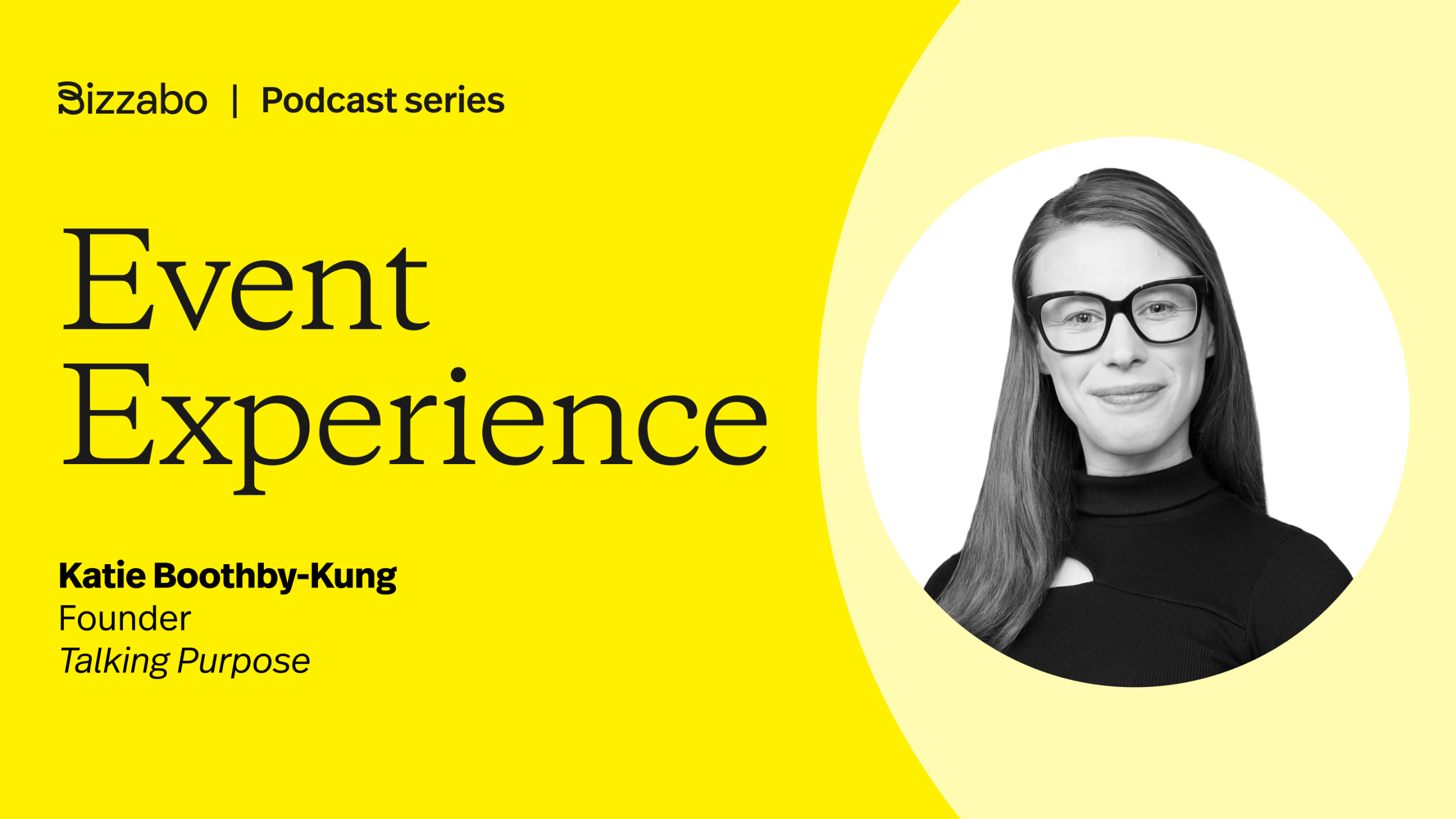
In this episode of Event Experience, Katie Kung, founder of Talking Purpose and former social entrepreneurship lead at Shopify, explains how e-commerce brands can use in-person events to build brand awareness, drive sales, and create memorable customer experiences. She argues that event ROI extends well beyond on-site sales, spanning exposure, content, influencer coverage, and email capture that all feed the wider sales funnel. Kung shares her four experiences framework, covering the product, online, in-person, and founder experiences, and warns that a weak website is the fastest way to lose customers you just won at an event. For event professionals, the core lesson is to treat every event as one strategic piece of the sales funnel and to make sure the online experience matches the in-person one.
E-commerce events give online brands something no ad campaign can: the chance to put a product directly into a customer's hands. In this episode of Event Experience, host Rachel Moore sits down with Katie Kung, founder of Talking Purpose, who previously led social entrepreneurship at Shopify and cut her teeth in event logistics on the tour team for Prime Minister Harper. You'll hear her signature idea of taking a brand from 2D to 3D: most e-commerce companies have no brick and mortar presence, which makes an event the only place customers can see, feel, and smell the product in real life.
Kung makes the case that event ROI is always there, even when on-site sales don't cover event costs, because exposure, influencer content, and email capture all feed the wider sales funnel. She shares how a pop-up at the Eaton Center attracted major Canadian influencers like The Birds Papaya and Mary Berg, then breaks down the two biggest post-event funnel leaks and where founders should focus first for growth in 30 days. For enterprise event organizers, this episode is a useful lens on portfolio thinking: every event is one touchpoint in a longer journey, and the teams that win connect the on-site experience to everything that happens after attendees go home.
"This is a chance for a business to go from the 2D, which is their online store, into the 3D." — Katie Kung, Founder, Talking Purpose
"The ROI is always there when it comes to events." — Katie Kung, Founder, Talking Purpose
"Influencers, they are waiting for somebody to make their job easier, and if you're able to provide them with that moment in time, then there they are." — Katie Kung, Founder, Talking Purpose
"You have the product experience, the online experience, the in-person experience, and the founder experience." — Katie Kung, Founder, Talking Purpose
"So 30 days, focus on your product page." — Katie Kung, Founder, Talking Purpose
Enjoyed this content? Subscribe to our newsletter and get insights like these delivered straight to your inbox.

Rachel introduces Katie Kung, who traces her path from the tour team for Prime Minister Harper through social entrepreneurship at Shopify to founding her own practice helping e-commerce brands build experiences online and offline.
Speaker: [00:00:09] Welcome to Event Experience by Bizzabo, the podcast where we bring the best and brightest event experience leaders together to share stories, tips, and lessons learned from creating some of the world's biggest events.
Speaker: [00:00:22] I am Rachel Moore, your podcast host. Go with me into the world of e-commerce as we welcome Katie Kung as our guest. Katie shares her expertise on how e-commerce brands can leverage in-person events to build brand awareness, drive sales, and create memorable customer experiences. We're merging the physical and the digital worlds in this interview on Event Experience.
Rachel: [00:00:56] Right, but we're back everyone, with a new episode of "Event [00:01:00] Experience." I am your host, as always, Rachel Moore, and today's guest is on a mission to prove that purpose-driven brands can grow and grow well, more to the point.
[00:01:09] After leading social impact initiatives at Shopify, she now helps e-commerce founders build smarter sales funnels through better customer experiences, stronger communities, and standout brand moments both online and in real life. So I am thrilled to welcome Katie Kung to "Event Experience." Katie, thank you so much for joining me in your world of e-commerce, and also, I believe from Edmonton in Alberta, Canada.
[00:01:33] Is that right?
Katie: [00:01:34] Alberta, Canada. That's right. Yes, Rachel, thank you for having me. I'm so excited to be here
Rachel: [00:01:40] Me too. I remember when I came across your profile, I was super excitedI see the words e-commerce and that's mixed in with, again, you know, we're talking about events, and I'm like, "Ooh, let's say more about that." And I just gave a super brief intro to you. I would love to get toss it back to you.
[00:01:54] Could you tell us a little bit more about you, like kinda like your role and what your day in the life is? Like what [00:02:00] comprises your day as you work in your standout industry in e-commerce?
Katie: [00:02:04] Yeah.
[00:02:06] Well, I mean, like you said before came from Shopify, so I led social entrepreneurship there at Shopify for the last three years that I was there. For the last four years, I've been working at Agency, and so I was doing-- I kind of straddled a couple of different things, wearing a couple different hats.
[00:02:19] So, helped on the sustainability side, so working with, you know, very large corporations think about their sustainability strategy and how to market it and communicate it to their audience. And then also events. You know, coming from my past, past life, obviously we did a ton of that at Shopify all the time.
[00:02:38] But that kind of love affair started when I was on the tour team for Prime Minister Harper. Uh, And so that's really was able to, as they say, cut their teeth in the event and logistics space and really loved it. And so I'm now out on my own, and I absolutely love it.
[00:02:54] I get to work with e-commerce brands help them, like you said build brand experiences [00:03:00] both online and offline. So it's taking that online e-commerce shop and making sure that there's a very clear but also delightful customer journey, and also being able to translate that into in-person moments, whether it's through events, pop-ups, you know, just possibly having in-person interviews and things like that.
[00:03:20] Just being able to create those experiences that people get to see and feel your brand and understand it more and wanna shop from you, of course.
Rachel: [00:03:29] Love it. Well, I mean, I think that's the goal of all of our listeners too. I mean, they essentially are like, "Hey, here, please shop at my brand where I'm..." You know, what- whatever we're doing, product, service or whatever, and whoever the audience is, that's what they're trying to do is connect with that audience so they do shop there.
[00:03:43] So, excited to get into this with you in a little bit. First we're gonna do some get to know you questions, a little more on the personal side.
Katie shares her hard-won lessons on event day footwear, the entrepreneurship podcast she can't stop listening to, and the guerrilla pop-up campaigns catching her eye on LinkedIn.
Rachel: [00:03:51] First thing I'll ask, I ask all of our guests when you're facing one of those really long days at an event, what are your go-to on the ground event day shoes of preference?[00:04:00]
Katie: [00:04:00] So as we said before we started this podcast, I spent a long time thinking about this answer. I don't know why but I actually just loved it. It, I just thought it was such a fantastic question. So, let me tell you the genesis of my shoe my shoe choices. So back when I worked for Harper you know, we still had to be very business-y, but we were on our feet all the time.
[00:04:23] It was still in the era, like pre-COVID, you know, I used to wear pencil skirts to work. Like, you still had to look. Like, there was no sneakers on this
Rachel: [00:04:32] No
Katie: [00:04:33] And so I invested in my first pair of flats that had, you know, like that cushiony inside, but it also had a heel, and that's the key for arch-less flats, is that you need that heel, right?
[00:04:45] 'Cause it gives you a little bit of arch support. So they were called Louis De La C, I bought them, and they lasted forever, I swear. They were bulletproof. I was so sad when I had to finally throw them out. And I did learn along the way the shoes that you [00:05:00] don't wear for your go-to event shoes.
[00:05:01] I used to do this trade show. It would kind of travel all over the province of Ontario, and we would be in hockey arenas agricultural show floors. So I was wearing Blundstones, and then by the end of it, I actually couldn't walk, and I didn't realize that Blundstones are so stiff that your foot doesn't have full range of motion.
[00:05:23] And so I managed to like mess up my knee and like the ligaments in betwe- and anyways, it was a whole thing, and then my physiotherapist was like, "You cannot wear Blundstones walking around for 12 hours a day." So now that we're in the post-COVID, like sneakers are professional, And I have these ones, actually.
[00:05:42] They're not sneakers. They're more like slip-ons. They're from Amazon. I have no idea what they're called, but they're just these like black. They cost like $30. They are fantastic because you can spill anything on them. You can like rinse them off. You still look cute, but also professional if you're wearing like a bit of a suit.
[00:05:59] Anyways, I [00:06:00] love them. They're super cheap, super affordable. You can replace them anytime. Those are my go-tos.
Rachel: [00:06:04] Oh my gosh. And the best part is, and that's what I'm saying too, is like sometimes we'll get, you know, people will drop the brand name or whatever, and obviously, you know, we love that because people looking like, "Hey, let me go shop for that." But sometimes you just encounter the right thing. You're like, "I don't know where this is from.
[00:06:20] I don't know, I, you know, I know where I got it." I-- But hey, if it's-- Hey, oh my gosh, when they're affordable, that's even better, 'cause, you know, shoes can be so freaking expensive. But I love that you tapped into the right one and that, and more importantly, you know the wrong one to wear, which
Katie: [00:06:32] Yeah.
Rachel: [00:06:33] Yeah, because my story. There's my storytelling on shoes
[00:06:36] love it. No, because yeah, you gotta go on that journey where it's like, let me just kinda figure out what works and what does not work. I still remember one time my mom had like beq- we have the same shoe size, which is lovely, has been lovely all of our lives. But she bequeathed unto me some really cute, like solid black slip-on sneakers.
[00:06:53] And I wore them like for a couple hours one time. I'm like, "Oh, these are great." And then I wore them to an event, and I, must've been the socks or [00:07:00] something, they were not great that day. I still have them, and they work great now. Like, I literally could wear them. I think they just had to, they had to get used to my feet.
[00:07:07] But man, last thing you wanna do is end up on a, an event ground floor, and then you're just like, "And we're in pain." So thank you for sharing that. I love your journey. I encourage anyone else who's listening, if you're on this podcast, please feel free. We can expand on what, what made you arrive to your best shoe.
[00:07:22] So, next question.
[00:07:24] Is there anything that you're listening to, reading, or watching these days that you just can't put down? And it doesn't have to be work or event related.
Katie: [00:07:32] Ooh, good question. I think that now that I'm in my entrepreneurial journey, I really have come to appreciate "Work Party." It's a podcast by Jaclyn Johnson and she is just s- such a powerhouse of a female entrepreneur. She does events as well, like she knows the power of events, this woman, And she's just so fantastic, but they just interview the most interesting people, and [00:08:00] like I said, now that I'm kind of in it with these women, I really appreciate it even more
Rachel: [00:08:05] I love that. That's great. Yeah I, it always is find-- You know, once you're kind of in something where you're like, "Okay, new experience," but I-- you know, you need to find your people, right? And man I love finding that kind of stuff too, 'cause you're passively listening and also just very much commiserating with everything they're going through too.
Katie: [00:08:20] Right, exactly.
Rachel: [00:08:22] Awesome. And then finally, is there a particular social post or a piece of media or even a hot take about events that you might have found interesting lately?
Katie: [00:08:32] Ooh
Rachel: [00:08:34] Or anyone you like to follow or
Katie: [00:08:36] That is a great question. I think it's not a hot take necessarily on events, but I do love following Dream Day on LinkedIn. They're a PR company, and they also-- I s- I've seen that they've started getting into the realm of these, like, pop-ups and again, like these sort of guerrilla moments. They recently done with Ritual, and like I said, you know, love e-commerce, [00:09:00] but my first love was politics, and so it was about how Ritual's gotten kind of into the women's health space, and they did a bit of a pop-out up around Washington, D.C.,
[00:09:09] and so that was really cool
Rachel: [00:09:11] Awesome. Oh my gosh, that sounds super interesting. I too, I love, I love-- I dabble in politics as well, so I would find that really interesting too. It's funny 'cause like I got to go to South by Southwest this year,
Katie: [00:09:21] Ooh
Rachel: [00:09:21] and they did a "Peaky Blinders" pop-up which was probably one of the most interesting ones, and I'm a huge fan of the show, so it was really fun to go to that.
[00:09:27] But I love that kind of stuff, so that's cool.
Katie explains why event planning is a craft that spans every industry, and why in-person moments are often the only chance customers get to see, feel, and smell an e-commerce product in real life.
Rachel: [00:09:30] All right, well, without further ado, I'll kick this off by teasing out, you know, something we always include at the end of each episode. I ask each guest for a piece of advice that they'd give to our audience, and sometimes it's a tough thing to do because, like, people have very broad careers over many years, and I'm saying, "Pick one thing," you know, to tell the audience.
[00:09:49] They're like, "Oh, okay." But something we often hear on repeat is the advice is that event professionals should branch out from types of events that they plan to learn from other verticals and industries [00:10:00] and even audiences, purposes, et cetera. And that was one reason why I was so excited to bring you on.
[00:10:05] I know we tend to, on this podcast, talk to event planners who are executing for, you know, software brands and things like that and, you know, or mostly like B2B things. And that's fine, but I'm really interested to hear more too about e-commerce more broadly and especially bringing you on with your expertise.
[00:10:23] So that's what I'd love to hear from you. Your experience, like how is experiential marketing for e-commerce unique from, and maybe also similar to other types of event and activation? Would love to hear from you for that.
Katie: [00:10:35] Good question. I think a lot of it is the same. Like, I see event planning as a craft and not necessarily like a subject matter expertise where you're kind of like you're in agriculture or you're over here, like you said, in tech. Like events kind of span all of those, and if you have the foundation, it's, you're usually in a good place.
[00:10:55] You know, you need to understand who your audience is, what change you're [00:11:00] driving, what experience you want them to have how you want them to feel when they leave. Like all of these things are still very important when you host e-commerce, whether it's a pop-up or, you know, a small brand activation or for Ritual, you know, like having a, a moment in politics.
[00:11:18] And I guess it's probably the same for some of these people who are doing B2B, like you are wanting to drive sales. Like that is still the experience that you want people to have when they're there. And a lot of the times with e-commerce like they're not in these big box stores.
[00:11:34] They probably don't have a brick and mortar shop, and it's really usually the only time that you get to actually see, feel, smell their product in real life outside of maybe it's a marketplace or something like that. But this is a chance for a business to go from the 2D, which is their online store, into the 3D.
[00:11:55] And so a lot of times when I'm giving advice to brands and how they build their [00:12:00] website on Shopify I, always say to them, "You know, you need to make the 2D 3D," because there shopping on their online store and they're like, "What does this smell like?" You know, "How big is it? I can't really visualize it."
[00:12:12] And the event space or being IRL is that chance, and it's really a big moment for a lot of these e-commerce brands, 'cause they're usually quite small. They don't have massive marketing budgets, and even within that marketing budget, an event is probably just a small portion of their marketing budget. So they really want to be able to knock it out of the park.
[00:12:32] And so a lot of times it's bringing their product as a showcase so that they can bring in their, either their loyal customers or new fans, and have it so that people can really see and feel it. 'Cause I imagine that for some of these larger brands, most people have experienced your product. And so, you know, coming to your booth at a trade show or seeing, you know, a massive event where you're doing maybe a customer appreciation, like people know what your [00:13:00] product is.
[00:13:00] But when it comes to e-commerce, a lot of the time people haven't had a chance to see that. And again, it's thinking about that budget when you want to showcase your product and thinking about who it is you want to reach and how do you build that experience with your product. And so I'm sounding a little bit convoluted, but for some people, you know, you wanna be raising awareness, and so that's bringing just, you know, your hero products and being able to say, "This is who we are.
[00:13:28] You're gonna love us. Just try us, you're gonna love us." And they're in that top of funnel. And then, you know, you're getting into the awareness phase and you're really wanting to sh- do a bit more storytelling in that phase. Or you're bringing people in, like you see some of this with some of like luxury brands, for instance.
[00:13:46] Like you're talking to those loyal customers and maybe you're bringing them like an exclusive product that they've never seen before, and they're able to experience that in real life. And so it really is, most of the [00:14:00] time it is product focused, but it's how can you create that experience knowing who that, the audience is and where in the funnel they are or who you're looking to target because it's part of your marketing strategy.
Rachel: [00:14:14] This is all so fascinating too, 'cause like, and now that I think about it too, like I know I, I have been to trade shows and events where, you know, you are maybe seeing, you know, you're able to touch and feel the actual thing that people, you know, are just displaying. And I love the way you put that, going from 2D to 3D, because that's exactly right.
[00:14:31] Like, you know, you're going from screen to in person and now, and especially for a lesser-known brand. And that's, I guess that's what I'd like to ask you next too, because, you know, you gave some great examples there about like how, you know, you could bring your hero product or products, you know, the things that you know are driving the most sales that are, you know, causing more interest or possibly unleashing something new onto the world and being like, "This is your exclusive time to be able to touch and feel it."
[00:14:54] So knowing that you do work across the online or 2D growth and real world [00:15:00] experiences, 3D growth areas,
Katie: [00:15:01] Wow.
Rachel: [00:15:02] Oh, I know. I'm I, I'm like, I'm like, ooh, I'm,
Katie: [00:15:04] Should I change my bio 2D and 3D growth? Like, wow.
Rachel: [00:15:08] I love it because that just really... i'm a visual learner too, 'cause I was just like, "Ooh, I see it."
Speaker: [00:15:14] We'll be right back with more Event Experience after the break
Speaker 3: [00:15:17] Event enthusiasts, are you hungry for the latest event trends and insights? Pop open your laptop, pull up your favorite browser, and head to the Bizzabo blog, that's B I Z Z A B O dot com forward slash blog, for fresh perspectives and expert takes on what shaping the world of events. Plus, subscribe to get blog updates sent to your inbox every two weeks, and never miss an article from bizzabo.com/blog. Do more that matters with Bizzabo.
Katie makes the case that event ROI is about far more than on-site sales, from influencer content to email capture, and shares how a Toronto pop-up attracted major Canadian influencers.
Speaker: [00:15:49] We're back with Katie Kung to get real about how in-person events boost sales for e-commerce brands
Rachel: [00:15:55] So talk to me about that though, because like let's say I am an e-commerce brand and I [00:16:00] am, you know, maybe I'm s- kinda a little small potatoes. I'm not a household name or anything, and I am trying to do that, build brand awareness. I'm trying to also just like wanna move product and stuff.
[00:16:08] So, if you are an e-commerce brand doing that, like, how are you seeing that like events in person are, is that really, is that tending to drive sales a lot for them because they are showing up in person? Is that really giving a boost and, you know, bump to their people finding them online and learning about them, and then gaining new customers?
Katie: [00:16:25] Yeah, and the answer is yes, 100%. Like, the ROI is always there when it comes to events. Like, even if, you know, you walk away and the sales you make at that pop-up or event aren't going to cover your event costs, what you get in terms of exposure content, the lead up to it, all of it, it becomes ROI, and it just it becomes part of your sales funnel.
[00:16:51] Like, people start to know you. You know, like, when you run one ad on, on Meta, you know, they're not immediately going to buy from you, and are you [00:17:00] like, "Oh, my... I guess my Meta ads don't work," because they saw it once and they didn't, they didn't immediately buy. Like, this is part of your sales funnel, and so you have to think about that.
[00:17:11] Like, this is part of the sales funnel. It isn't the sales funnel. It's not, yes, they might have purchased, but how can you think strategically about how that event lives on in people's minds for longer? It's making sure you're collecting emails. It's making sure you're engaging with influencers and the media.
[00:17:30] Like, that is by far the easiest thing you can do to get exposure for your event and exposure for your brand, is to have an event and invite as many local influencers as you possibly can. Because you're saying that, "I've created a space where you now don't need to think about how to make content, because I made it for you.
[00:17:50] All you need to do is show up, drink my drinks, and eat my food." "And you don't even need to buy my product if you're just talking about the [00:18:00] event and how awesome it is." You know, we did it for a brand who ran a pop-up at the Eaton Centre, and it was an incredibly successful event where we invited, you know, we had The Birds Papaya posting about it. Like, it was crazy. Like, these are, again, like, these are local Toronto, for those of you who don't know, these are local Canadian Toronto big deal influencers. We had Mary Berg who's a TV personality, talk about it and show up and, you know, all these things were happening.
[00:18:29] And again, like, that is just free content for you because you've created a space where these people want to come. Like, influencers they are waiting for somebody to make their job easier, and if you're able to provide them with that moment in time, then there they are.
[00:18:47] And, you know, you're able to build relationships with people. That's the other part of this sales funnel. You're meeting, as the founder. I talk about, you know, the four experiences. You have the product experience, the online experience, the in-person experience, and the [00:19:00] founder experience. You're also creating that founder experience at these events.
[00:19:04] You're meeting people. You're meeting potential customers. You're meeting loyal customers. You're meeting influencers that maybe you can work with and do some partnerships with. You know, there's so many opportunities at events. You just need to think about them strategically and not as a once a moment in time.
[00:19:21] Sure, as an event planner, like your heart is racing because you know it is the moment in time and everything needs to be perfect, and oh my gosh, the printing needs to be done, and this. But as an event planner in e-commerce, and even as a founder who's, you know, working with an event planner, it's thinking about how this fits into your sales funnel at the end of the day, and how you can capture those additional pieces of information so that you have people coming back to your main piece of real estate, which is your online store, and not your once in a moment pop-up
Rachel: [00:19:56] I so appreciate that you call out it's, this is not [00:20:00] the sales funnel. Like, y- I think so many people get stuck in that rut. And even if you know you've got other things going on, you know you've got other ways you're promoting your brand, it can be very easy to get myopic about an event, especially 'cause it's, you know, can be a large expenditure, right?
[00:20:14] And they're like, "Oh, I'm just seeing this as like a one and done, and if we did not at the booth close a bunch of sales right there and make up everything we needed for the event right there, oh, it was a failure." But instead you're like no. Hold on." You know, it's like this is you, you-- that's a drop in the, many drops in the bucket hopefully, but it, there's this way bigger picture.
[00:20:33] And I wanna ask you that too, because obviously that can be an error in thinking that somebody makes in just perceiving that event as the sales funnel instead of part of the whole thing.
Katie identifies the two failure modes that waste event investment: skipping the post-event follow-up, and sending excited attendees to a website that undercuts the experience they just had.
Rachel: [00:20:47] What are the biggest leaks that you see in most e-commerce sales funnels where there may be missing opportunities?
[00:20:49] And then how would you tell founders to fix those quickly?
Katie: [00:20:52] I think the biggest one is the follow-up and making sure you know who's there, who's in the room, who is shopping from you at that [00:21:00] particular event, or if there's even... Like, maybe you're having an event that isn't even about shopping at all, but, like, making sure you know who's there, making sure you're doing the follow-ups, the thank yous, making sure that they know that you appreciate the time that they put in.
[00:21:13] And you know, any follow-on posting and things like that, that you can do so that this event lives longer than in that slice of time. The other biggest leak that brings us back to the 2D world, if you don't mind me calling it that, is that people come to an event and they're so excited. "Wow. Oh my gosh this popup was so cute.
[00:21:35] Oh my gosh, I'm, like, loving the smell of this perfume. I want more." Or like, "This hand cream, I love it. I'm I'm so obsessed." Go to the website, garbage. Garbage website. Just like no navigation. Your product photos are clunky at best. They don't know where to find that amazing hand cream they just fell in love with because it's just a disaster.
[00:21:59] And, [00:22:00] you know, it's one of the main leaks when it comes to running ads as well, is that you're putting all of this money and marketing investment into one thing to drive attention to your main point of real estate, and it's like you forgot to mow the lawn and buy the charcuterie plate, and all you have is water and bread to offer these guests, and then they're leaving being like, "They were so nice, but that was so shitty."
Rachel: [00:22:28] Yeah.
Katie: [00:22:29] Right? Like, you want them to then leave, and like I said, maybe they don't buy things, something at the event 'cause they didn't have a need for it, and then they come back and they're like, "My mom would absolutely love it. I need to buy it for her immediately." They go on and they're like, "Ugh, horrible." And then they leave, and that, that's it.
[00:22:45] That's a customer gone. Like, that's a churn, and you probably won't get them back because they had such a wonderful experience, and it's almost like you kind of tricked them into going to your website, and it didn't level up [00:23:00] to what you did for your event. And so making sure that when you go into your event that, yes, the event is done and you've hired a great event planner or manager to put it on for you, and then going back and making sure that when they land on that main piece of real estate, that it is top-notch.
Rachel: [00:23:17] You're kind of reading my brain too here because I know in the past, like I've had people ask me, and I work in marketing, they're like, I don't understand, you know, w- a website. Like what's a domain? What's the hosting? What's the CMS?" And all that stuff.
[00:23:28] And I'm like, "Oh." And I have often used, I'm like, "It's like a house. Like you've got your lot is the hosting, you know, you have to have it somewhere. Your domain is your address, your actual like what do people, how do they find you. And then the CMS is the house itself. And if that sucks, nobody's gonna wanna come to your house party."
[00:23:45] And you know, you could have the best flyers ever. You could have like, you know, put these like awesome signs out there and invitations and they're glorious. And everybody's like, "Oh my God, I totally..." You know, and again, send samples and whatever, and then they show up and they're like, "Ew." Um,
Katie: [00:23:58] Exactly
Rachel: [00:23:59] it's [00:24:00] such a great point to be like that consistency of, and this goes back, consistency for both points you made.
[00:24:06] Follow up on the people who are interacting with you at the event, and then make sure they're getting that same epic experience that they saw you in 3D, and then moving to 2D and saying this is... I'm still epic. Everything's
Katie: [00:24:18] Yeah.
Rachel: [00:24:19] and and people apparently, you know, if you're not doing that, you need to.
[00:24:23] You need to make it epic for everybody the whole way through, right?
Katie: [00:24:26] Exactly. Exactly
Rachel: [00:24:28] Oh, man. Well, awesome insights there too.
Asked where she would focus first with a 30-day growth window, Katie points straight at the product page, balancing the emotional story with the logical details shoppers need to buy.
Rachel: [00:24:31] And so now,let's think about a purpose-driven e-commerce brand and you know, you are you know, talking about growth for these brands and really trying to help them 'cause that's what they want, right?
[00:24:41] They're like, "Look, we want more sales. We wanna make sure we're scaling up and all this stuff." But it's a, if it, for a purpose-driven one if you wanted to help them grow over like say the next 30 days, and that again makes my brain hurt as a marketer 'cause everything to me is very long term.
[00:24:56] I'm like long game, but then you're talking 30 days. Where would you focus [00:25:00] first if that was your turnaround to say, "Let's make things grow for you in 30 days"?
Katie: [00:25:05] Good question. I actually, fun fact, I have a freebie on my website, Talking Purpose and that is exactly it. It is how to make sales in your first 30 days. And again,
[00:25:16] but really it does come down to building that customer journey for when people come to your website.
[00:25:20] Like, just keep it simple. Like, you don't need to have 10,000 products. You don't need to have 10,000 menu bars. Like, you really just need to put yourself into the the shoes of your, hopefully they're comfortable, the shoes of your customer and have them head to your website and decide, "Would I buy this product?"
[00:25:42] A lot of the times websites fall down because yeah, the homepage navigation, all that kind of stuff, but it really comes down to actually the product experience that you're building on your product pages. So, for example, like whether you feel good or bad about Amazon is irrelevant. [00:26:00] It's largely very ugly experience.
[00:26:02] But are you getting the dimensions? Do you know if that, you know, cheap shelf you're buying for your daughter is gonna fit in her dorm room? Yes, because it's there. You know how high it is. You know the color. You know the material it's made of. It looks like wood. Oh, but it says it's not wood. Okay, good to know.
[00:26:20] Like, you are putting it all on there. A lot of the times founders will give you this flowery story about, you know, "This water bottle is green, and it will make you feel like you're walking on a spring day." And like, sure, okay, fine. Like, you are wanting to create, you know, that aspirational piece of the customer, so it's like tapping into the emotional side of making a sale.
[00:26:44] But then you also need to tap into the logical side of the, like how big is it? How much water does it hold? Is it gonna fit in my, car cupholder, that's the one. I want to know all of these things because I'm not going to buy it if I don't know. Like, people [00:27:00] selling jewelry, like how long is it?
[00:27:01] How long is the chain? Because how awful is it that you find this necklace and you think it's gonna go with a dress, and then it hangs down to your belly button, and you're like, "Oh, they didn't tell me that, and the pictures didn't really look like that." And so it's again, it's bringing that 2D into the 3D world, and you can do this through photos.
[00:27:19] You can do this through video. You can do this through your description. And like I said, the aspirational piece is important because shoppers are emotional. But you do need to tap into that logical side of their brain, where they're able to see it in real life. They're able to see it in a living room.
[00:27:35] And this is why those AI tools work really well, especially for like furniture companies and things like that, because you're like, "Okay, I think I can conceptualize what this looks like," but then you're able to take it and like get... Have you seen those where you
Rachel: [00:27:48] Yeah. Oh my God, I love it. Turning
Katie: [00:27:51] the 3D fit for clothes, and you're like "Okay, okay, now like And then how easy, like how easy is it for you to see [00:28:00] all of this stuff on a product page and go add to cart?
Rachel: [00:28:02] Yep,
Katie: [00:28:03] Like, why do you think Amazon's so successful? Because it's making me so easy to add half of this junk, it's junk, into my cart. And so if I go to someone who's a small business a for-purpose small business who's selling something amazing, and I look through it and it's as easy as, you know, I know exactly where this is gonna fit, I know exactly what I'm gonna wear it with, boom, add to cart, purchase, done.
[00:28:25] That is how conversions are made. So 30 days, focus on your product page.
Rachel: [00:28:30] That ma- makes
Katie: [00:28:33] That was a very long answer. I'm so sorry.
Rachel: [00:28:33] it's great because, I mean, I think that's where people-- And you do, you just have to really think about and make it as easy as possible. And again, I'm gonna speak from marketing brain. You know, we always talk about copy. It's like, you know, you might have very highfalutin concepts, but let's be honest, a lot of people, you know, if they're reading anything, they're reading it like at maybe eighth grade or less level nowadays.
[00:28:52] You've gotta make it simple. You've gotta make it so wide more-- it can be more widely understood. Same thing happens when you're shopping. The easier they can get to that decision [00:29:00] being like, "Is this the exact thing I'm looking for? Yes. Then I'm going to add it to my cart." And that's such a great point.
Katie shares where listeners can connect with her, and leaves the audience with the two emotions every event should deliver: surprise and delight.
Rachel: [00:29:06] And I have the final easiest question of all for you. Where can our listeners find and follow you online?
Katie: [00:29:13] Ooh, thank you. You can find us or me at talkingpurpose.ca, and so I actually have my own podcast, so if you are in the e-commerce space and you're for purpose, then you can check out Talking Purpose wherever you find your podcasts. And for me best to connect with me actually on LinkedIn. I love LinkedIn and it's Katie Booth B Kung, and you can just reach out, follow me connect with me, and I love to chat with people there
Rachel: [00:29:41] Awesome. That's wonderful. Thank you so much.
Speaker: [00:29:52] Katie's advice for all of us to skill up our event experience boils down to two key emotions
Katie: [00:29:58] I loved always hearing this [00:30:00] at Shopify, specifically from the UX designers, is always surprise and delight.
Rachel: [00:30:07] Oh, love
Katie: [00:30:08] I'm-- Perhaps that's, like, been said before, and so I don't wanna sound bland, but, you know, there's... It doesn't matter if you're hosting a government reception or if you're hosting a trade booth at some fishing show.
[00:30:27] There's always ways to build interaction with people and experiences for people to have with your brand or your business or whatever it is that, you know, you walk away with a smile and you think, like, maybe you're never gonna buy from them, but like, "Man, wasn't that fun?"
Speaker: [00:30:45] Thanks again to Katie Kung for joining us on "Event Experience," and thank you for listening. If you're enjoying the show, we'd love to hear it. Connect with us on social and subscribe, rate, and review us wherever you're listening. Also, don't forget to share the show with your colleagues [00:31:00] and friends
[00:31:00] You can find transcripts of each episode and key takeaways on bizzabo.com/podcast. On behalf of the team, thank you. We'll gather again soon for a new episode of Event Experience


