
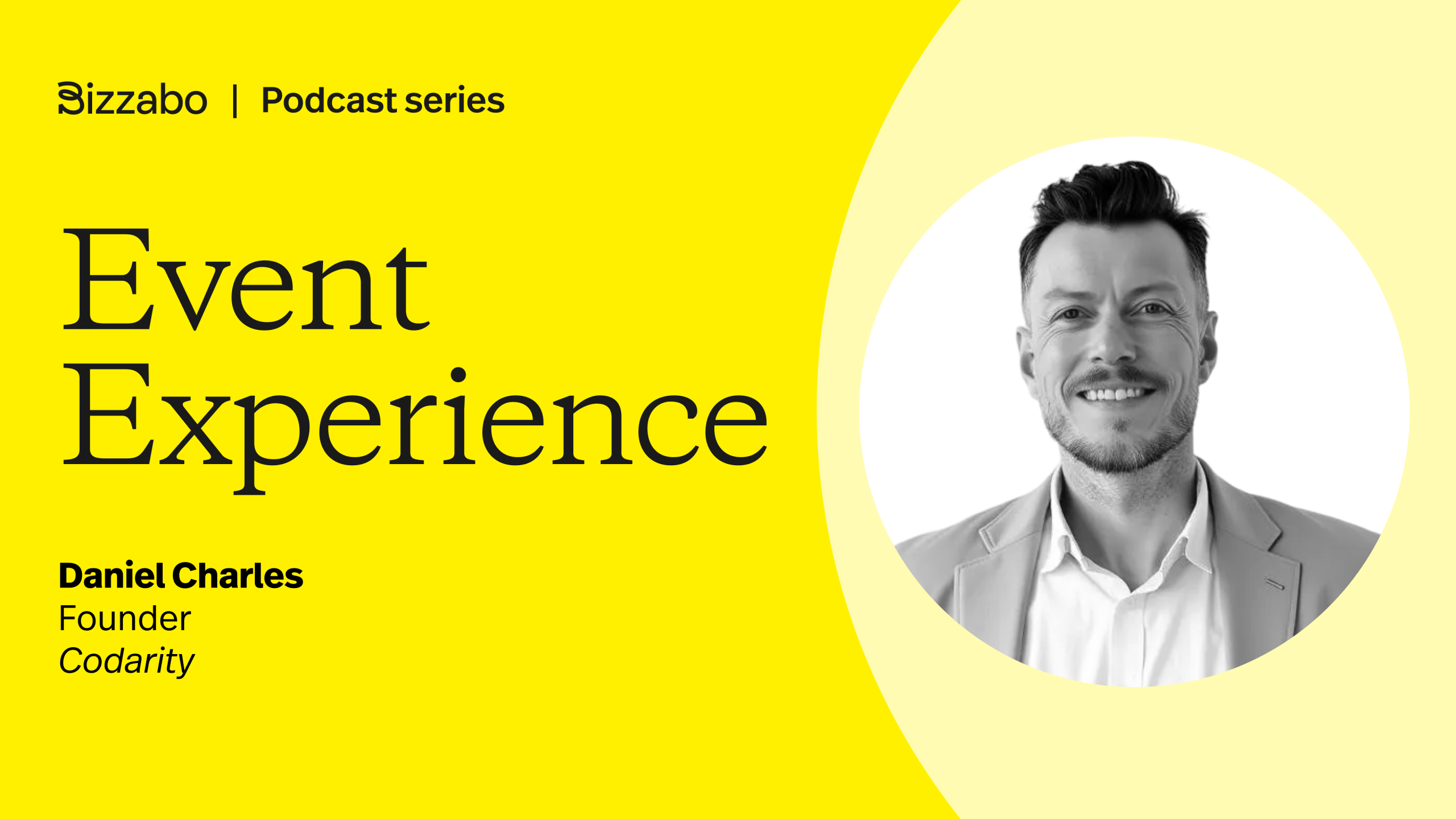
In this episode of Event Experience by Bizzabo, host Rachel Moore sits down with Daniel Charles, founder of Codarity, a performance marketing agency tailored for the events industry. Daniel shares how he transitioned from music A&R and event production into helping event businesses escape the feast-or-famine revenue trap.
He breaks down the Evergreen Event Profit System, a framework that helps creative professionals generate consistent income year-round. From defining ideal client personas to implementing smart automation and lead-nurturing systems, Daniel reveals how event planners can build a sustainable pipeline without sacrificing their creative edge.
Rachel and Daniel explore common mistakes like relying too heavily on referrals, neglecting analytics, and vague customer targeting. Instead, Daniel champions a data-informed, content-driven approach that blends creativity with scalability, using automation and AI to attract high-quality leads and convert them more reliably.
What you’ll learn:
Enjoyed this content? Subscribe to our newsletter and get insights like these delivered straight to your inbox.
[00:00:09] Rachel Moore: Welcome to Event Experience by Bizzabo, the podcast where we bring the best and brightest event experience leaders together to share stories, tips, and lessons learned from creating some of the world's biggest events.
I'm Rachel Moore, your podcast host. From music to Event Marketing, we're about to go on a journey. The journey of Daniel Charles, founder of Codarity. As he shares with us the challenges of revenue cycles in the events industry.
By partaking of this episode, you'll understand the importance of ideal client personas. The role of automation in marketing, and the need for strategic marketing efforts in our competitive landscape.
Let's leave behind the feast or famine uncertainty in this episode of Event Experience.
[00:01:00] Rachel Moore 1: We're back with a new episode for you of Event Experience and I'm excited to tell you just a little bit about today's guest.
After scaling events from 60 person venues all the way up to 3,000 plus capacity shows in working in the music industry, our guest today discovered why most event businesses struggle with uncertain revenue cycles. Can we all holler about that? That's very recognizable.
Today. He is the founder of Codarity, a Marketing Agency specializing in the events industry and helping clients add millions in predictable revenue, emphasis on predictable.
I'm thrilled to welcome Daniel Charles to the podcast.
Thanks for joining us, Dan.
[00:01:40] Dan Charles: Hey, thank you Rachel. Great to be here today. Thank you.
[00:01:42] Rachel Moore 1: Yeah, it's awesome to have you and, um, I, I can't wait to dig into some of the things I just teased out. there about your bio, but uh, i'm gonna segue now into some get to know you questions so we can know a little bit more about you. So, when you are spending a whole day on the event, at an event on the ground, what are your shoes that you're gonna be wearing to make sure you get through the day successfully?
[00:02:01] Dan Charles: This is something I kind of, um, was thinking about and like, if I'm honest, I like wearing the Chelsea boots because they, they look smart, but I've got these kind of inner soles in them, so they're really comfy and cushy on the feet. They look smart, but they also kinda have a bit of sturdiness in them as well, so that your feet don't get completely, you know, you don't get flat foot from walking 30,000 steps in a day. But also as well if like an unexpected kind of potential person you want to kind of network with or something like that kind of is there, you're kind of still looking the part as well.
[00:02:35] Rachel Moore: Excellent. Very nice. I dunno if we've had Chelsea boots on here before as far as a wreck. So this will be really great to include in our, we, we ask every guest that. So, uh, we've got a nice long list of some really good, uh, recommendations.
Is there anything that you're listening to, watching or reading these days that you can't put down and it doesn't have to be related to events.
[00:02:54] Dan Charles: Yeah, so, um, I am reading a book called How to Think Like an Emperor, the Art Stoicism. I'm not massive hardcore stoicism, but I really love the philosophies behind it. And a lot of it is kind of very much about focusing on what you can control and trying to let go of the rest. And I feel like in this world, everything's so busy. There's a million things going on. I dunno about you and the listeners. But, there's a lot going on, every day.
It's hard to find the bandwidth sometimes. And so, I find that that kind of, actually just reading that and applying some of that just gives me a lot of calm in the storm and I'm getting a lot outta it and been listen, you know, checking up on that philosophy for about, sort of six years now, and it helped.
Just before 2020 and all those challenges and things, it really helped me see through that. But I've kind really embodied a lot of that moving forward. And yeah , it's been, um, very rewarding and
[00:03:51] Rachel Moore: I have a feeling that'll, that'll be something a lot of our listeners might wanna check out. 'cause if anyone, we're all looking for calm.
[00:03:57] Dan Charles: Yeah.
[00:03:58] Rachel Moore: And just, just something to help us get through.
Is there a particular social post or a piece of media or even a hot take about events that you found interesting lately?
[00:04:07] Dan Charles: Yeah, so there was a really awesome post I saw recently about a guy who I've been following for probably 12 plus years. To be fair, when I first started learning to market events and things. I started following his content and he's not an event marketer per se, he was just great at what he does.
The guy's name's Rand Fishkin to some people might have known him, but the post was about how he, does his content marketing. And the great thing is it's like, he rather than kind of telling people what they do wrong and then just going, you are doing this wrong and you should do it like this.
He's positioning as genuinely as an advocate for his audience. Right? And so it's kind of like, showing a lot more about the struggles and the challenges that they have, and then positioning himself as much more of an ad advocate for that.
And then he's basically just letting his case studies, testimonials and all those kinds of things. Do the selling on the kind of the bottom of the funnel. He just always has a super fresh approach to everything he does, and it's, it's so cool. He's very smart on kind of industry trends and things like that, but I kind of, never really thought about it like that before, but I was like, that's a really, a really interesting take.
And, um, yeah, salute to Rand Fishkin. He's always been adding value and I've learned a lot from him over the years.
[00:05:25] Rachel Moore: Well, I'm gonna go follow him after this 'cause I don't, I, I, maybe I am already, but I'm gonna go check it out 'cause I'm always into that stuff too. But thank you so much for that, that recommendation. Awesome.
[00:05:33] Rachel Moore 1: I'd love to toss it back to you first and give you an opportunity.
Can you tell us a little bit more about yourself, about Codarity and just like your kind of what your day-to-day is in the events industry?
Tell us a little bit more about that.
[00:05:42] Dan Charles: Yeah, sure I'd be happy to. So, my name's Dan Charles and I am the Founder of Codarity, and we are a Performance Marketing Agency who specialize specifically on the event services.
My background is in music A&R. I used to do label distribution, which led on to kind of audio engineering and so forth. And naturally from that I started running my own events where we started scaling from kind of 60 person capacity, small intimate events all the way up to 3,000 plus productions.
That's kinda where I really got to know a lot more about the events industry and, um, met. Tons of event pros throughout the years and kind of realized a lot of 'em were all struggling with the same thing.
They were awesome at what they were doing, but they were really going on a bit of a feast or famine rollercoaster.
Eventually I had to stop kind of doing the events because I started a family and I couldn't really do
the kind of 3, 4, 5 in the morning finishes anymore, four days a week.
Unfortunately, it was a little bit of a unsociable kind of time, especially when you've got little kids and things. So, I kind of moved into starting my marketing agency and that's where I developed the Evergreen Event Profit System.
So, right now I'm rolling out our free growth readiness assessment, which is an interactive scorecard that event businesses can take. It's kinda like an a. A business diagnostic, as it were, that shows event companies exactly where their growth bottlenecks are and what to tackle first.
Ultimately my bigger vision is to become the go-to performance marketing agency in the events industry so that creative professionals never really have to worry about seasonal slumps or feast or famine cycles again.
The core of it is turning creative excellence into predictable profits.
[00:07:21] Rachel Moore: I think you just had, that was music to people's ears to be like, "Oh my gosh, you wanna let me actually focus on being a creative, uh, event planner versus like..."
'Cause we all know, everyone listening to this knows the bottom line is always very important. And that's what we're doing this for is because of, revenue is an expectation when you're putting on an event.
I do wanna dig in more into that because I, I think, You just told us a little bit about how you realized this was an issue, but I, I do wanna get into your origin story a little bit first.
How did you get started planning productions in the music industry? I'd like to hear a little bit about that, but also then, and then how did you realize, "Hmm, I have a superpower for scaling." And so tell us about how that evolved a little bit.
[00:08:02] Dan Charles: Yeah, I'd be happy it was quite interesting how it started because the place where we were working, we had like A&R distribution and we were working with all these different artists and labels and basically putting out their music for them. And I managed to scale that up quite well. I was like, "Oh, this is actually pretty fun."
But we wanted ways to promote artists and like local much better. And so, we started kind of looking at potentially putting on some events. Some of the artists and, and acts and people we had on were really well known, so they were quite easy to fill an event with and some of them weren't. So, it was like, right.
So there's a big difference here between like, having few hundred people in the event or having no one show up sort of thing. So it was very much a, "Well, hey, this was a great success" or "Ouch, this was no one here."
And so, I kind of had to learn how to get butts on seats as it were, you know, and that was the number one thing. And from that, I experimented with things like Facebook Ads in the early days and running hundreds of ads and just trying all these different styles and then not quite knowing why one ad would just work really well and one wouldn't. And then, kind of even creating different flyers with quirky angles on the flyers and posters and things like that, kind of gorilla marketing and things.
It really kind of got to that point where I was like, "Okay, so for the smaller kind of acts and things. There's different angles and quirks that you can kind of promote to make them more interesting."
And for the bigger ones, it's just really more about the profit and loss and the balance sheet sort of thing on those ones, making sure it works.
Yeah, and that led on to kind of building websites and all kinds of things and, and just kind of actually really enjoying it because I've got pretty good at it, you know?
[00:09:38] Rachel Moore: I love that you brought up too, i think that's something event planners today always are struggling with too. You just mentioned how hey, you've got a big name, you know, that's gonna be an easy draw and not gonna have trouble putting, as you said, the butts in the seats.
But if you get someone who's maybe like less known, yeah, super quality, right? You know, they are wanting to scale up their career and their performance and stuff. And I think event planners too, you know, whether they're working in music industry or something like that, where it's, you know, it's performers or if they're, you know, working in, in business conferences and stuff and they're like, "Okay, well what speakers do I get?"
And are looking those like recognizable names. We're the ones that are gonna give you an immediate draw. But you also struggle too, to say, "Okay, but we also need some fresh blood, if you will and like, what if we've got some really knowledgeable people out there that are gonna be great?" You have to convince people to buy into that, right?
You do need to take the risk. Go ahead and buy that ticket. Come and check this person out. You won't be let down. Right?
[00:10:31] Dan Charles: Hmm. Yeah, absolutely. And what we kind of found was that we would start trying to combine a lot more of these kind of smaller unknowns with the bigger names as well. When, when we started getting larger budgets and things, we couldn't really do that at the very beginning at all. So we had to do that quite systematically and strategically.
But what we found was that we could actually be a bit more of an authority because we were bringing these acts and bands and kind of artists and things forward to people where they would be starting to really trust. They go, "Well, I know this person, so I'm gonna have a great time either way." But what I actually really like is discovering the new talent and the up and coming and things like that, you know?
And so, that allowed us to hedge our bets in a lot of ways. And yeah, be a trusted source of events in our space. Which was pretty rewarding, you know?
[00:11:15] Rachel Moore: That's super smart way to do it too. It's like, bring the receipts right? And pretty much at anything, you're trying to convince anybody of anything, if you have that trust and credibility, that's gonna get you a long way. But you, you really saw the need and the benefit.
Let's build that trust then using the known quantities, which helped to get, then get you, uh, the trust you needed for the more unknown quantities and stuff. And that, that segues nicely actually into my next question. One of the reasons I really wanted to have you on the show is 'cause you brought something up in your bio that I think we're all familiar with.
And if the last five years, and I'm just talking five years, y'all, we all know what's happened in the last five years, 2020 to 2025, okay?
If the last five years have reminded us of anything, it's the fact of feast or famine revenue cycles. It's either raining, it's, you know, if it doesn't rain, you know, it's not raining, it's pouring, or it's a, you know, desert. It's a drought. And events, as our audience will knows, are meant to generate revenue for the brands that execute them in spite of feast or famine.
Can you share with us your approach for managing the uncertainty of revenue cycles? Like how it, it's, it's, it's a super, it feel, I, I already mentioned risky. It feels risky and it, it can feel very, not just uncertain, but scary for people. Especially if you're an event planner. You're like, "Okay, I hope this works." And I kind of feel like you, your approach might be able to take some of that uncertainty outta the equation for us. So yeah, what's your approach to manage that uncertainty in revenue cycles?
[00:12:38] Dan Charles: Yeah, so one of the key things we come across a lot when we're talking to new clients who are potentially interested in building out these types of systems and things is that they are in those cycles of feast or famine where they have the quiet seasons and the busy seasons. Naturally that's kind of a bit of a chicken and egg scenario because you're really busy, you're like, blinkers are on, I need to just do the work. Logistics, logistics, logistics. And I completely understand that. 'cause it's like a thousand things going on at once. There always is.
But then because of that busy season, it's very hard to put the time and the effort and the attention into things like that marketing and all those types of things as well. And so then when they inevitably to be going to acquire to season, it's already almost too late, you know, at that point because with events, there's often longer sales cycles, a lot more competition.
Especially kind of when you're looking at the corporate side, we work with a lot of kind of event agencies and audio visual companies, event planners and things who work on the corporate side. It can be a 12 month plus sales cycle. A lead can come in on January the first, 2025, for something in December 2025, and that is quite common. So in November you are quiet, you are not gonna catch that corporate lead from January because they've already got everything planned, you see?
So, it's a case of kind of looking at understanding that marketing windows need to be much wider and longer. Than they often are for event agencies and a lot of event agencies and event services, they tend to kind of use for example, events and things that they've put on as, as their kind of news cycle as it were.
That's great and you definitely want to be showcasing that. But the key I find is to have some form of evergreen approach, which is like a flywheel, which can be 365 days a year, not just like quiet season, 365 days a year, where it can be running ads for you around the clock sort of thing. You could be continuously publishing content on your website, blog posts.
You could be doing kind of PR and outreach and things like that, and then having systems which can kind of capture that interest and convert it into leads. Earlier rather than later on. My, my goal is to capture 'em whilst they're right out there in the blue ocean, months and months before they're even really thinking.
Because ultimately that positions event companies at more strategically. Rather than an order taker at the last minute. And we know order taking is kinda like, cut the price, do everything you can to get the deal across table, you know, and then you're like telling and then you're dumping it on your team and being like, right, so we've got this event and we've got virtually no money at all, but we need to kind of make it work. And then, um, the team's getting burned out and stuff like that, which no one wants.
So if you are in the conversation way, way earlier, you are positioning yourself more strategically and therefore there's more opportunity to talk about services, you can build your pipeline over a much longer period of time.
And ultimately, that's kind of how I sort of see it. And that's kind of what the methodology is to just actually have a system which can work for you 365 days a year. And therefore when you get busy, it continues to work 'cause you kind of got the momentum. And then when you're quiet, you are super grateful for it because it's actually still bringing in leads and nurturing people through your pipeline.
[00:16:02] Rachel Moore: That makes a ton of sense. It is something I think we've heard on the this podcast too, from other guests and even on Bizzabo's webinars as well, where, gone are the days where if you just had maybe, maybe one or two big events. Pillar events are doing the year, you're kind of treating those like, "Oh well, this, it's all around this. And then people will just, I'll just let it sit."
Set it, forget it, and you don't really come back to it. And that thinking is out the window. Because as you said, the competition is fierce out there. You really do need to be in the hearts and minds of those attendees and those leads the whole, every day of the year.
I have a, a follow up question with that too, because it's like, how much does automation, because my immediate thought was like, "Okay, I'm thinking of like an event team." You know, maybe they're real lean, maybe they don't have a ton of budget and obviously we do wanna do that, implement that 365 year round approach.
But, thinking of like the event planner out there's like, okay, so you're saying I've gotta, okay, email marketing, that means I've gotta write these emails how much of this can be automated where like you set up the system and now it's kind of like you said, running there for you even when, whether you're busy or you're slow.
Does that figure in and kind of like, what's your best advice for that kind of approach?
[00:17:16] Dan Charles: Yeah, absolutely.
So I completely get when I'm saying this, it's just like, they're like, "Wow, this just sounds like loads of work and and do need more work right now. You know?" So I completely get that. I completely do.
But yeah, automation plays a really big part in this. Because, ultimately, the way we kind of look at it is as you're kind of collecting that collateral from those kind of events and things like that, and you're getting those case studies and things like that.
Yes, it does require putting some time aside to kind of turn that into something which is useful. But if you can create things like, you know, nurture sequences and things like that, which can just be one email per week for 52 weeks of the year. You know, that's one thing where it's like, this is, and, and ideally those emails need to be of value, not just, "Hey, look at us. We won an award or whatever." That's fine. But it needs to be more around like, client X had A, B and C problem. We solve that problem with Y, and this was Z, the outcome kind of thing. You know, those kind of things.
Because ultimately there's gonna be people who are always coming in and out of those challenges throughout the year. And so, you are kind of being able to talk to 'em about how you helped with this specific thing.
And so, naturally with AI and things like that, you can absolutely scale up a lot of kind of content and ads and all these types of things now. So, it does really help to kind of know how to use some of those tools.
But what, one thing I would suggest, and this is a bit of a hack for people to kind of get stuff out, is if you dedicate, say, half a day or something like that, and you go to any, any AI system or anything like that, and I'm, I'm giving away some secrecy. I don't,
[00:19:01] Rachel Moore: I love it.
[00:19:01] Dan Charles: I haven't told anyone else this yet, but.
[00:19:03] Rachel Moore: Okay, cool.
[00:19:04] Dan Charles: Basically it works really well. What you can do is you can go to, we use Claude, but you can go to any of them and you go like, "Hey," you explain to it exactly what you do, what your business does. You spend a bit of time giving it loads of context around your business, your ideal clients and all these kinds of things. And then you can go, "What I want you to do is I want you to interview me is if you are an investigative journalist, one question at a time, and feel free to go down a rabbit hole if you feel it's worthwhile to my ideal audience. Otherwise, stay on topic."
And you can even transcribe it and things like that, straight in. And you can ask 5, 10, 15 questions, say half an hour or so back and forth.
And then you can ask it to basically consolidate all this down and it can actually create a plan and it can pick out your voice from that as well. How you speak naturally, right? So you're not AI-ing, just chatGPT, "three tips for blah, blah, blah." It's genuinely you.
And then it can scale that out into all sorts of email marketing kind of ads, pain points, angles. Like you could get an absolute ton of really good, valuable content, which is unique to you and your own perspective.
And so we do that with our clients when they first come on. We just basically interview them and go through this entire piece and then we have other systems for producing the content and stuff. But that can get you a massive way across the line.
We see it just great because authenticity is so important these days, I feel with AI and stuff like that. Yes, AI stay, but it can help you kind of build out that kind of automation. Like it could help you create a 52 email sequence from an interview.
Like that kind of thing.
[00:20:40] Rachel Moore: That's super. Oh, thank you for, for spilling that tea. It's funny 'cause like I, I've even been, you know, talking to the Bizzabo content team too. And we know AI, there's appetite for AI. know we're all mandated to use it. But, you know, and even then it gets back to what you were saying, we need to have this, this all year long, every day of the year approach to generating and, you know, creating that buzz, nurturing those leads, cold, warm, hot, whatever, uh, around our events, through our events, beyond our events in just all that time.
And again, how are we finding the time, the resources to do that. But that was a great hack. Thank you for sharing that. I've even thinking like beyond events, I'm like, oh, I could use that for some other stuff too.
I just feel like our brains can't really. Some of us might be still be trying to comprehend all the things that are possible with technology. And, you know, we're an event tech company, Bizzabo, and so we're always like, "Yeah, what else? what else can we add that can help in our platform?" Super insightful. Thank you for that.
Um,
We'll be right back with more Event Experience after the break. Event enthusiasts, are you hungry for the latest event trends and insights? Pop open your laptop, pull up your favorite browser, and head to the Bizzabo blog, that's B I Z Z A B O dot com forward slash blog, for fresh perspectives and expert takes on what shaping the world of events. Plus, subscribe to get blog updates sent to your inbox every two weeks, and never miss an article from bizzabo.com/blog. Do more that matters with Bizzabo. We're back with Daniel Charles, for real talk about what event planners should not be doing these days.
One other thing that drew me to you as a guest for this show is your willingness to admit mistakes that helped you learn along the way.
There's something we can learn from. I love it. I think we all love when people are like, "I did this wrong and don't do what I did. Do it better and righter the next time. Any practices and efforts that you would discourage for our our event planner listeners, based on your experience?
[00:22:38] Dan Charles: Yeah, so, we get quite a few people who come through and they've, they have specific problems and things like that, and a lot of the time fall in a few different areas. One of them is just relying purely on referrals and word of mouth. And I absolutely love them. I'm not bashing referrals at all, they are fantastic, right?
Everyone loves a, "Hey Rachel, meet Dan. He can help you with X, Y, and Z." You know, no one's bashing that at all. But with the economy and everything's so turbulent these days, people are turning over, people are moving in and out of companies and things like that all the time. And we've had clients where 50% of their revenue was from one big client, right?
And then the person at that company moved and then the new person came in, changed things up, and then, "Oh, we're not gonna work with you anymore. We're going a different direction." Half the client's revenue. In a blink of an eye, you know?
And so, and they were referring work for years, and he was just heavily reliant on just that kind of business to kind of keep him topped over.
It's kind of like really, again, treating that marketing as an afterthought, it's, oh, I'm getting some referrals and stuff. I can just rely on those. And you should always be doing nurturing referrals, but just relying on those, it, it, especially nowadays, it's, it's very, very risky in my opinion.
I feel like a few other things are just, we work with some big agencies and things who've come on and we go, "Okay, cool. So have you got any kind of like metrics on what's kind of been working in the past for you" and they're like, " We have a spreadsheet, which is kind of like, got a few rows of stuff, but we think it might be out of date or not quite sure. The team doesn't quite know how to use it and it gets updated every now and again"
And we're like, "Right, okay, you're doing. Seven figures and you are using a spreadsheet to track" you know, so just having even some very fundamental tracking in place of where things are coming from. What kind of happened to attract these kind of people.
Did they turn into recurring business and things like that. And you absolutely, you could do that with a spreadsheet, but if you're gonna do it with a spreadsheet, just try and get a bit of a system in place for it. Right?
Get it regularly updated on a weekly basis. Have a few columns with maybe some statuses and dropdowns and things like that as a bare minimum. But if you're doing any kind of advertising at all, we've seen clients who've spent like multiple thousands of pounds on things like Google ads and not had any tracking in place at all, and they're like, "oh, we get some leads. We get some really bad ones. We get some great ones. Don't really know which ones are which."
[00:25:12] Rachel Moore: Oh no.
[00:25:14] Dan Charles: Yeah, so, so it's kind of, and that stuff, the pain, like no one likes it, it, it sucks to have to do that, you know? But, I think one of the things is with a lot of event people is they're quite creative.
Some of them want to step away from the analytical side of things and some of them love the analytical and don't like the creative. The way I see it is we kind of all need to be a bit left brain, right brained on this kind thing. And ultimately that's some areas where I see big opportunities for, event businesses to just get way, way better insights. 'Cause then they're like, oh, okay, well this one thing's working really well.
So, I can keep working on that and do my referrals and just keep working on this thing.
I suppose one other thing is as well, , without going down a complete rabbit hole here, is we speak to a lot of people who kind of come through and they don't really know who their ideal client persona is.
[00:26:04] Rachel Moore: Right.
[00:26:04] Dan Charles: So it's, you know, they're like, we, we can do any kind of event for any kind of business, right?
And I'm like, "Okay, awesome. But the problem is if you're kind of everything to everyone, then you're kind of nothing to no one as well. And so, I just say ultimately just really try and build out a really clear, ideal client persona. And, if you position all your messaging towards that ideal client persona, you will attract other people in as well.
That's just the nature of the internet and, and marketing and so forth as well. But if you are promoting through that filter first, , you will get a lot more of your actual ideal clients coming through and.
It does deter the kind of the tire kickers and the people who you're not gonna be profitable on. And it same goes for when you're kind of promoting events for, you know, selling tickets and all those types of things as well. Just absolutely understanding your ideal client is, is critical these days.
Again, AI and stuff can help with all those kind of things, but I would say many, many event businesses don't even have a definition of their ideal client.
[00:27:08] Rachel Moore: That might come as a surprise when people when you say it. But I mean, I'd be interested to like even poll some of our, our listeners of this show might be like, "Yeah, I try to get this all the time. Maybe, and we, we have a really hard time like nailing it down."
And a lot of that sometimes can come from that anxiety especially people who don't get marketing and maybe aren't, aren't tracking as a dely as you mentioned too. And those are all really great points, I so appreciate that. Because it's like, you literally are trying to throw a dart at a dart board that's a whole room. And you're like, yes, but are you, are you hitting the target you wanna hit? Where is the target? You know, it's like you could be hitting across the room from the actual target you wanna be hitting and like, that person's never gonna buy from you.
You're not actually marketing to everyone. You're not actually trying to get every kind of attendee to come to your event. You have a very specific one in mind. Sales teams can help with that, you know, and be like, no, I can tell you. I love that you mentioned that too, where like you've got one big client that's like your whole half your revenue, and if that person at that, that brand leaves, that is now in question and probably going away.
Well, go look at that person then. What kind person was that? Was that, you know, what was their persona? What was their demographics? What kind of business was that? You know, what was their annual revenue? What, what industry were they in?
Start painting that picture, but such good tips I, I have a feeling a lot of our event planners are like, yes, we want all of these things and this will help a ton and I really appreciate it to the left brain, right brain thing too.
I always think of it. I'm not an event planner per se. I work in marketing, but that creativity, that always, that balance between creativity and and analysis is always there where you're like, "I've got a great idea." Well then your next instinct should be, "Great. I wanna prove it was a great idea," so I'm gonna put it out there, but we're gonna track the crap out of it to make sure that it was like, can I prove that it was good? Or it was like, oh no, I just, I was the only one that thought it was good. You know? So it's really important to do that right?
[00:28:56] Dan Charles: Yeah. Absolutely. Yeah. Yeah.
[00:28:58] Rachel Moore: I wanted to ask. Okay. Again, speaking, I'm a, I'm a marketing person and we're talking about events, and a lot of what you're, you've shared about being able to scale these events does have a lot to do with marketing and tracking and really knowing how to get the word out, how to nurture, how to target the right people for these events.
As we look at all of the traditional and even out of the box marketing efforts that we all like to use or hack our way through and use on repeat, is there anything that you think event planners and marketers should stop doing or stop using because it just doesn't work anymore?
I'll give an example. I worked for a company years ago and the internet was alive and well and, uh, had been for a while and the CEO of this company was convinced that the marketing team, we needed to plan a webinar.
Where we were gonna invite journalists to come and listen to the CEO talk about how awesome the company was and what they were doing, and we had to explain to the CEO that is not how journalists work anymore.
You have to serve them a story on a silver platter. They are not coming to a webinar to hear you rave about how awesome you are, and they're gonna make a story outta
We're dealing with someone who's like, well, that's the way we did it and it worked. Not recognizing that doesn't work anymore because that's not how this works anymore.
And if the answer's no, I mean, listen, because I, I think the answer to this might be, "it depends, but, that's kind of where it's going because I, it can be so easy talking about bandwidth and resources to set it and forget it. Be like, well, this is what we've always done. We've done this for four or 5, 6, 7 years.
Well, that is a different world than it is today. Yeah. Is there anything that, that you see in like the marketing or, you know, scaling things up that do you think people are doing that's like, "Why are you all still doing that? That doesn't work anymore. That's not how the world works anymore." Anything like that?
[00:30:55] Dan Charles: Yeah, absolutely. So, we had a client, uh, a while ago when we kind of first brought them on board. They were relying really heavily on cold outbound only, and they had a really big sales team of like SDRs and kind of sales reps and stuff. And it was just pound the phone all day, every day, a hundred dials, you know, smile and dial and just calling all these businesses.
Now, there isn't that many event businesses out there, right? They're compared to other, you know, compared to like mortgage brokers or plumbers and things like that, right? The total addressable market isn't as big as other ones where you can just absolutely volume, volume, volume.
[00:31:34] Rachel Moore: Yeah.
[00:31:35] Dan Charles: And so their solution at the time was to just bring on more SDRs, to do more cold calling, more cold email, and all these kinds of things. And their CEO at the time was like, "No, like SEO, content, ads. None of that's gonna work at all, like, no, no, no. It's all direct to, you know, find a decision, make it, call 'em, pitch them and stuff like that."
But the sales director, uh, and head of marketing, they really wanted, they were like, "Look, we are burning out, we're scaling the team and we're not getting any better results here. This is kind of crazy. We're just spending loads and loads of money on this."
And it's not, it's not saying cold outbound and stuff like that doesn't work. 'cause it absolutely does, but it just needs to be a lot more strategic. I mean, I do cold outbound. I know many clients and agencies who do, right?
But, the way we kind of positioned it was "Okay, again, if you had an ideal client persona, what would that client look like?" So we kind of profiled that, and then the CEO was like, "Yeah, I, I can get on board with that. If we had five or 10 of those a quarter coming to us, we would be in a good place. So we just basically started creating content as a kind of a very small trial.
They're a big, big agency, but as a small trial, we started creating content around the problems that that ideal client persona had and this was kind of like before AI and stuff. So it was like Google was, Google still is massive, like no discredit in that at all. But it was quite easy to kind of rank for like, long tail keywords and things like that.
And we went really, really prescriptive with these keywords. It was kind of like very descriptive with the types of problems and things and we're just creating all these articles. And CEO was like, I don't think this is gonna work. We kept going for three to six months or so and saw these rankings approach and we were getting 5, 10 hits a month on a blog post, right? Not much per, per kind of blog post.
And then first lead comes through from it, and then they kind of, "Oh, oh, okay. It's a six figure event." Like, you know, from, from, from one blog post sort of thing. And he said, like, specifically, I read this article, I, I, forgive me, it was quite a while ago, I can't remember, I read the article. And it really resonated with me, your approach and your solution to that problem and how you would tackle that.
So I wanted to have a chat with you and naturally that converted into a six figure deal. So that was like a 30 XROI on everything they was spent with us in one go.
[00:33:58] Rachel Moore: Wow.
[00:33:59] Dan Charles: And the CEO was very much like, oh, like could we scale this up a bit?
I'm like, yeah, you can absolutely scale this up. Right. You know? So then I kind of gave him a more. A longer term strategy.
We scaled that up and, it worked massively. It was so great and, and yeah, they continue to kind of get more and more kind of qualified leads and as a result, they were able to scale down the SDR and we were able to build content that supported their sales team as well and kind of helped their sales team actually go, "Oh, that's great. Yeah, our CEO actually had a really great idea about that specific problem you had missed a potential client." And then.
And you can absolutely do the same on the event ticket side of things as well, if you're trying to bring people in, like for example, if it's a conference for example. They might have specific kind of exhibitors or brands and stuff. You solve specific problems so you can kind of create content around those types of things and use that as collateral, you know.
But yeah, that was quite a, a good turning moment there. I was like, "No, just trust, trust the process. I know it's work.
[00:34:58] Rachel Moore: Well, and I like that you said too, I mean, this goes back to the, the sales cycle can be very long on events and stuff like that, but, um, obviously, you know, they were trying something that well, wasn't really working.
It's not to say that a cold outbound doesn't work, but you should be measuring that. Again, it can be one person, a decision maker, be like, Nope, this is what's gonna work and we just go with that. But thankfully there was that openness to say, "Well, let's try this too and see which one's working better." And then, like we said, the receipts came through and they didn't lie.
So thank you for sharing that. Yeah, that's, , just something to think about too. Like it's, it, if it's not working for you, if it's actually not working, even though it worked in the past, you always need to be iterating and, and an analyzing like, what are we doing and , what's working best? And then stop maybe doing as much the thing that doesn't work.
[00:35:44] Rachel Moore: Finally, easiest question of all.
Where can our listeners find and follow you and Codarity online?
[00:35:51] Dan Charles: Yeah, sure. So you can find me mainly on LinkedIn. That's my kind of primary channel https://www.linkedin.com/in/dancharles/.
Now you can find me on now at Dan Charles. We believe it is on LinkedIn. And, uh, you can check out our website as well, which is Codarity.com. That's Codarity.com
I try and put out regular useful kind of blog content, like with frameworks and useful insights and things like that, uh, on there on a regular basis. And, uh, you can learn more about our agency and what we do.
You can follow me on the other kind of channels and things as well, but LinkedIn and the website are definitely the best places to find the most info about me and what we do.
[00:36:29] Rachel Moore: Is that a, um, that assessment that you mentioned at the top of the show, is that available on your website as well?
[00:36:35] Dan Charles: Yeah, absolutely. So you'll see some call to action buttons throughout the site, kind of like, uh, you can get started where you can book a call or you can opt in for the assessment. And the great thing about the assessment is it takes about three minutes so you can kind of jump in there and yeah, it's interactive and it's, and I've had loads of people say "it's really, quite fun and engaging sort of thing."
And, um, it will give you a, a breakdown of kind of where you might be struggling, where you're doing well, and kind of give you some guidance on specifically what you could be doing to kind of move on to the next steps.
Yeah, you get a nice score and kind of a breakdown on all of those different sections. It's about 15 questions, I believe it is. And um, yeah, you get it instantly, which is quite fun.
So three minutes, fill out the questions, instant results.
[00:37:27] Rachel Moore: To skill up your Event Experience. Dan is adamant that we should really and truly know our customers.
[00:37:34] Dan Charles: The number one thing is really just know your customer better than anyone else can know your customer. And it kind of goes back to that ICP, the profiling piece like that.
But if you, if you genuinely put your time, energy, and resources into understanding your ideal customer better than anyone else. Their problems, their hopes, their dreams, their aspirations, what their goals are, what their lives look like. Not to the point of stalkerish. I'm not saying go knock on their door and ask what they for dinner.
[00:38:06] Rachel Moore: At least not so they know.
[00:38:08] Dan Charles: But exactly. But you know, are they luxury shoppers? You know, do they believe in kind of expensive brands? Do they kind of travel a lot? Do they kind of spend a lot of time in hotels?
Like all these kinds of things can really help you paint a very clear picture of them. And because of that, when it comes to creating kind of content and things like that, where. You, ideally want to stand out from the crowd.
Authenticity is there because you are coming from your genuine self. And then you can, you know, you can kind of talk to them on a level like, "Hey look, I get you, I've been there, this is the challenge I see that you are probably facing as well. This is how I specifically kind of solved it. I hope it helps" kind of thing.
[00:38:49] Rachel Moore: Thanks again to Daniel Charles for joining us on Event Experience, and thank you for listening. If you're enjoying the show, we'd love to hear about it.
Connect with us on social and Subscribe, Rate, and Review us wherever you're listening. Also, don't forget to share the show with your colleagues and friends. You can find transcripts of each episode and key takeaways on Bizzabo.com/podcast.
On behalf of the team, thank you. We'll gather again soon for a new episode of Event Experience.


