
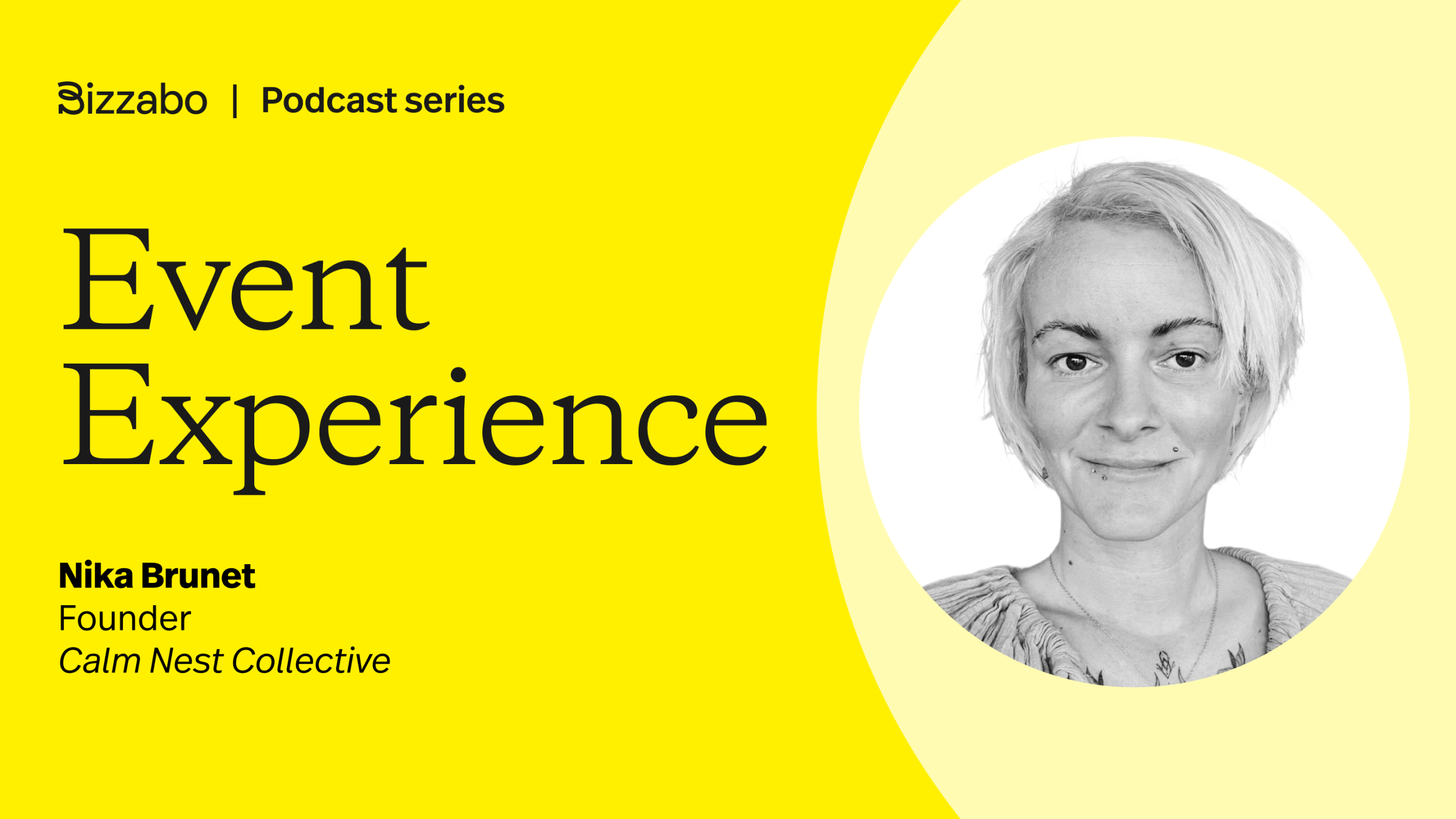
In this episode of Event Experience by Bizzabo, host Rachel Moore speaks with Nika Brunet, founder of Calm Nest Collective, about designing sensory-friendly, inclusive event spaces. Nika shares how her background in social work and IT led her to address the lack of well-being and neurodiversity support in the events industry.
She explains how sensory rooms and quiet spaces help attendees and event professionals regulate, recharge, and stay engaged. The conversation also covers practical ways event organizers can incorporate inclusive design, from creating calm environments to offering thoughtful alternatives like non-alcoholic options.
Nika emphasizes the importance of listening to attendee needs, collaborating with communities, and starting small. By prioritizing wellbeing and accessibility, event professionals can improve engagement, retention, and the overall event experience.
Enjoyed this content? Subscribe to our newsletter and get insights like these delivered straight to your inbox.

Rachel: Welcome to Event Experience by Bizzabo, the podcast where we bring the best and brightest event experience leaders together to share stories, tips, and lessons learned from creating some of the world's biggest events. I'm Rachel Moore, your podcast host. Adjust your volume, check your screen brightness.
Rachel: And find you're comfortable for this episode featuring Nika Brunet, founder of Calm Nest Collective, about creating sensory-friendly, inclusive spaces in events and public venues. Together, we explore practical strategies for integrating wellbeing and neurodiversity considerations into event planning, emphasizing the importance of asking questions, designing refuge spaces, and fostering a more inclusive event experience.
Rachel: [00:01:00] Alright, everybody, welcome back for this next episode of Event Experience by Bizzabo. Let me tell you a little bit about our guest. First of all, I am your host, Rachel Moore, in case you weren't aware, but I'm not the most important person here. Our guest is, and I'm excited about our guest today.
Rachel: She's the founder of Calm Next Collective, a consultancy and design studio creating sensory friendly spaces and inclusive sustainability strategies for events, offices and public venues. This is born out of over 11 years in the events world and a realization that wellbeing and neurodiversity were chronically and are chronically underserved.
Rachel: A social worker and a PhD researcher studying mental health and neurodiversity in the events industry. She's on a mission to make events, workplaces, and public spaces calmer and kinder and more inclusive. I am gonna delight in this episode. I can already tell. Please [00:02:00] join me in welcoming Nika Brunet to the show.
Rachel: Nika, thanks for joining us on event experience.
Nika: Hi everyone. Hi Rachel. I mean, you've described me so perfectly. I have nothing to add.
Rachel: Oh, well, we're gonna dig, we'll learn more about this, but yeah I remember when I first read your bio, you know, kind of like, you know, scoping out guests and stuff. I'm like, well, this is something we definitely need more of. I know we've had past guests that have touched on the topics we're gonna cover today.
Rachel: Very important. You know, there's so many aspects to events, but man this is definitely one that I, I'm very excited to be bringing to our audience. But before we do that I am gonna kick it back over to you. 'cause that was, it was a good bio, but I can't take full credit for it.
Rachel: I did get it from you, but I wanna hear more from you. Can you tell us a little bit about yourself, your role, kind of what your world is like? Please include any, any stuff around pets or, or family or anything like that. But Nika, tell us more about you.
Nika: What to say? A mom, definitely two kids, two grownup kids already, which just tells you how old I am um, spending my [00:03:00] time between Europe, UK, and Africa. Really, I would consider myself a citizen of the world because I was born in Yugoslavia and maybe the older. Listeners will understand or remember what that was.
Nika: It was a country way back.
Rachel: Yeah.
Nika: It existed way back originally from Slovenia. But yeah, I'm a social worker as you've said, but I just briefly worked as a social worker. Started my career. Interesting enough in it. Computer chick played games a lot. So really an avid gamer in my youth. Quake too, if somebody remembers, oh my gosh, this is really old.
Rachel: I love this.
Nika: And yeah, stayed in corporate world for decent seven years and then transitions to events industry spontaneously um, and stayed there ever since. COVID hit, obviously this is a big thing for us in events. And long story short, this was one of the backgrounds for calmness Collective because I saw just How demanding and how high pressure this industry is and how my colleagues, including myself are suffering. [00:04:00] And I just decided. First of all, it's time. It was time to finish my PhD. And then I got the feedback and the results and people contacted me answering the questions on my research. And I just figured its situation is much worse than I thought it is.
Nika: And yeah, this was basically the final notch. And so Calmness Collective was born amazingly in a times where economics are shit. So, but this is my life story. I mean, it just could it get any harder? Probably not. Maybe, yes. But still it's challenging enough to found a startup, non-tech startup by the way, because startup is everything about tech and AI, which we are not.
Nika: And yeah here we are now trying to get people understand what we are trying to do, why what we are trying to do is really good for everybody and not just for us, nor divergent ones. And trying to prove that it really works for everybody.
Rachel: Love it. Well, we are on a mission. We're gonna help with that cause to make sure everybody's aware of why this is important, if [00:05:00] they're not already. And again our audiences are all event professionals, so they're probably in the midst of everything you just described and being like, you know what, yeah, I'm gonna take a little bit and listen to this and learn about what I need.
Rachel: But first, before we get into kind of the depth of what Calmness Collective does and what, you know all these things we're gonna address with wellbeing and neurodiversity in events. Let's do some get to know you questions. So, in the events industry, something that's pretty normal is being on your feet for, I don't know, it's 10, 12, 14 hours a day, you know, especially if it's, you know, at like an all day thing.
Rachel: So, burning question in our minds is do you have a favorite pair of go-to shoes you like to wear when you're on the ground for that long?
Nika: Yep. Non-paid promotion, but Viva barefoot all the way
Rachel: Ooh. Nice,
Nika: I'm into barefoot I mean, I ditched everything else, and I do have them in all shapes and sizes. And I, this is my go-to travel shoes, working shoes, office shoes. That's what you'll see me in.
Rachel: If anyone from Viva is listening, I think you have a perfect [00:06:00] uh, spokesperson right here because Yeah, that's, I do, it's one of my favorite questions to ask because we've actually, I think people take notes and they're like, well, I need a shoe. I'll try something else. So that's great. Is there anything that you're listening to, watching or even reading these days that you cannot put.
Nika: I am currently, I just finished listening to an audio book. It was about a psychic medium and the stories behind or the stories he got his name is Michael Newton. if somebody is into this kind of topic, I can definitely recommend it. it's that kind of book that gives you a little bit of a solitude and a little bit of a hope as well.
Nika: So,
Rachel: Oh, very cool. That's great. I see. And again, I love hearing some of these recommendations, like things that kind of help me, you know, get out of maybe a bubble I'm in of like, well, here are the things I like, but lemme go dabble in some other stuff. I love it. And then finally is there a particular social post or maybe a piece of media or even a hot take about events that you found interesting lately?
Nika: I think that what actually is. A good thing is that [00:07:00] from what we're trying to do with Calmness Collective, I'm seeing more and more posts people putting calmness, wellbeing, and mental health into the events agenda, which makes me genuinely happy. We still have a long way to go, but at least we're moving to the right direction.
Nika: So every single post on neuro inclusion accessibility that I see on LinkedIn gets my like,
Rachel: Yes.
Nika: a comment just for reach.
Rachel: Oh, I, and see, I love that you already know too. You're like, I know how to push this up the algorithm, when we give it some support by commenting on it, I agree. And this is gonna kind of help segue us into kind of more the questions and really learning what your approach is to this and what our approach in turn as event professionals can be.
Rachel: But, I also have appreciated, we're seeing way more of that and yeah, I'm sure there's a lot of factors. Maybe it's coming outta COVID, you know, even on LinkedIn, when I look at that, it's like, I feel like we're talking more about whole person considerations rather than just like, leave that at the door.
Rachel: We only want your professional self on this platform. Everybody's like, no, we're gonna talk about everything. I love that you [00:08:00] point that out, that's really important. And let's get into this though. I wanna kind of set the stage for our listeners, because obviously we've teased out we're gonna dig into neurodiversity and wellbeing in events, which we're in short supply of we need more, more support for this. But first I'd like to find out for our listeners, can you describe to us the size and type of events that you at Calmness Collective and yourself help impact?
Nika: Well, we're actually working with everybody and everywhere. I usually say it's if an event has more than 20 people, you are my client. It's already needed .
Rachel: Yeah.
Nika: and, I'm coming from festival events world. I was working on large scale music festivals. This was my home or still is my home in a way.
Nika: That's definitely something that I would absolutely recommend it. But then there is really everything from corporate events to intimate. Away days. Even that corporates have like team building events and public events, all of the events. And then it's not just events then it's also offices, corporate environment public [00:09:00] spaces, schools, airports.
Nika: I mean, you wouldn't believe I can really start counting and it is just the benefit is there no matter where we, where you put this kind of sensory space, it doesn't have to be mine, but any kind of sensory space, any kind of calm, quiet corner zone that has some kind of sensory impact um, it works.
Rachel: Again segues. I, I, it's almost like I couldn't have paid you to like do this better, but you're bringing, you're helping get into each question very awesomely, but yeah 'cause like you are describing like a big music festival you know, and even if you've never been to that, you've probably been to something similar or even, you know, event planners about playing these kind of things.
Rachel: I love that you point out, it's like anything with over 20 people and that's such an important point in a self is that can feel overwhelming for someone who is like, listen, maybe I don't have wellbeing right now. And or I, I have some neuro neurodivergence and I'm just like, there's just stuff about this that is not helping me be comfortable and be my best in this environment.
Rachel: And I think, [00:10:00] so thinking of that, I want everyone listening to this to think about the last time you were at an event or planned an event where we're all kind of immersed in that sensory overload. You know, you're talking about over 20 people in a space, talking or even shouting, you know, sometimes, 'cause it's all that chatter, music playing noises from the activations I remember I've been in they'll do like sponsored happy hours right after like trade shows and you're in a bar where it's just all bouncing off the walls and you can just feel like I have to yell to even be heard.
Rachel: And it's just a lot. And even the hvac, so even like heating systems and weather, if you're talking about outside it, it can be a.
Nika: as well.
Rachel: Oh my gosh.
Nika: Hmm.
Rachel: be a lot. And so it's hard, like we're all imagining that right now. It's hard to fathom how calm can be infused into those event environments to foster that inclusion for neurodivergence and wellbeing.
Rachel: We'll be right back with more event experience after the break.
Rachel 3: [00:11:00] Event enthusiasts, are you hungry for the latest event trends and insights? Pop open your laptop, pull up your favorite browser, and head to the Bizzabo blog, that's B I Z Z A B O dot com forward slash blog, for fresh perspectives and expert takes on what shaping the world of events. Plus, subscribe to get blog updates sent to your inbox every two weeks, and never miss an article from bizzabo.com/blog. Do more that matters with Bizzabo.
Rachel: We're back with Nika Brunet to get super practical about how to infuse calm into the chaos of in-person events.
Rachel: I wanna ask you that question. How is that possible? Like, if I'm thinking about that kind of frenetic environment I'm in, how are you able to bring calm into that situation? What kind of stuff do you do?
Nika: Well, I think the most honest answer is you don't actually remove the energy of the event. You just create a refuge within it. That's the biggest thing. It's actually [00:12:00] the key is to give people somewhere to go where they need to regulate. And I'm sure that many listeners will understand, you know, sometimes you're sitting at a meeting with 20 people and suddenly you feel like, oh my gosh, let me just go on the toilet.
Nika: Or Oh my gosh, I gotta go and take a smoke. It's not about a toilet. And it's not even about the smoke, it's just your body. Send a signal to your brain. We need a breather. It's maybe a little bit too much for us. And of course when I say that this refuge, it can be just a quiet room with lower lightning reduced sound some fidget toys inside low steam zone.
Nika: And I think it's really important to understand that it really works. And even, you know, I always. I like to joke, but it's 21st century and you don't have to go to the toilet to feel better. You should, we should do better and we should do better at an event at an office. But this is what most people do.
Nika: And I did have quite a lot of feedback from people telling me, yeah, this is what I usually do. And I do it myself as well. I remember, a lot of times at the conference, for [00:13:00] example. Thousand people, plus the energy is there. The noise, the light, the stages, the buzz. Everybody's pulling you in various different direction.
Nika: Take my business card, do this and do that. I just went out back to the hotel. Or outside in a park just to grab a coffee. I mean, I don't do it like for two or three hours, but like half an hour, just gimme a little bit of a break just to catch a breather, just to decompress and regulate myself and then I can come back and once I come back I'm fully energized again.
Nika: And the truth is also, you know, you usually we're speaking about attendees of the event, but this is the same for the crew. This was actually my main objective was working with an event crew because I know how overwhelming it can get. I am one of them. I know how it works. I know how I feel. I am neurodivergent, but trust me, this is really working for everybody.
Nika: If we can make it work for Neurodivergent person, it really works for everybody. So, yeah.
Rachel: Oh, well. So I would love to hear an example of this too. 'cause you're so right. 'cause I think we all default so [00:14:00] often on this podcast too and now when we're talking about events attendee first, right? We're always like thinking about the attendees. Yes, we'll have, you know, neurodivergent people or people who just need a bit more extra calm attention in an event and we wanna make sure we take care of them.
Rachel: But taking care of the event professionals themselves, the ones who are putting on this very frenetic event and they're immersed in it. So I'd love to hear about this too, like, can you share an example of, and I know I even like on our, um, our notes, you know, I position this as a, for attendees, but maybe I can hear it from you, from the event professionals.
Rachel: So the person who's helping execute this event, you know, or whatever aspect it is. How do you do that? Like, how do you approach that and say, Hey, let's make sure we're setting up space for the actual event planner. So you can stay sane, you know, in the midst of this thing that you're also working on right now.
Nika: Well, I think quiet sensory rooms are really the best example of that really done thoughtfully. And I know that event organizers, and even in corporate environment, people still think that you need to turn your office [00:15:00] or your event upside down to make it really inclusive and work for neuro divergent people.
Nika: But this is not the case. I think just thoughtful design from start to finish and even post event can really make wonders. And I think that when I, when just to give a little bit of an example how a sensory room looks like. The idea, so the room itself, the concept of a sensory room was actually invented in the Netherlands in the seventies for children with autism.
Nika: That's the background of a story. The idea of the room is to tackle all your five senses and to tackle them in the shortest amount of time so that you can actually regulate your senses and calm down. And it. I can tell you that, you know, some people only take a few minutes. They just enter. Usually the first thing we see as working there is this big, that's what usually happens, and you already know this is, it's happening.
Nika: So it's, yeah, it's just there. And then because the sensory environment is what it is. So we create the sensory [00:16:00] environment with special lights biophilic elements. So we have plants inside, water, smell weighted blankets, fidget toys special cushions. So it's a very, I mean, if people can check the website, it's a very cozy, dark, yeah. Nice environment. It's just, it's very welcoming. It's usually very quiet. We also offer headphones with ural beats therapy um, or silent headphones, whatever somebody prefers earplugs. So everything is there and people really. There are also some books there are some coloring books as well.
Nika: And then people just react differently because it's, it's the sensory impact. It's usually so big. Some people react differently. We've had crying. Some people wanna talk, some people sleep. This is usually what happens. People will just go and sleep. I mean, it's just a snooze. But this is.
Nika: Actually the biggest proof it's working. And the biggest, one of the things that I actually noticed is a lot of organizers are asking me, but is this [00:17:00] going to simulate like silence? Is it going to be silent enough? Because we've had setups, for example, in a large hall on a trade show. So it was like, I think it was over 2000 people, large exhibition hall.
Nika: And they actually built us a space within the hall. It was a little bit on the side, but still it was in the hall. But you wouldn't believe how actually quiet. It was in a room, although it was not soundproofed, it was just the whole physics behind putting all the cushions and everything was ob obviously absorbing sound, although we do sometimes bring soundproofing panels as well.
Nika: But in this case we didn't. Um, It was just, people just said, I can't believe how quiet it is here. I guess just the whole atmosphere of being calm, quiet yeah, it's just really worked and yeah, we had a lot of snoozing people.
Rachel: You know, I mean, I don't know anybody else. I mean, especially in my younger days, you know, I'd work a lot, I was working multiple jobs. I would absolutely go sleep in my car, like, you know, during, especially here in the United States, but I'd go sleep in my car [00:18:00] during breaks and stuff like that.
Rachel: 'cause it's like, well. Maybe I was burning the candle at both ends. But I mean, you're talking about a profession where we do that. I mean, especially if you're talking in the midst of the event days, you are working probably an 18 hour day, to be quite honest. Because, and it is it's entailing so much.
Rachel: You're working, you're activating, you're also networking. You're being a human being to other people, you know, and we always think of like that you can't only pour so much out of a glass until it's empty. Well, then you don't have anything left and you need to go refresh, you know, and refill that glass.
Rachel: And it sounds like that's what these rooms help do, whether that's sleeping, whether that's just getting that break away. I have encountered one of the rooms that I was really appreciative of my family or a bunch of nerds, and we go to like the kind of Comic-Con or, you know, it's like the pop culture, you know, nerd nerdom kind of convention that they have in our city here.
Rachel: They had this for the first time, I think they had a sensory deprivation kind of room or a calm room. And it was had all, a lot of the [00:19:00] things you're talking about. I wanna kind of segue into this too, because something that came up to my brain when we're talking about this, and let's look at it from the standpoint of the event planner who is in this trade show or exhibition or conference, and they're the one working on.
Rachel: Actual execution of it. But they're also like, I need to go be in that room for 10, 15 minutes maybe a little bit longer. A lot of that seems like that will kind of help. That'll rely then upon their team and their management, their leadership, supporting that. Be like, yeah, if you, that's what you need.
Rachel: Go get it. This also drives a little bit back to what you were saying earlier about a lot of times if we're in that environment and our excuse or escape to get away, this is what we're used to having to be like, oh, I need to go use the blue. I need to go see to the restroom, or I need to go get a smoke.
Rachel: Maybe nowadays we're getting to the point where you're like, I need a break and that's all you need to know and I'm gonna go get that and I'll be back. So with that, I know I covered a, you know, kind of [00:20:00] circled back on all that stuff, but this leads to my next question. I think we are seeing those similar trends and hearing about them how event planners need to be cognizant of that diversity that needs to be baked into.
Rachel: An event, whether it's the attendees or the people putting them on. I think about non-alcoholic options. We've actually had a couple guests on this podcast too, talking about how maybe the happy hours don't always have to be so rife with only alcohol options. They can actually have cool non-alcoholic options for people who just wanna be there.
Rachel: that can feel like the same with this neurodivergent and calm and wellbeing approach. Do you feel like this is gonna be more widely adopted in future events? Like how do you see that trending? And hopefully it's, yes, but I wanna hear your honest take on that.
Nika: Well, I think the numbers at the moment are estimated about 20 to 25% of population worldwide is neurodivergent diagnosed neuro divergent, which is diagnosed um, which is a huge amount of [00:21:00] number. And if you are an event organizer and you don't have. You didn't do anything. When it comes to designing inclusive event, what you're basically doing is you are excluding one out of five people.
Nika: This means this is not just certain and these, I'm talking also about your team which is a big number. It's a lot and I think that, we're already seeing a little bit of a shift. It's slowly, but it's happening and I think those non-alcoholic option comparison is actually spot on. It started more or less like a niche request, and now it's quite standard practice at most of the events.
Nika: I think that organizers realized it serves far more people than they assumed.
Rachel: Yeah.
Nika: And your inclusion moves. I think in the same trajectory, I think we're kind of at a tipping point, or at least slowly coming to a tipping point. People are starting to understand, also return on investment. What does it mean?
Nika: Because it's actually, I mean, there are just benefits. There is definitely no downside. There is doesn't exist. People are more engaged. People stay at the event longer. Your [00:22:00] team works better. Communication is better. Everything is better. And I think that. The conversation is slowly moving from this, like isn't a nice idea to more of a why haven't we been doing this since forever.
Nika: And I think that also what will accelerate the demand it's absolutely attendee but also team members advocating for themselves. And just putting this out there. And this is exactly what I'm trying to do because the more vocal we are about this, the better it'll and the sooner the things will come.
Nika: And the truth is that by implementing inclusion at your event, event will feel safer, more welcoming, and it'll retain, attend this, but also your team members and you will get better reviews and just build genuine loyalty to the event. Absolutely.
Rachel: You bring up such a great point too. I think the assumption can be we've even made this comment on prior episodes that an event planner must be a very extroverted, frenetic person who just loves to be in the thick of it all, you know, at every minute of the [00:23:00] day. That's not necessarily true. That's not true.
Rachel: There
Nika: It's absolutely not true. I mean, events, creative industries in general are full of neuro divergent people. Why? Because we're great at what we do until we can't do it anymore.
Rachel: That's so right.
Nika: That's the truth behind it, unfortunately.
Rachel: That's so right. Yes. Thank you. Because yes I mean, even I just did that now where I'm like, well, it's not necessary, you know, but you're right. It's a patent fact. It is true that there are neurodivergent people in these more creative, and including in the events industry where, look, I can plan an event from start to finish and I will be there, but you've gotta give me some space to go.
Rachel: Whew. Just, you know, simmer down, settle down. Like I love your verb regulate to regulate myself somewhere.
Rachel: You also brought up a great point too. It is about retention. Because you made an example earlier. You're like, I'm gonna go back to my hotel room. Well, you just, you just removed yourself from the event altogether to go find your calm. Maybe you didn't need to do that. If they've [00:24:00] created the space there to be like, you actually don't even need to leave the room. You don't need to go get scanned on reentry again. You can just go to this room over here that's still in, in the midst and part of the event and come out when you're ready.
Rachel: And it, it just makes a ton of sense, you know, just practically from that standpoint to say yes. Include this in what you're offering, make that space, it'll be worth it. And I agree. I think we're seeing way more people now they're not having to say, oh, well I've gotta go to the bathroom, or I've gotta go to get a
Rachel: Like, sure, I might go to those things, but I'm gonna go to that room. That's what I need right well. it, it seems super important.
Rachel: and so with that, I wanna ask you where Nika can our listeners find and follow you and calm this collective online and learn more about it?
Nika: We have a website, obviously calmnesscollector.com. I'm on LinkedIn where I'm very vocal,
Rachel: Awesome.
Nika: so you'll find me there as well. I also have a podcast, it's called Pinkness Podcast, which is actually a calmness baby, because I just figured so many people wanna share their stories and have no place to do so.
Nika: [00:25:00] And yeah, I mean if anybody has any questions, does wanna follow up, needs an advice or just brainstorming, I'm really happy to help because I really am a fond believer that people that are trying to make a change should stick together. So do reach out. Absolutely. Happy to help.
Rachel: Nika helps us all skill up with her advice about the danger of assumptions.
Nika: I think this question about piece of major, piece of advice I think is really important. So we should cover that one because I will definitely say that yeah, everything about asking the uncomfortable questions, don't be afraid to ask them so we can, no, this is okay.
Nika: I think start asking questions listening before you start designing your event. And don't make too much assumptions. I think that so many, well-meaning inclusion efforts fall flat because they're built on assumption rather than actual [00:26:00] input from communities that you're meant to serve.
Nika: And I think that it's, you know, not asking questions is some kind of a safe space. 'cause you never know what you're gonna get as a feedback. But I think reaching out to attend these volunteers, community organizations, even your crew, of course, your most important bit. Just ask the questions. Ask what made.
Nika: Past events, hard for them. And what will make a genuine difference. And as I've mentioned already before, you don't have to turn your event upside down. There are people out there like myself, I'm not the only one. Absolutely not. And organizations like mine, not the only one who know what they're doing and are really willing to help because we are actually coming from the industry and we know what it takes to make an event really inclusive.
Nika: And it's, it doesn't take a lot. It does take some work, but you gotta start somewhere, and I think that you learn more in one conversation than in a dozen industry reports, and you'll build something that actually works for everybody, not just for us in other urgent ones.
Rachel: Thanks again to Nika Brunet for joining us on event [00:27:00] experience, and thank you for listening. If you're enjoying the show, we'd love to hear it. Connect with us on social and subscribe, rate and review us wherever you're listening. Also, don't forget to share the show with your colleagues and friends. You can find transcripts of each episode and key takeaways on bizzabo.com/podcast.
Rachel: On behalf of the team, thank you. We'll gather again soon for a new episode of Event Experience.


