
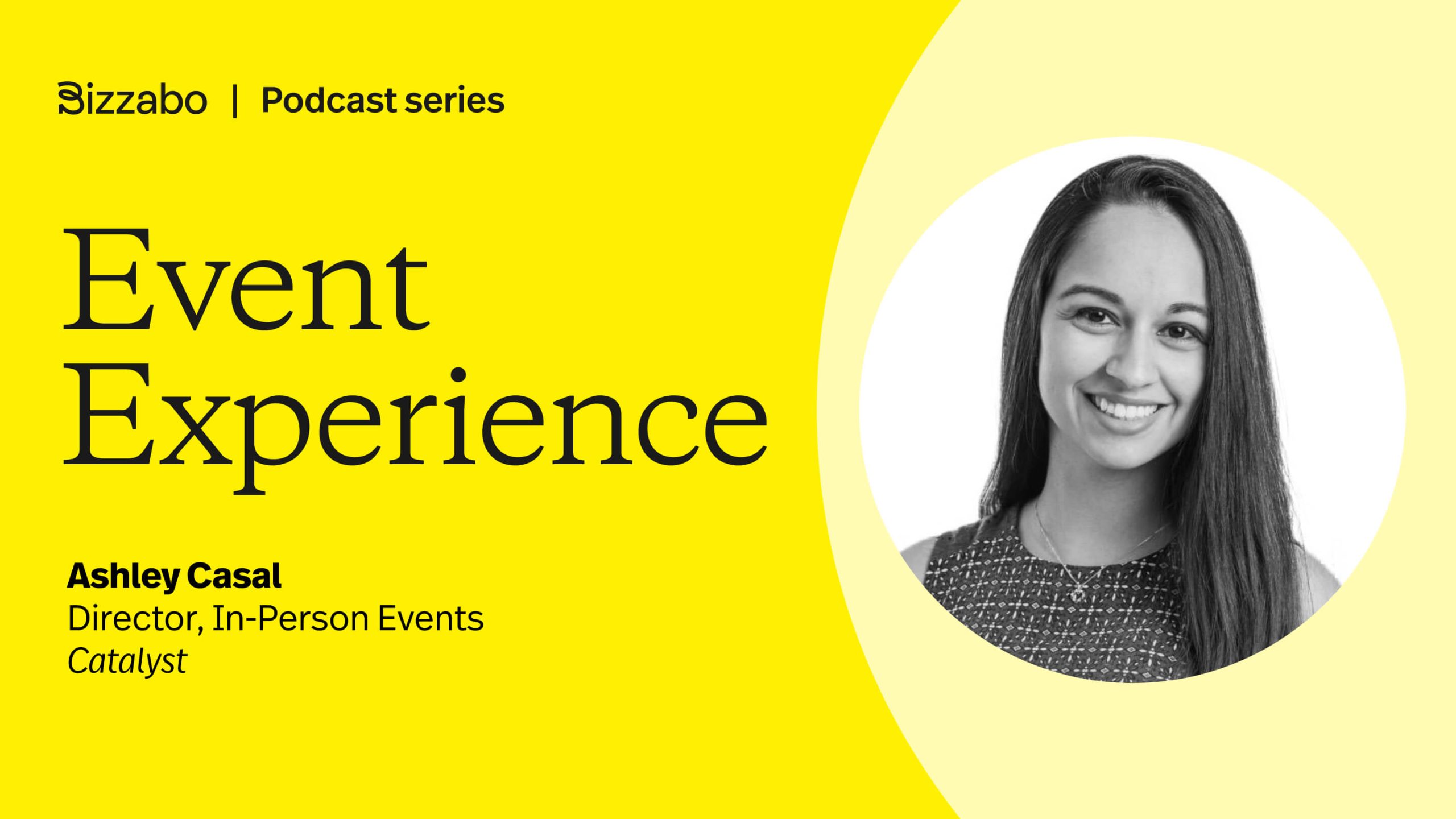
In this conversation, Rachel Moore and Ashley Casal delve into the intricacies of event planning, focusing on budgeting and financial forecasting. Ashley shares her expertise in managing event logistics, emphasizing the importance of understanding costs, setting realistic budgets, and communicating effectively with stakeholders. The discussion also covers the significance of vendor relationships, the necessity of organization in budgeting, and practical advice for new event planners. Throughout the conversation, Ashley highlights the need for flexibility and creativity in maximizing event experiences while managing costs.
Ashley Casal is the Director of In-Person Events at Catalyst, where she excels in crafting immersive event experiences that foster community and drive engagement. Known for her expertise in live event strategy, Ashley brings a creative and results-focused approach to connecting audiences with Catalyst's mission. Her shoes of choice for the all-day events are Cole Haan Oxfords.
Takeaways
[00:00:18] Rachel: Welcome to Event Experience by Bizzabo, the podcast where we bring the best and brightest event experience leaders together to share stories, tips, and lessons learned from creating some of the world's biggest events. I'm Rachel Moore, your podcast host.
[00:00:33] Budgeting doesn't have to require a crystal ball, and we have the guests to prove it. Ashley Casal, Director of In Person Events at Catalyst, joins us to dive into the intricacies of financial forecasting and event budgeting. Ashley shares her tips for setting realistic budgets, how to prioritize vendor relationships, and the fact that she has a tried and true Excel template she relies on for her budgeting process.
[00:00:59] You can't put a price tag on this kind of event experience.
[00:01:13] Rachel: Our guest for this episode has event experience in the sports and entertainment industries. And today she serves as the director of in person events at Catalyst. She is known for her expertise in live event strategy and in crafting immersive event experiences that foster community and drive engagement.
[00:01:30] I am thrilled and you will be too, as we welcome Ashley Casal to the show. Welcome Ashley.
[00:01:35] Ashley: Thank you, Rachel. I'm excited to be here.
[00:01:38] Rachel: I'm excited to have you here.
[00:01:39] Rachel: We're going to segue into some get to know you questions now.
[00:01:43] What are your go to on the ground event day shoes when you know it's going to be an all day event?
[00:01:49] Ashley: For an all day event, I go Cole Hawn Oxfords all the way. I mean, who doesn't like a cute sneaker that looks like a dress shoe, right?
[00:01:56] Rachel: It is the theme. It is the trend now. Yeah, all of us like, Hey, let's get some fancy shoes, but they are basically sneakers. So I love that.
[00:02:04] Is there anything that you're listening to, watching, or reading these days that you can't put down?
[00:02:09] Ashley: So, I am reading a book that was written by a former high school professor of mine. It's not an autobiography and it's not a biography, but it was just like kind of storytelling of all the crazy stories that he heard and throughout his teaching career, which I absolutely love. And my guilty pleasure is watching right now, Grey's Anatomy.
[00:02:30] Rachel: What even season are they on right now?
[00:02:32] Ashley: Like 20, I think?
[00:02:35] Rachel: It's amazing to me that that show, I mean, you've got Simpsons, which is animated. You don't really have to worry about people aging out of that. But man, Grey's has just been going forever.
[00:02:45] Ashley: It has and I love it. And think the storyline is starting to repeat itself, but it's just such a great show.
[00:02:52] Rachel: You just bought into the characters, right? It's like, you know, you've got to show up for every week.
[00:02:57] Ashley: Of course, I just binged Cobra Kai last night.
[00:03:00] Rachel: Oh, that was another one. We watch that around our house too, it's fun. And as someone who grew up with the Karate Kid movies, it's very, nostalgic for me.
[00:03:11] Ashley: It is. It really is.
[00:03:13] Rachel: Those are great, great suggestions.
[00:03:16] Is there a particular social post or a piece of media or even a hot take about events that you found interesting lately?
[00:03:22] Ashley: So, I am always on LinkedIn and I love following Julian Solaris content. All about event planning and improving your ROI and what's hot and what's not in events.
[00:03:34] Rachel: Yep. He comes up on this podcast often with that question. So, you're definitely good company with following Julius and loving what he says about events. It's always a conversation starter.
[00:03:45] He's actually been on this podcast in the past, we always try to find a little gap in his schedule to get him back on. So hopefully we'll be able to circle back with him soon.
[00:03:54] Rachel: As always, I give such a super intro, super brief intro. It is super and brief, um, for all of our guests, but I want to give you the opportunity and a quick call at everybody. As always happens in life, notifications happen in the background, whether we like them or not, or whether our computers like us or not.
[00:04:11] So please disregard any little beeps that you might hear, because we're going to focus on a great conversation.
[00:04:16] Ashley, with that, I want to give you opportunity to tell us a little bit more about you, your role in, in what your world is like as the director of in person events at Catalyst. Go for it, tell us more about that.
[00:04:26] Ashley: Absolutely. So Catalyst is a non profit in the DEI world. We focus on advancing women in the workplace, which is a very important mission nowadays.
[00:04:37] So my day to day is essentially planning the logistics, um, making sure that we stay within budget, tracking the budget, measuring ROI for our events.
[00:04:46] Rachel: Okay, well, you, uh, segwayed us perfectly into why we're talking to you today. And thank you for that too, for that intro as well. Because not only are we having you here for a general event experience, but, we're, it's really cool that we're able to expand on a conversation that actually just took place.
[00:05:04] So, Bizzabo just hosted a webinar about budgeting. Um, and we talked about sponsorships and stuff too, but mostly the topic was about budgets. And we're taking this opportunity with you right now to expand on that topic
[00:05:18] . Uh, and I'm really excited to have you here and you, like you just said, you loaded it up that, Oh, we are here to talk about budgets. Cause that is, that is what you do with Catalyst.
[00:05:26] So, um, let's start things off simple. And again, this whole podcast is about helping experience and helping people level up in events. Let's talk about budget. Can you, for me, define forecasting and describe how event planners should approach it?
[00:05:43] Let's get into budget forecasting. Tell me about it.
[00:05:46] Ashley: Absolutely. So essentially, budget forecasting is the process of estimating your financial needs for the event, right?
[00:05:54] So you're looking at everything from your venue costs to your catering, your entertainment, um, your staffing, even potential risks or unexpected expenses, right? Your contingency planning.
[00:06:04] So you need to think of it as like creating a roadmap for your finances. It allows you to anticipate all your costs, plan for future expenses, while also avoiding surprises, right? So you want to make sure that you set your limits but also set up for your your event for success. So it's kind of like a financial blueprint in a way.
[00:06:23] So what you want to do how I, I would approach it is you want to identify your event goals, right? So you ask yourself, what is the purpose of the event? Is it a conference? Is it a celebration? Is it a fundraiser? Your goals will directly impact your budget. So you also need to take in mind that all events are different. Not all events have the same components.
[00:06:41] So a small, intimate wedding would be completely different than a multi day conference, or even a board retreat would have a different budget. So all of these things play into how to create your budgets.
[00:06:52] So once you have your goals, you want to estimate your revenue and that's where your ticket sales, your sponsorships, any merch or donations come in, and that'll help you create an idea of realistically, how much money you have to work with. And then you have to break down your expenses, which is the biggest part.
[00:07:10] Rachel: I like that a lot. It feels like too, like that can be a point where event planners can be pretty creative to say, right, I know how my event goes, I kind of know what experience I'm crafting for attendees. And really creating some options there. It's almost like an a la carte menu.
[00:07:30] It sounds at least if I were going back to food and the importance of food, but, you really can say, Hey sponsor, you know, we've got a myriad of ideas here. This is a buffet of options here.
[00:07:41] What plate looks good to you? As far as like, what helpings are going make this a good experience for you, but also work for us and it's a give and take and really just negotiating that.
[00:07:51] Ashley: Yeah, yeah. And if you have a sponsor or a partner that's in the food industry for example, ask them, Hey, are you willing to donate product for my coffee break? Are you willing to donate, you know, X item for my breakfast bar or for my lunch bar? Are you willing to sponsor my lunch?
[00:08:10] Rachel: Mm hmm.
[00:08:11] Ashley: By providing X, Y, Z.
[00:08:13] Rachel: Wow! I mean, even just that, it doesn't have to be so cut and dry. And I feel like that again, you're teaching us a lot too about that flexibility to say there are all kinds of possibilities that you can imagine up and make it an easier on ramp a for a sponsor to say, instead of saying, no, we can't sponsor being like, yeah, you can, let's get creative and figure out how to make sure you're part of this event.
[00:08:39] Ashley: Absolutely.
[00:08:40] Rachel: I think that's so great because as we know, I mean, goodness, sponsors are just like us, right? They're looking at their budgets, and their line items, and where they're investing their money. They're doing the exact same things that you're describing through this whole episode. And so, really need to get you as the budget queen with the sponsors budget queen. And like, y'all need to make a kingdom together and figure out how that's going to work
[00:09:04] Yeah.
[00:09:05] Ashley: At the end of the day, it has to be a win win for both organizations, right? You don't want one organization to lose money.
[00:09:10] Rachel: Absolutely. Absolutely. Excellent. This is so wonderful and thank you so much. I think you, you helped me feel smarter about budgeting, which is saying something. But certainly our audience in a second here, we're going to let people know how they can get ahold of you to learn more.
[00:09:28] I have a feeling you're going to get asked about that Excel template. Which is great because we all could use some help. But
[00:09:33] You make this sound so much easier than like, I, I literally get deer in the headlights and, and admittedly. And I said this on the webinar that you were a panelist on. Nobody should be trusting me with any accounting. I hate it. I don't like math. And yet, you know, every profession requires you at some point to start doing that stuff.
[00:09:50] But you really did break it down well to say, look, you're getting, you, you said a few words there, estimate, idea. I think we all think we have to get it perfectly right, and sometimes that can cause the deer in the headlights thing.
[00:10:02] But you literally are trying to formulate estimates. Like you're, you're using your best guesses to anticipate what you're going to make, what revenue you're going to make and then what things are going to cost, right? It's really just kind of making a best guess.
[00:10:17] Ashley: Yeah, you need to think about your ROI at the end of the day.
[00:10:19] Rachel: Yeah. And I, I think that's super interesting too. Look, offline, we talked a little bit about, um, I just planned my, my father's 75th birthday. I actually did this, which this makes it seem much more digestible. And again, you.
[00:10:31] Ashley: Party planning!
[00:10:32] Rachel: See. You made a great point too. It's like a wedding is going to be different than a three day conference.
[00:10:37] My dad obviously didn't have a three day, you know, event for his 75th birthday, but that's exactly what I was like, okay, I know we're having people attend for free. So I was like, okay, there's going to be some expense involved. So I didn't have any revenue from it other than vibes.
[00:10:49] I think that's, that's great to say, let's look at what that revenue is going to be, but now you've got to, got to be loading up, comparing your expenses against that, correct?
[00:10:57] Ashley: Correct. So for me, when I'm doing my budgets, I not only want to look at what my expenses are going to be, and what the revenue is, but essentially the bottom line is my profit margin. What's my profit margin?
[00:11:09] Rachel: Again, just, just getting super, remember you're talking to someone like, like I am five years old with accounting, um, you're saying, so whatever the expenses are, you want your, your revenue to exceed that. So whatever, that's the profit margin is saying, I'm going to make some money off of it.
[00:11:23] Ashley: Yeah, exactly. You know, when I was a kid, I wanted to be a mathematician. I love math, so this is so much fun for me.
[00:11:31] Rachel: I'd love to know who are listening audience would be like, yes, that's me too. Um, and if you're watching this as well, you know, let us know in the comments on the video. But, um, yeah, I can't relate with that, but that's why I'm talking to you, where I always want to talk to people who have the expertise we lack.
[00:11:45] So it's great to have you here. I have a interesting, hopefully it's an interesting question. And some of our audience may be wondering this too.
[00:11:53] Are there any like budgeting software, uh, or tools that you recommend that you like to gravitate toward?
[00:11:58] Ashley: So, I'm old school. I use Excel for everything. Once you have a template, you have to create a very good template that you can just plug and play and reuse. That's all you need, in my opinion. Now, other people like tool, um, other softwares. I don't have any recommendations as I don't use any of them.
[00:12:16] I just, old school, Excel.
[00:12:18] Rachel: You know, who, who doesn't, I mean, it's, it's definitely, sometimes you're like, Oh, what can I use? Let me open an Excel. And you know, it can do the formulas and stuff.
[00:12:26] Let me ask you this. Are you good at pivot tables?
[00:12:28] Ashley: I'm not.
[00:12:29] Rachel: Oh, thank God.
[00:12:31] Ashley: I'm not. But I'm very good with formulas and calculating like percentages, things like that.
[00:12:37] Rachel: Well, I, I know to go to you, um, and I know you mentioned too, you were getting some great questions from the attendees at the webinar that you're a panelist on. So you might get some more based on people listening to this being like, Ooh, tell me more about that template in Excel.
[00:12:51] Ashley: Send them over.
[00:12:53] Rachel: Nice. Uh, it's all about those hacks. Right. And, and getting it. And I can't say enough too, yes, templates are your friend. You set it up. If you get something working the way it should, then like, Hey, let's use, let's use and reuse that again. And it saves so much time.
[00:13:07] We'll be right back with more event experience after the break.
[00:13:12] Rachel Moore: Let's face it. Venting won't fix outdated overpriced event management software that lacks the support and features you need. But Bizzabo's Event Experience Operating System will.
[00:13:24] Say goodbye to your frustrating legacy event software and hello to building more events that matter. Visit bizzabo.com. That's B I Z Z A B O.com to learn more about the Event Experience OS, KLIK SmartBadge, and more.
[00:13:42] Rachel: We're back with Ashley Casal to learn how to educate stakeholders about realistic budgets.
[00:13:49] Rachel: In the webinar, we talked about the importance of providing realistic guidance around budgeting to stakeholders, partners and collaborators. And you know, obviously you've shared, you, you love math. You're, you're into budget and accounting. You know this.
[00:14:04] A stakeholder or a partner or a collaborator may be like me and they're like, ah, no, tell, you know, I need you to, to make sure I understand this. And that can be a big, a big hill to climb.
[00:14:15] Can you share your best practices around how, how to have real talk about budget with the other players in the room that are important too, to the event.
[00:14:23] Ashley: Yeah. So as you mentioned, like not everybody likes math, not everybody understands the numbers, but most people, at least in business will understand what the bottom line is, right? You have to hit a certain target.
[00:14:34] So these conversations are about being transparent and setting realistic expectations and also fostering open communication.
[00:14:41] So you want to work together and to find any practical solutions to any issues that you may have. What that means is be upfront about your expectations, right? So set your goals, have the discussion with those in the room about the importance of, one, staying within the designated budget and, two, possible outcomes if you do go over budget.
[00:15:01] And then also you have to look at what offers solutions to the roadblocks. What are your roadblocks? Is it a tight budget? What can you do to stay within budget? Where can you pull the money from? How will these decisions impact, um, the event? You want to make sure that you don't derail your event.
[00:15:16] Rachel: Do you ever come across, you know, in your, in your experience, um, ever come across stakeholders or people having those discussions where they're incredulous even about maybe how much stuff costs or, or like you, you have to be like, look, wake up call. This is what it costs, right?
[00:15:31] Ashley: All the time. Like, somebody will say, why does that candy bar cost $2 when last year it was $1? Well, inflation. You need
[00:15:43] Rachel: It's, it's hitting all of us. Yeah. Well, and, oh my gosh, you just brought up the elephant in the room, right? I mean, I think we're all feeling that inflation is an absolute real thing. We talked about that in the webinar, right? Where it was like everything costs more right now, especially for in person events. It's, it's ridiculous.
[00:15:59] Ashley: In general, in life, I mean if you go to the grocery store, um, and I've seen this a lot on social media, and some of my neighbors actually did it, where you take your receipt from a few years ago, you go to the grocery store and you buy the exact same items and a bill that was $50 last time will be over $100 this time.
[00:16:16] Rachel: Yeah, yeah, it's definitely having ripple effects. So it makes, makes someone in your role way more important and, and be able to have those, you know, kind of educational discussions with your stakeholders to be like, okay, we, we really need to look at what our costs are, how they're different from before.
[00:16:32] I think that just makes it more crucial too, for that flexibility. And again, that's, that's what we talked about in that webinar and what we're talking about today, just how to, how to stay flexible, um, being able to manage that.
[00:16:43] You know, we ran out of time in the webinar, before we got to this question, um, for you and the other panelists that were there.
[00:16:51] So I'm going to take this opportunity to ask you the question here.
[00:16:54] What are some budget line items that you try to make sure get attention, in each event in order to support their long term growth?
[00:17:03] Ashley: So that, great question. It will vary, um, based on your type of event, right? So for example, in my role for a large conference, for me personally, food and beverage. If the food does not taste good at an event, I won't go back there. I will not use the venue. I won't attend the event the next year if it's in the same venue because I know that the food was not good and that's not a good impression, right?
[00:17:29] It didn't give me a good experience.
[00:17:31] So besides food and beverage, audio visual. Audio, visual technology is what will make your event. You cannot have any fails.
[00:17:39] You don't want your computer beeping during your conference. You need great tech. You want to make sure that your screens are HD videos. You don't want to see blurry videos, bad lighting, etc.
[00:17:54] The next thing for a conference is speakers.
[00:17:57] Content is what makes an event. So you want to make sure that you invest in your keynote and in your speakers because you want your audience captivated and engaged as well.
[00:18:05] Rachel: Yeah, do you have, as far as like gauging that too, are you relying basically on surveys afterward to? Like to say, hey, how did you like and if you're noticing trends saying oh, people bounced out of this session with this particular speaker or I think rating it certain ways. Are you using that to help kind of formulate, great! Now I know where to go with my budget next time?
[00:18:27] Ashley: So we don't use the surveys per se for budget purposes, but we use it to gauge the event experience and to listen to what our attendees have to say because we obviously want to make sure that they're loyal customers, right? Quote unquote. That they return.
[00:18:41] So if they say listen, for example the food there wasn't a lot of food inclusivity or a lot of food options That's another important thing now is you need to make sure that your food options are inclusive of any dietary restrictions and in any allergy needs.
[00:18:55] So if they come back and say that then I have to go back and say, "Okay well, let me look at the menus again. Let me change the food up for next year and see how that's going to impact my budget as well by including for example kosher meals or halal meals."
[00:19:09] And then the same thing for again, it goes back to inclusivity and accessibility like "Oh, I need closed captioning or any translations," that's going to affect my budget for the next year. So I do take those, I guess you could say suggestions, to incorporate, but not in full. If that makes sense.
[00:19:27] Rachel: Yeah, I like that there's that tie in and just admittedly, like, I think we talk a lot about feedback and surveys and that's part of those metrics that you can kind of track, how was the attendee experience? But obviously it's really crucial to have those results and use those to inform people who are your budget decisions.
[00:19:48] Maybe you're someone who's like, Oh, we've had the speaker back. You know, we've had that keep coming back , every year over five years.
[00:19:56] But then suddenly you start seeing, maybe your people are like, yeah, it's same stuff or I'm not getting anything new. It might be time then to say, okay, well, we need to change it up. And what is that going to cost if we pivot to this other speaker or this other kind of content, right? It all has an impact.
[00:20:13] Ashley: Yeah absolutely and at the end of the day, you want to make sure that your attendees have a great experience, right? Because if they're loyal to you, they're going to return and that's what's sustained, it's essential for like growth.
[00:20:27] Rachel: Yeah, yeah, exactly. And that gets back to that question too. Cause it's like, you want to grow year over year. Obviously we all love it when we're like, Hey, every year I'm hitting that target but there's the scaling of it.
[00:20:39] You'd love it to become that kind of like sought after event where maybe there's waiting lists and stuff like that, where, yeah, you all, you never want to like, be worried about that attendee pipeline and you always want to be generating that.
[00:20:51] A lot of this, it really is interesting. And like I said, even if you hate math and you're like, Ooh, I'm going to get into event planning cause I don't like math. Well, you're going to deal with math because it's all going to come back. Exactly.
[00:21:04] I have a question too. I think you had mentioned you are somewhat new to the role at Catalyst and this dovetails into the question.
[00:21:11] Let's say you're new to a brand. Like, okay, I'm now the events person at a business or a brand. How do you create a budget when you're new to a company? Like, what are your steps that you take?
[00:21:22] Ashley: Absolutely. So, well I've been in the events industry for about 15 years now. I'm essentially new to Catalyst. I'm the newest person on my team. I joined at the end of January of this year I joined right before our largest event, which took place in March.
[00:21:40] So I had to dive in deep real fast and understand how budgeting worked in the organization. So when you're new, essentially you want to make sure that you rely on your past spend data.
[00:21:55] Rachel: Mm.
[00:21:55] Ashley: So you want to make sure that you can look at the data and track your spend and measure results.
[00:22:00] So what I did was, I was lucky enough that my predecessor was very organized and left everything in one location for me. So I grabbed the spreadsheet that was left for me with this year's budget, as well as last year's budget. And I was able to do that comparison and say, okay, so last year we spent 3,000 on this. This year we're spending 3,100, okay, we're on the right track with inflation.
[00:22:27] But now if we spent 5,000 last year, why am I spending 10, 000 this year? What's going on there?
[00:22:33] Is it time to find another vendor? And essentially that's kind of what I did. I started questioning, like, why are we spending these amounts on certain line items? And let's bring in new vendors. Let's do a new procurement process.
[00:22:48] The best thing I can say is, if you don't have access to past spend data is ask your colleagues or try to get in touch with your predecessor and say, or even your supervisor, how can I have access to these documents?
[00:23:00] Can you sit with me and guide me on this process?
[00:23:03] Rachel: Yeah.
[00:23:04] Ashley: And how was it done in the past and how can we improve it for the future?
[00:23:07] Rachel: You brought up something there. Super crucial and again, even if you don't like math or numbers, super crucial to be organized about this. You mentioned how it was great that your predecessor was organized and then had it all in one place so you could easily reference stuff.
[00:23:25] Goodness, I'm sure some of our listeners may have come arrived into situations. And even if you're like "Okay, now I'm going to join a company and join their events team" or I know a lot of our listeners are their own agencies or independent kind of consultants or contractors, have probably encountered where they've come in and maybe the budget's a mess.
[00:23:47] Maybe it literally was like, it's a pile of receipts or like a folder of unorganized receipts that aren't categorized. And you're like, "Oh my God, I've got to go in and figure this out."
[00:23:57] So what we're bottom line saying is organization is absolutely crucial.
[00:24:02] Ashley: Organization is key. For sure.
[00:24:06] Rachel: Yes, don't make people want to pull their hair out because the budget is enough without needing to do that.
[00:24:14] You brought up another topic too, I want to hover on. Working with vendors, you know, knowing if you like need to switch things up or if year over year, you've got the vendor of choice, you know, it's a good relationship.
[00:24:26] I'd love to ask you that. How often do you partner with the same vendors across your events?
[00:24:31] Ashley: So, I've been in the experience where in my previous org, there was a preferred vendor for everything, right? And we never questioned anything and we would just keep giving business back.
[00:24:43] Until we started realizing, wait, there should be other vendors that we should be looking into because we may be saving on costs. And essentially we did a cost analysis and an RFP and we realized that because the vendor, we were loyal to that one vendor, we were missing out on key discounts.
[00:24:59] Rachel: Hmm.
[00:25:00] Ashley: So fast forward, there was a whole procurement process put in place. So now it's key to get multiple quotes before you can proceed with the vendor.
[00:25:11] So at my current org, when I came in, again, it's same vendors. So I'm the believer that we use the vendor for one or two years, as long as we like them. But by year three, you do an RFP. Start sourcing other vendors and see if they're still the most competetively priced. Because if they're not then either they can price match or you move on.
[00:25:32] Rachel: That's a really great thing to kind of put in there where it's like, Hey, bake in that you're going to set a reminder that like, yeah, and you know, let's keep at it and do this. But you know, in two or three years let's do an RFP and see where we're at at that point.
[00:25:45] And you even brought that up too. I mean, you looking at inflation, costs are going to change. Line items, budget items are going to change, your budget's going to change. It just makes all the sense in the world to then say, let's do a reset here, where are we at with our vendors?
[00:26:00] And are there even technology changes? So are there some different things and options that you can work into the arrangement?
[00:26:08] Ashley: Exactly.
[00:26:09] Rachel: Very good. Very great advice. Like I said , I don't math. I try to avoid it as much as possible, but I'm learning a lot. So I can only imagine our listeners are as well.
[00:26:19] Rachel: Last question, easiest question of all, where can our listeners find and follow you online and ask you those questions about your Excel templates?
[00:26:25] Ashley: LinkedIn will be the fastest. I'm also on Instagram, but I'm honest, I rarely post on my personal social medias, but I am on LinkedIn a lot.
[00:26:45] Rachel: Ashley helps you skill up with some advice around where you can pull in extra budget opportunities.
[00:26:50] Essentially, you just, you want to leverage your sponsors and your vendors. Maximize your budget by creating multi purpose experiences.
[00:26:58] Ashley: So I'll ask them, are you willing to give me discounts, you know, for placing a logo on my signage? I'm promoting your business, it's a win win, but I'm also getting a discount.
[00:27:09] So for example, AV asked them for some VIK services. You know, you also want to maybe create immersive experiences, right? So you want to have the most bang for your buck.
[00:27:24] So for example, convert your swag into a swag activation. Not only be the gift that you give out, but it'll also be a place for social content gathering.
[00:27:33] Like I said, at least one immersive experiences, you want to find creative ways to get them.
[00:27:38]
[00:27:38] Rachel: Thanks again to Ashley Casal for joining us on Event Experience, and thank you for listening. If you're enjoying the show, we'd love to hear it. Connect with us on social and subscribe, rate, and review us wherever you're listening.
[00:27:56] Also, don't forget to share the show with your colleagues and friends. You can find transcripts of each episode and key takeaways on bizzabo.com/podcast.
[00:28:05] On behalf of the team, thank you. We'll gather again soon for a new episode of Event Experience.


