
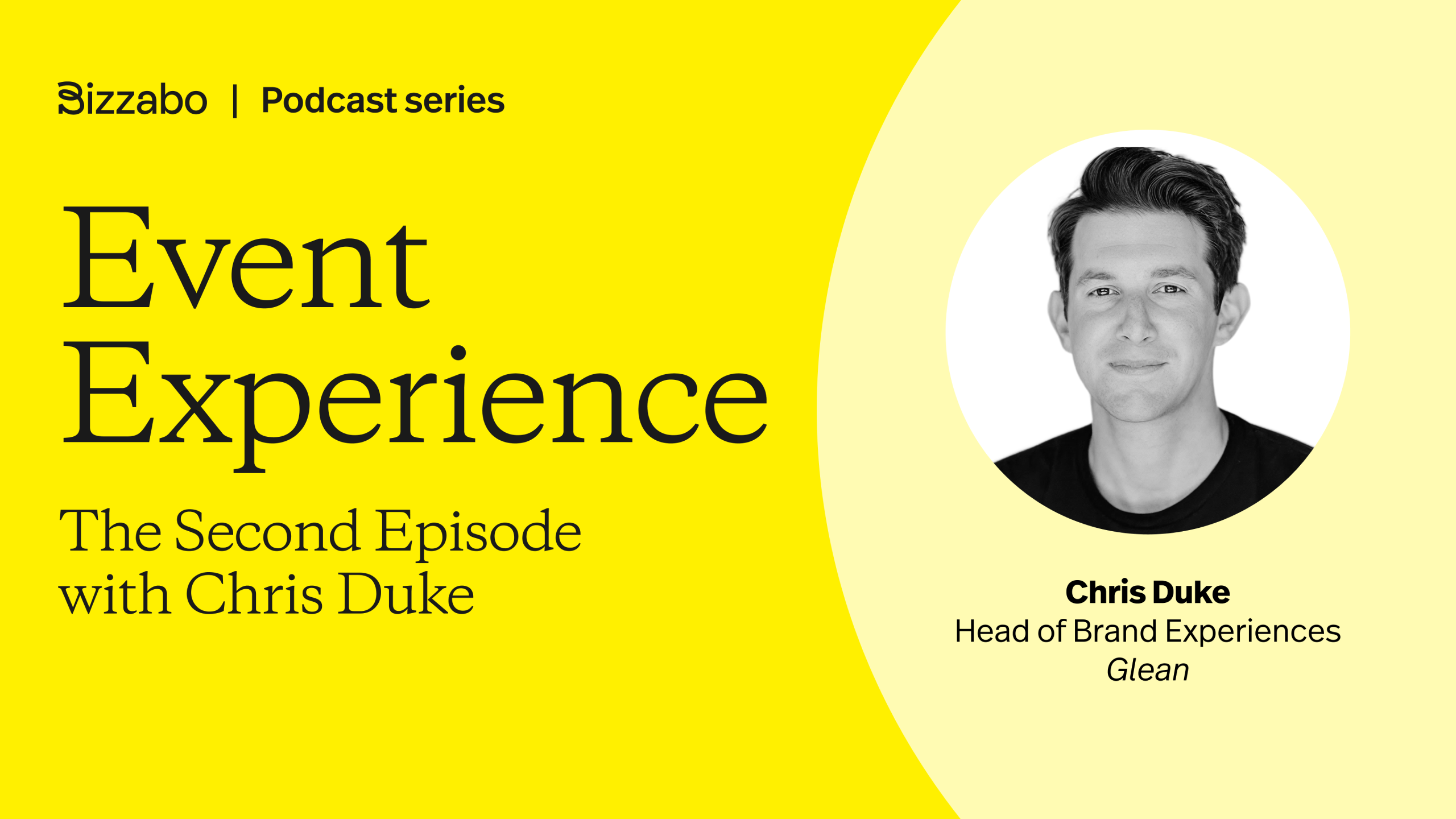
In this episode of Event Experience by Bizzabo, host Rachel Moore welcomes back Chris Duke, Head of Brand Experiences at Glean, for a conversation on how AI is reshaping the events industry. Drawing on his experience leading global activations, Chris explains how event professionals can adopt an AI-first mindset to boost productivity, enhance workflows, and unlock new creative possibilities without losing the human touch.
The discussion covers actionable strategies for integrating AI into daily event planning tasks, overcoming skepticism, and building team-wide confidence in using these tools. Chris dives into how context-rich prompts yield better results, the rise of image and video generation, and the importance of cross-functional collaboration when working with AI. Listeners will walk away with practical ideas for experimenting with technology and growing their impact in an increasingly AI-powered industry.
Enjoyed this content? Subscribe to our newsletter and get insights like these delivered straight to your inbox.
Welcome to Event Experience by Bizzabo, the podcast where we bring the best and brightest event experience leaders together to share stories, tips, and lessons learned from creating some of the world's biggest events.
I'm Rachel Moore, your podcast host.
We are welcoming back, Chris Duke, the Head of Brand Experiences at Glean, who you may have seen in Bizzabo's recent webinar AI Masterclass.
We take this episode to expand even more on the evolving landscape of event planning. The role of AI in enhancing productivity, and how event professionals can embrace these technologies to improve their work.
If you're taking in this episode after watching the webinar. You are truly AI first in your approach to great event experience.
[00:01:03] Rachel Moore: Welcome back everyone to the next episode in your queue of Event Experience by Bizzabo. I'm your host, Rachel Moore and really delighted to tee up today's guest for you.
He is the Head of Brand Experiences at Glean, leading global events, live productions, brand advertising campaigns, and executive and customer engagement.
He's previously driven event and brand initiatives at Greylock Venture Partners, Robinhood Rubrik, GoPro and Red Bull, creating experiences that connect audiences through creativity and storytelling.
His expertise spans experiential marketing, sports marketing, and large scale brand activations. Thus, he is the perfect guest to have here on the podcast. Really excited to welcome back to Bizzabo, Chris Duke. Chris, thanks for joining us once again.
[00:01:50] Chris Duke: Thanks for having me. Really appreciate it.
[00:01:52] Rachel Moore: Of course. I said "once again" because we did recently have youas a, the featured panelist on a webinar.
[00:01:58] Chris Duke: We're actually gonna give our audience a little bit more of a chance to get to know you with some, uh, "get to know you" questions.
[00:02:03] Rachel Moore: So if anyone has seen the webinar, this next question might be a little bit of a repeat, but we're gonna do it anyway for our, our podcast listeners. With the world of event planning, knowing that these often entail, uh, very long days on our feet, would love to know Chris, what are your go-to, on the ground event day shoes you prefer to wear?
[00:02:20] Chris Duke: Yeah, so 90% of the time, they're Nikes. 5% of the time. I realized I was at Amazon reinvent last week for their major conference, and I had thrown some New Balances on and I walked out the door. I was like, "Oh, this is new."
that was new for me. I thought about our, I thought about our webinar actually, when I put those on. Uh, this week I have to wear, you know, a little bit more business professional. So I think it just doesn't matter what the shoe is, as long as there's some inserts in it. So that's the key, you know, the gel thing, that's, that's really important. So it doesn't matter what the shoe is, as long as the inserts are good.
[00:02:49] Rachel Moore: Excellent. Yes, myself and my family agree with you wholeheartedly, and I love that you put the new into New Balance. So glad glad we heard about that. Thank you for that wreck.
Is there anything that you're listening to, watching or reading these days that you can't put down? And it doesn't have to be events related.
[00:03:03] Chris Duke: I love shows and TV. Like I'm the biggest like, Game of Thrones fan probably ever. So I'm excited. There's a couple new shows or seasons coming out of that. Currently watching Stranger Things. I think everyone's probably watching that right now, at least the first part of the last season. So we've got the next ones coming out on Christmas Day, I think. And then I'm reading a book called Red Rising, which is like a fantasy series.
I like to read, sort of like, I don't know, I'd like to just like leave my world sometimes, which, whatever. So I enjoy the, those types of books. And so I'm, I'm currently working through that one right now.
[00:03:31] Rachel Moore: Lovely. Love that. And this'll be interesting 'cause yeah, I believe that we're publishing this, it'll be before the finale of Stranger Things, uh, hits. So everybody can be in anticipation with all of us too, who are watching that whole show. And it's a great book Rec there.
Is there a particular social post or a piece of media or uh, even a hot take about events that you found interesting lately?
[00:03:51] Chris Duke: You're seeing a lot of like thought leadership on and people trying to give their opinions on the types of experiences that will happen next year as it pertains to the size of the event.
A lot of people were talking about these like large scale events. I was at Amazon Reinvent last week. I don't even know how many thousands of people were there. It was crazy. Getting through the hallway, you're just like, it's shoulder to shoulder with people. They're everywhere.
And so there's a lot of thoughts around smaller, more intimate experiences versus these like large scale formats. And I'm in the mindset where I'm starting to agree that the, like small to midsize events are more impactful than these large conferences.
I think there's time and a place for those of course. But one of, some of the things that I love that we do at Glean is like our user conferences, about a thousand ish people.This summit we're doing in the next couple of days is like 50. Really? You know, it's very intimate. It's like 50 people. I think we get a better chance as a, as a brand to connect with, with individuals that way.
And so again, time and a place for the large ones, I think that all makes sense, uh, for the right brands and for the right companies. In my view, it's more impactful on the small to medium size.
So I've just been reading a lot of people's posts about that right now in the event.
[00:04:56] Rachel Moore: It's definitely in the zeitgeist, I feel like, and, and it certainly has been. It's cool that you pointed out like if anyone's listened to this year, 2025, or the episodes of this podcast, lot of people been opining in that same way, where it's like, "Hey, intimates better." Smaller, more focused is the micro event is having a moment.
So I really find that interesting and yeah, it's gonna be interesting to see how that manifests over the next year. So all eyes to the events industry to see how that, how that manifests and unfolds.
[00:05:23] Rachel Moore: But, I just really skated through a very brief bio of you.
So I wanna toss it back to you briefly. Can you tell our listeners and our. Fans a little bit more about yourself, your role, your world?
What's your day to day like? Chris, let us know all the details.
[00:05:36] Chris Duke: Yeah. Yeah. Thanks, thanks again. I lead our brand experiences here at Glean. So I run our flagship programs that we do as a brand. So things like Glean Go, that's our annual user conference, which is coming back to San Francisco next year, which I'm very excited about.
I work with our wonderful Head of Events, McKenzie Anderson, on my team, who runs our strategic events program here at Glean. I work across marketing on a lot of different things and, , very random programs, which we all kind of laugh about at work sometimes.
Traditional brand advertising, customer experiences. We're actually headed up tomorrow for a two day summit that we're planning up north of San Francisco for some of our top customers as well.
So, we're doing a lot of fun stuff here, and I'm lucky to be a part of it.
Awesome. I mean, that all sounds very exciting. I think some of us might be a little feeling a little jealous because Ooh, that's sounds fascinating and awesome. But love hearing about your world and stuff.
[00:06:25] Rachel Moore: Now that we know a little bit more about you, let's get into the guts of this interview because, we're actually welcoming you back.
We've been doing this and those of you who are paying attention. Whenever Bizzabo, we host a webinar, we'll repurpose it and have a podcast episode about it. And then what we always love to do is have at least one of the panelists or featured speakers on that webinar, come back and be a guest on the podcast here so we can expand. Because we all know webinars, right? I mean, we're literally barreling through. You have so much time, which is not much, and we're just kind of trying to hit really high points really fast.
Here we have a little bit more time to expand and let's say we could call this the extended edition of the AI masterclass webinar that we recently hosted for Bizzabo. We kept you, if anyone didn't see that already, we kept you super busy in an epic show and tell for how event planners can use AI to get them further, farther, and faster.
We had a sheer tonnage of people in that webinar who tuned, tuned in. It was very highly attended and still is on, on demand. So obviously I encourage you all to go check it out. Who tuned in to learn what they need to know. It was also coming off your presentation at Sema.
So I'd love to hear, and I, I think our audience would love to hear too. What are you hearing from event planners when it comes to how they view AI and how they should be using it in their day to day?
[00:07:39] Chris Duke: Yeah, I mean I think the, the overall like tone of it is net positive for sure. There is definitely some skepticism, and I think I know we talked about in the webinar too, is that, we talk about like humans being replaced and like people losing their jobs and you know, that is can't predict what the future looks like. Of course, we just know what's going on right now.
What I know right now is that people should be using AI as a tool and a resource for them. I think some people have a fear of maybe potentially using AI and it like "Is it doing my job for me?" Like, "Am I still the person that's doing everything that I like, you know, my brain that I used to do. Am I, is it still me?"
And so there's a little bit of, um. maybe some imposter syndrome or some fright around what using AI tools may mean for them personally and their career and things like that.
I think everyone's thinking about all these different things, but what I would encourage everyone is that , the events industry is very much so an in-person planning experience. AI tools can help, as we shared in that webinar. It can be an awesome resource and it can help you speed up your job. It can help you be more strategic versus tactical.
At the end of the day, like the tools still need an overseer and you are that person and all the things that you have done in your past or are doing right now is still requires some, some creative thought of the, of the human brain.
And so I wanna, yeah, I definitely am hearing that. It's a great tool and it's a great resource, but it's not, I don't want people to feel like it's going to in any time soon, replace what they're doing. And, yeah, that should be an encouragement to like, go out and explore all of these different assets and tools that we have now.
[00:09:14] Rachel Moore: Agreed. Uh, and you're so right. I love the analogy you painted for the orchestra conductor yes it can do, sure, maybe it can just go, you know. Yeah, go play me, you know, a piece of a symphony and it can do that, but it needs your instruction before it does it. And then how does that fit into the hole? Right?
[00:09:30] Chris Duke: Exactly, and I know that there are some things that are working like agents now that work autonomously, but like it still needs, again, like you said, the person who's conducting the orchestra of all of the different things that you do, and not every part of that orchestra is AI. Right?
It's every part of your job, but that can be just one piece of like, or one instrument in the orchestra. And so, yeah, definitely feel, I want everyone to feel encouraged that this is a resource and can help you do your job better, but we don't need to worry right now about it replacing or taking your job.
[00:10:00] Rachel Moore: Well, pivoting off of that. My next question does kind of address that direct, you know, worry.
I'm sure everybody is looking at the same feeds. We're seeing the same trends in hiring or possibly downsizing rifts and things like that that we might be seeing by different brands and companies.
So it, it can feel very like, tumultuous or a little bit uncertain. I'd love to hear, like, how do you think knowledge or expertise in using AI and becoming proficient at being that orchestra conductor for AI, how do you think that'll figure into career paths for event planners and pros?
[00:10:32] Chris Duke: I think I heard Jensen from uh, Nvidia talk about that basically, the people that are gonna be the next CEOs or executives at companies are gonna be the people that know how to use AI the best and how to use it to their advantage.
And I think everyone, you know, not everyone's gonna be a CEO or an executive one day. Some people love being ICs or an engineer or whatever it is, of course. But the people that are going to succeed in their roles will know how to use the AI tools, I think at this point where it's here, it's gonna stay for a while, you know?
And so it's not like it's going away anytime soon. So, I think people can really use these tools to take advantage of some of the opportunities that they may not have had before.
And it's just another thing that like, "Hey, if you're a graphic designer, you need to know how to use Photoshop, an Illustrator, InDesign.
And if you're a video editor, you need to know how to use Premier Pro so you can edit things.
If you're an events person, you need to know how to use Bizzabo or Cvent or some of these other, it's Marketo, Salesforce.
But it's, why don't we just add the ChatGPT or Claude or whatever internal tool you have to your skillset, essentially. Just another thing.
But I think people are putting too much emphasis on it being like, the one thing that you need to know how to do.
As we'll talk about like some of these tools, like, I don't know, I was trying to do some image generation recently and I could just not get it to work, right? Like it was not creating what I wanted to do. Or I uploaded a, a document to, to ChatGPT and I, you know, I was trying to have it compare and contrast to data sheets and it just wasn't doing it right.
Like it's still not there yet. And so, learning how to like work through that and get your answer and work with the tools as a skillset. So I need to even continue to practice. Like what could I have done differently in order to make that prompt that I gave it work better?
So like, again, it's just something that we need to continue to, to work on and to add to our skillset.
[00:12:16] Rachel Moore: I think it's super interesting too. I mean, if you think about an event planner and we even covered this in the webinar a bit. Where they, in their brain have everything kind of visualized, like, you know, how they want the booth to be laid out or what, how they see a traffic flow and where, how they see, you know, the swag can be laid out here and a lot of times they have to describe what they want to all the different vendors and the staff and the team that are helping them execute that vision.
Translating that then into talking to AI and saying, here's what I need from you, and giving it those instructions seems like that that is a strong still skillset for them they already can build off of because they have it already. Now you're just using it with a, a chat prompt instead of an actual human being.
[00:12:57] Chris Duke: Totally. Yeah. It's just learning how to communicate with something different, right?
Every person that you work with, or if you have a team below you, you need to like manage individuals, right? You can't manage a team. You have to manage the people on your team. People like to hear feedback one way. Some people like to be more direct or maybe more indirect.
Some people like to, they wanna hear a positive thing before they hear a bunch of negative things about them. Some people are like, I don't care about that. Just tell me what I'm doing wrong. So it's the same thing, right? We just have to learn how to communicate with the. The tools and the people that we have working for us.
So yeah, totally agree with you
[00:13:26] Rachel Moore: At least we know if anyone, you know, if anyone who does use any of the AI chat tools and platforms, they're very effusive in their praise of the person giving them prompts.
It's like the most self, self-aggrandizing like, uh, experience you can go through. It's very like, ooh, affirming.
So it can, it can be a nice experience and maybe sometimes a little more pleasant than talking to. A frustrated human being, we'll see.
Speaking of those prompts and that experience and using chat prompts. In the webinar you went over the importance of context in prompts to AI and agents to deliver as close to what we need as possible.
You just even shared, you know, you're like, sometimes you're trying to get it to do something and you have to keep refining what you're telling it to do.
So I'd love to hear from you what are the most important details or instructions you think are necessary as we're providing that context to, to AI.
[00:14:11] Chris Duke: I think it depends on the tool you're using, right? So if you have an enterprise tool like Glean or Gemini or whatever you're using internally.
Sometimes that context is provided for you, which is really nice. But if you're using some of these public domain tools like ChatGPT or Claude, and you're just using like a pro account.
I will say, before I say any of this, don't upload sensitive information or like your company's financials.
[00:14:31] Rachel Moore: Exactly. No social security numbers people.
[00:14:34] Chris Duke: Yeah, yeah. Just like, we don't know, just try not to do it. Use fake information and replace it later if you need to. Yeah. Sensitive information. Not good that that's it.
But with context, I think there's a few things you need to, one, you need to give the, the AI tool, a framework in which it's answering your question from.
So, I like to say if I'm needing to get, let's say I'm preparing a deck for my CEO and I want it to, I wanna run the deck by like, what am I missing?
I'll say like, " You're the Chief Executive Officer at a technology startup. Growth is really important, brand awareness is really important.
Like give it like a role and a job essentially. And so that it views whatever I'm uploading to ChatGPT. Basically with, and it has the lens of that's the job that it has.
And so it's gonna gimme feedback based on what that type of person might want. And so, I think giving it a, yeah, a role is really, really important upfront.
The next thing is to, whenever you are uploading anything to be very organized and very specific with the data that you're uploading. So that it can parse it out, um, better because if it's kind of messy, unorganized, part of the, I think the reason why that, uh, while I was comparing, contrasting the data, it was kind of messy.
I looked in the Excel sheet and it was like formatted weird and so it just had a hard time parsing through it and understanding what I was even asking it to do.
And so yeah, the context needs to be organized. It needs to be direct and you need to make sure that all of those things kind of work together as you then ask it to do something, whatever the question that you're asking it or the task you're giving it kind of all that comes together in a very clear, direct way.
[00:16:12] Rachel Moore: Again, you can kind of think of it, obviously it's got a lot of, you know, the heft of computer processing behind it, right? And language learning models and stuff.
It's just like if you were to hand off a whole messy stack of papers or binders or anything to, to a person, a human being, be like, okay, go make sense of this.
But you're not clear in what you want the outcome to be or the instructions. Uh, the more likely is they're gonna, it's gonna mess up and it's gonna like give you something that's not what you asked for, or not exactly specific to what the, the outcome was that you wanted.
So it does make all that sense to be like, you can't just, it's not gonna read your mind just like a human being and,
[00:16:47] Chris Duke: A hundred percent. And sometimes we think it's going to, and we get frustrated, like it's not reading your mind, but it's literally like you're dropping off a piece of pa. It's like I'm dropping off that presentation on like, some random person in finance's desk and just being like, "Hey, help me with this."
It's a smart person, it's a smart thing. It knows what it's talking about, but like has no context for any of the, you know, you need to give it some background before that person or thing would be able to give you any answer or feedback on it.
So just you, everyone needs to think of it basically is the same way.
[00:17:11] Rachel Moore: Yeah. Plus y'all, nobody wants it reading our minds. So let's just be clear that's that's not what we want the next step to be. That
[00:17:18] Chris Duke: I agree with
[00:17:18] Rachel Moore: Stay away from that part.
[00:17:20] Chris Duke: a hundred percent.
[00:17:21] Rachel Moore: I'm pretty sure everybody listening to this realizes that even if they are super hesitant, still have their own reasons to be hesitant or a little bit just like, dubious about using AI
They know they need to, they know that it's, it's there and you know, I always look at it, anything that's unknown to you and you're like, "Oh, I'm scared of using it." Well, probably the best approach is to go in. Okay, let me get familiar with what I'm talking about so I don't have to be scared of it and maybe I can actually use it.
We'll be right back with more event experience. After the break.
Ever wished your event badge did more than just display your name? Whether you're an event organizer, exhibitor, or attendee, Bizzabo's Klik Smart Badge transforms the event experience. From interactive networking to real time attendee insights and lead capture, the Smart Badge is the ultimate game changer. Visit bizzabo.com/click, that's B I Z Z A B O dot com forward slash K L I K to learn more about the next generation of wearable event technology. Bizzabo, your partner for building conferences that captivate.
We're back with Chris Duke to discover how we can each play a part in creating AI first culture in our teams and workplaces
[00:18:35] Rachel Moore: And, And so this next question kind of tease that up because even an event planner listening to this podcast might be like, "Yeah, I know I need to use AI. I'm on it."
However, I might be working in a team that they're, they're not all embracing it. It's fits and starts and yes, I do have coworkers who are or maybe I'm the coworker who is like hesitant to use it while everybody else is on board.
So for those people who are still asking if they really do need to adopt or embrace AI for themselves and possibly a wider team. Love to hear your advice, how can we create a culture of being AI first in a healthy, positive way for team leaders as well as team members and our colleagues?
[00:19:13] Chris Duke: I think being hesitant is like totally fair. And I think if that's how you're feeling about it, I'd like totally understand. I have seen the benefits of using it for myself. I've seen the benefit for my team using it.
I have seen my, the company I work for as a, uh, company. We have a project going on basically trying to get everyone to start building agents and try to build things that help other coworkers and employees do their job better as well. So like using like, the entire brain power of the company.
So again, I've seen a lot of pros and a lot of benefits for myself and my team using it. And I think if you're feeling hesitant around it, it can feel overwhelming to like not know what to do or where to start.
And again, like you said, it's one of those things where it's like, just try it and see how it goes and refine it and work on it.
If it's one of those things where you, maybe you have a team too that's not necessarily utilizing it. There's a lot of things you can do for yourself in your day-to-day job where you can take advantage of it. If you feel like your team's not embracing it or you're trying to get the whole everyone on board, like that's okay. And I think that's fine.
But there are ways, if you feel confident and you want to use it, then you can use these tools to really benefit your own individual work. 'cause everyone has their own task and things that need to get done.
That kinda goes back to like the imposter syndrome thing again too, is like, is the AI tool doing my job? Like no, it's not. You're doing your job, you are commanding it. You are orchestrating it like we talked about. And I think that's a totally fair place to be if you just need to work in a silo with it.
I think what you'll start to see, and hopefully your manager or your skip level will start to see too, is like, wow, this person's like, you know, they're doing their job, they're getting a lot done. This is like all very consistent.
There's a lot of things that are gonna slowly start to happen, which I've seen happen when people start having the AI first mindset.
[00:20:50] Rachel Moore: Just give it a try and, and I think too, it'll be really incumbent upon those, those leaders, especially the team leads and managers who are kind of overseeing. A team dabbling in or trying to give the freedom to test and try and make mistakes and know that everybody's kind of getting, learn, getting used to it.
And then of course, setting the standard, they should be trying to use it too. But always, you know, with that human factor, you know, again, it's not like you want, "Oh, AI's gonna help me manage my team or manage my team for me." No, it'll support you but not replace you.
[00:21:19] Chris Duke: One thing that I have thought about too was like when I turn something in or like a, a brief or something like that and I send discussion questions over or something for, and like, I use AI tools to help me with that, right?
I give it context. It knows how I speak from a personalization standpoint. But it also has access to like the world's data, right? Like the internet and there's, it's able to pull in resources and different things that people are talking about right now.
And that's no like fault to your own and that's not something you should be. Well, I didn't write that question. Whatever.
What I am encouraging folks too is if you're also on the management side and you're receiving things from your team, that they are using AI tools to not necessarily think, "Oh, they just used AI" and it's, they didn't do any of this work, you know what I mean? One time I sent over discussion questions in like an hour and my CMO responded like, "Love that you're being AI first." 'Cause like I was able to generate things way faster and then refine it and like edit it a little bit and like send it off. And it was, they were a great set of questions. And so, I appreciated not being said like, oh, you used ai, haha. Like, it was no, like love that you're being AI first and that you are utilizing the tools and the resources we have internally in order to do your job better and faster.
So, some encouragement there for folks that are also managing teams to not like, think poorly of anyone who's using them or using the tools to, in order to like expedite their work or to get things done faster and be able to move on to other things.
So that was a, um, a small anecdote that I happened recently.
[00:22:39] Rachel Moore: I love that. And I think the more we can see that replicated by, by team leaders to be like, welcome and embrace it.
If any of us have kids who are gonna school and like I do, I've got two children, and you know, it's like, I think that the teachers and professors are trying to strike a balance of like, we know it's out there.
We want you to sit smartly. We don't want you to cheat. But that's not what you're doing here. That's not what you described. You really did just say, get me from a blank page. Now I'm gonna apply my human brain to this and make it make sense for the deliverable I have to put put forward to my manager.
So yeah, just use your smarts, use your critical thinking and, and again, yeah, great word to the wise for, for team leads and people who are managing teams that are starting to use ai, embrace it and encourage them to do it.
So. Love that. Love that. I love that you got that encouragement. That's great.
[00:23:22] Chris Duke: It was great.
[00:23:23] Rachel Moore: Yeah. Exactly. I wanted to touch on something that is a bit more timely. I know we already talked about Stranger Things, which is very specific to this, you know, this particular timeline.
But, um, speaking of prompts and images and how things, you know, how we tell AI chat to develop something for us. There was this thing called Nano Banana Pro. I just love saying that too. It just rolls off the tongue. Nano nano Banana Pro. Took over internet chatter, chatter in the last couple of weeks.
I know my feeds were full of people posting images they created. I even tried making one yesterday and it was pretty awesome.
I'm assuming you've dabbled, but I, I did wanna find out if you've dabbled yet and, and also get your thoughts about how generating images might be unique to how you, uh, prepare event briefs when using AI.
[00:24:05] Chris Duke: Yeah, I did mess around with it. And it's always funny when a new, a new AI tool comes out. Like Sora started doing those like videos that you could use your own face in it, and it's basically just for the first like month, it's just memes.
[00:24:15] Rachel Moore: Yeah.
[00:24:16] Chris Duke: No one's using it for anything productive. It's just people like generating, I know cats on space or cats on space, whatever, you know.
So, um, I always find that to be funny. Whenever I hear something released, I'm like, all right, here comes the memes.
I have played with it. I think it's an awesome tool. I've even started to see, um, na uh, Nano Banana, whatever, uh, being integrated into like Google Slides.
So I was in Google Slides yesterday and I, it said like, you know, I said like, basically "make this look better with Nano Banana." And I did it and it was terrible.
So, uh, like it just made a, what I'm trying to say is essentially like the tools are getting there, they're very interesting. They're going to help. Like basically wanted to redesign my slide using it, and it just ended up being this like cartoon slide looking thing.
It was like, okay, that's very nice. It didn't really actually work, but what I appreciate is that the thought is that, that just happened like a month ago or two ago, like when that was released.
And it's already being integrated into tools of products and give it six months. And I guarantee you the thing that I click that makes it redesign my slide is gonna look a lot better with model training and people using it and advancements in the technology like.
I know that it's going to get there, so I appreciate that they're already being things like that are already being integrated into work tools, essentially to help us do our job better.
So, again, great. Right now for memes, if you wanna make, a turtle, I don't know, riding a dolphin, spaghetti. Like yeah, like that's great.
But, give it a little bit of time and we're actually gonna really start to utilize the technology and the tools that are being released like that in a really productive way. And that, that what's I'm really excited about that.
And then image generation in general has come so far in the past and, you know, video generation two has come so far in the past year that I can't even imagine what the next year is gonna be like.
And for not only on the, again, better memes, but as well as, people's job and them creating things for their work and helping them bring ideas to life. Like, it's going to just continue to get better. And that's another area that I think people continue to dabble in so that they, you know. When the technology gets there and it's in a better place, like we're gonna be able to take full advantage of it, as event marketers.
[00:26:19] Rachel Moore: Yeah, the really, the sky's the limit. And, you know, you do think about, we just talked about a little bit ago, about visualizing booths or traffic patterns or what swag will look like when it's near your, uh, signage and stuff like that. Maybe what your, uh, team's polos or Sure shoes look like and things like that.
It is just getting better. I was actually pretty impressed. I did try it out yesterday I just had like my headshot without, you know, just like shoulder up and I'm like, can you expand this out?
So I'm, you know, doing this thing and it was like, oh, and I had all the right fingers in the right places.
So that was great. I felt really encouraged by that. I'm like, "Oh, good. You didn't make my a sign me into a six fingered human being," so it's great.
[00:26:54] Chris Duke: Yeah. Yeah. And like probably three months ago it would've, and it's already the last three months, we've made huge strides.
I saw a video recently of like, it was like Will Smith eating spaghetti, and it was like 2023 to 2025. And it's crazy how different it is. So I can imagine what 26 and 27 are gonna be.
It's like on this exponential path to, to being really great. So definitely excited to see it.
[00:27:15] Rachel Moore: Well, we'll have to have you back on at the end of next year and just be like, okay, what have we, what have, that's right. What have we generated?
[00:27:21] Chris Duke: would love that.
[00:27:22] Rachel Moore: I have one last question for you. It's the easiest question of all. Where can our listeners find and follow you online, Chris?
[00:27:28] Chris Duke: I'm like pretty bad at social media, so prob uh, LinkedIn's probably the best. I'd love to connect with anyone on LinkedIn.
I don't think I've posted on Instagram or anything in like four years, so, uh, I'm not really active on social media too much. But LinkedIn is the best way. I'd love to connect with anyone who's listening. Yeah.
[00:27:43] Rachel Moore: We'll be in touch with you to do that. Thanks so much. That's great.
Chris is following his own skill up advice for event planners by getting more involved in the great work his teammates and colleagues are doing, and how his work impacts their outcomes
[00:28:05] Chris Duke: The thing that I've been thinking about and really trying even on myself personally, is to just be more involved in, it sounds weird to say, but be more involved in the work that I'm doing. What that means is events are the, it's this thread that goes between all the departments of a company from, you know, you work with the CEO, all the, you know, you work with the design team, you work with the finance team, you work with product marketing, you work with the engineers.
so you work with everyone and that's very, very cool. It's very rare. That's like not a normal thing for most people on their day to day. But people are very isolated at work and they kind of focus on their one thing and the collaboration between departments is rare, and so we have this unique opportunity to work with everyone in events.
And when I say get more involved in the work that we're doing, the thing that I've been really thinking about is how do I get more involved in the messaging creation?
How do I get more involved in product messaging? How do I get more involved with the design team and like help shape the things that they're going, like the way that things are going to look, on site rather than just being like. "Hey, I've got this event next week. I need a booth design. Can you spin something up for me by next week?"
Let's have a conversation around like what's my vision for it? What do I want the content to be? And when we're so busy, it's sometimes it's really hard to do that. But again, we have these tools now like AI tools where we can take a first pass. Like I take a first pass, try to at least on like all messaging for events that I do or taglines or booth designs or whatever that is. Like, I try to be the, I try to take the first pass now, um, using some of these tools and that helps me just get more involved in the work that I'm doing rather than being.
I think project management's great and I think event marketers are all project managers at the end of the day, but it can go beyond that. And I think that's great from a career standpoint. If some, for some reason in the future, you don't wanna be in events forever, like there's opportunities for you if you're heavily involved in product marketing, maybe that's something you're interested in or content creation.
Maybe you have a design bug and you wanna go be a designer. I like to think of myself that I'm on the design team and if anyone from my design team's listening to this, they'll laugh at that 'cause I'm not very good.
But, um, yeah, no, I just, I, I really encourage folks to like do more and like to be more involved in not just like receiving assets, but be a part of the building of those assets.
And that's gonna go for a long way. People's careers, for many, many different reasons. And one of the ways that we're able to do that right now is using these AI tools. And that's why I've been very invested in learning more and more and using them more and more because I want to be able to be like an asset on the team and not just someone who's like receiving and receiving assets and checking off boxes all the time. Which again, time and a place, but, ideally in the future we can start to be just a little bit more, in the weeds and involved in all the work we're doing.
Thanks again to Chris Duke for joining us on event experience, and thank you for listening. If you're enjoying the show, we'd love to hear it. Connect with us on social and subscribe, rate and review us wherever you're listening. Also, don't forget to share the show with your colleagues and friends.
You can find transcripts of each episode and key takeaways on Bizzabo.com/podcast.
On behalf of the team, thank you.
We'll gather again soon for a new episode of Event Experience.


