
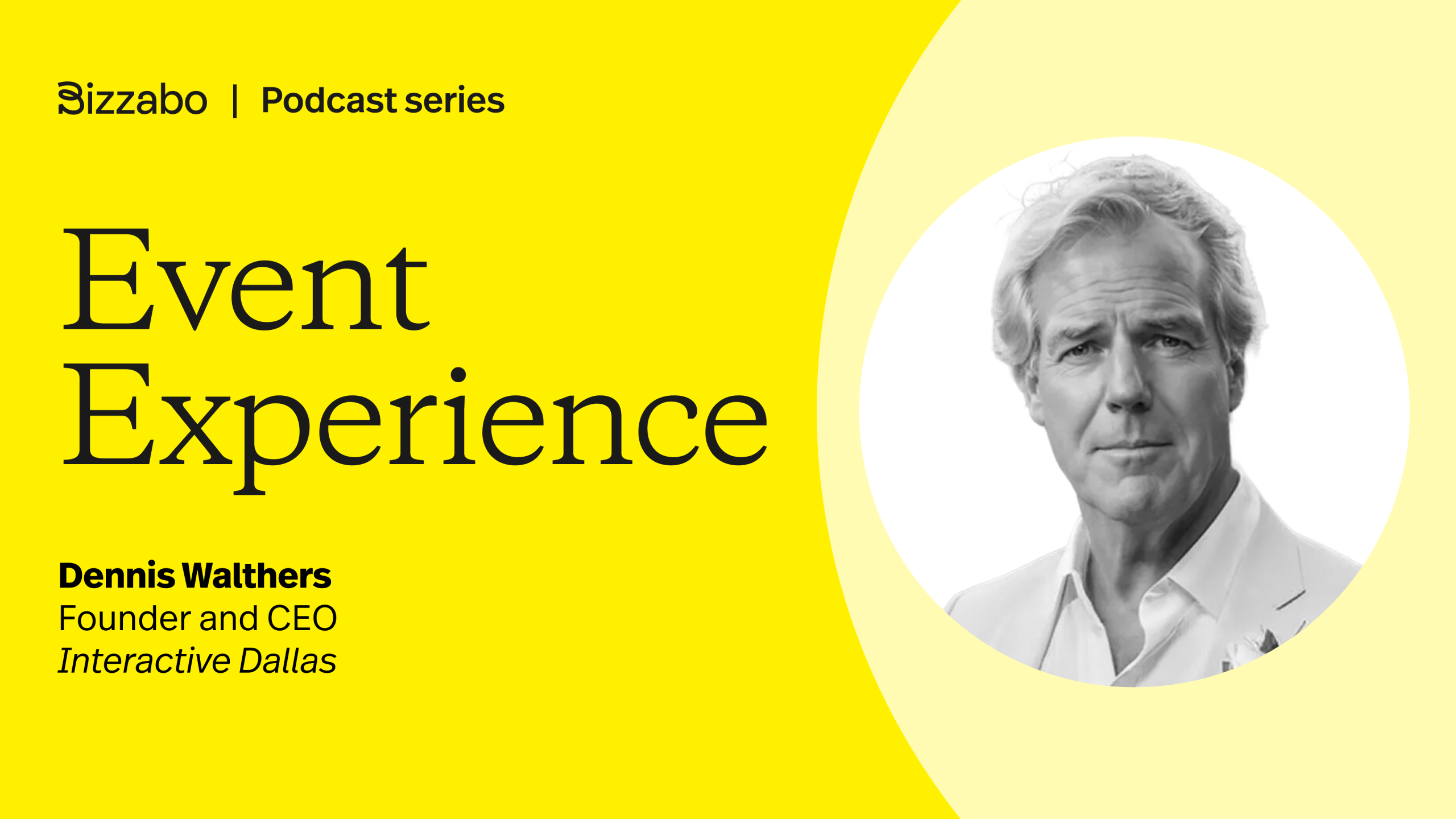
In this episode of Event Experience by Bizzabo, host Rachel Moore sits down with Dennis Walthers, Founder and CEO of Interactive Dallas, to explore how AI is reshaping live event activations.
Dennis shares the company’s evolution from a single digital graffiti wall to a full suite of interactive experiences. He explains how listening to client needs and embracing emerging tech, like AI-driven photography and real-time personalization, has kept Interactive Dallas on the cutting edge of experiential marketing.
Listeners will hear how AI tools can streamline event workflows, boost creativity, and personalize attendee experiences. Dennis also offers real-world insights into execution challenges, the future of human-AI collaboration, and why thoughtful innovation is key to sustainable event success.
What you’ll learn:

Welcome to Event Experience by Bizzabo, the podcast where we bring the best and brightest event experience leaders together to share stories, tips, and lessons learned from crew eating some of the world's biggest events. I'm Rachel Moore, your podcast host.
If you're still trying to get over the hump of equating live events with AI,
it's a good thing this episode is next in your queue. We're about to hear from Dennis Walthers, Founder and CEO of Interactive Dallas about the evolving landscape of event planning and the integration of AI technology. Dennis shares how his company is pushing the boundaries of live event activations.
Practical applications and examples of AI in enhancing attendee experiences and the future of AI in the event planning industry. It turns out AI can help you manage ever-changing client expectations for [00:01:00] their event experience.
Rachel: Welcome back everyone to a new episode of Event Experience by Bizzabo.
I'm very excited once again. I'm always excited. When am I not thrilled to have another interesting guest, an event planner or someone who is working in the weeds of this industry we love and is about to impart their wisdom upon you. So I'm super excited to introduce today's guest. Our guest has over 20 years in executive sales and marketing leadership at companies like Cisco, Deink and Epson leading global teams, scaling businesses, and now bringing that expertise to the world of live events aI powered engagement. There you go y'all, little teaser what we're gonna talk about today and customer experience strategy.
He has partnered with brands like Nissan, Dallas Cowboys, Toyota, Pepsi Company and Nike to deliver interactive activations that drive deeper connections, viral moments and [00:02:00] measurable, ROI. And finally, he is the founder and CEO of Interactive Dallas. I'm so pleased to welcome Dennis Walthers to event experience. Dennis, thanks so much for joining us.
Dennis: Hi Rachel. Thank you so much for allowing me to be on and having me on. This is a, an exciting opportunity.
Rachel: I'm excited too and I appreciate you taking the time. Um, I know we already chatted about the weather in Dallas versus Denver right now at this time of year, but sounds like you've got a better end of the stick on that one as far as right now goes. But speaking of which, I would love to learn a little bit more about you.
I barely glossed over your entire experience in two sentences there. But can you tell us a little bit more, tell our audience a little bit more about you and your day-to-day and kind of what you're all about being the founder and CEO of Interactive Dallas and what your day in your world looks like.
I
Dennis: greatly appreciate the opportunity. The Interactive Dallas kind of came out of um, when I left corporate America and started this company, we had one activation. This goes back to 2011, 2012 kind of timeframe. So we have been doing this for, you [00:03:00] know, roughly 15 years now. It was kind of interesting as we got into this whole technology piece and we initially first used a product called Air Graffiti.
It wasan interactive digital graffiti wall. And it was my expectation at the time although I was pretty novice, that I could really build a business around one activation being a digital graffiti wall. That didn't happen to be the case. As I found out, as we matured and grew our knowledge base considerably in the event space, we really recognized that we needed to expand our offering and offer diversity and scale up and have a bigger selection. So we have tried to do that over the years and every year we try to bring one or two new activations on that are, in most cases, something that people haven't seen. So we try to do something a little bit more revolutionary and extraordinary as well as some of the mAI nstream stuff, so.
Rachel: alright, we're gonna tackle our get to know You questions. you can pick which one you wanna answer. I [00:04:00] used to just ask event planners, what are your go-to on the ground event day shoes?
Now that is a perfectly great question 'cause I always get great recommendations. But otherwise, instead of that one you could answer what is your go-to AI prompt for event success? So I'll leave it up to you. Which one do you wanna answer about your shoes or about AI prompts?
Dennis: Well, the AI prompts is certainly where all the intelligence is, right? I have to admit, I am not a great AI prompt writer,
Rachel: Who is?
Dennis: But I can have enough
I have enough of an idea, or I can ask ChatGPT for ideas.
Rachel: That's right.
Dennis: Which is really key. And then, Ask ChatGPT to help you write the prompts, right?
So whether I'm writing a prompt for an AI booth, like we have an AI booth tomorrow that we're doing, and it's an eighties theme, and so there's four or five prompts that I have to write for that today that I will use right? I have a general idea, but I had gone before I even went into [00:05:00] ChatGPT and said, Hey, help me generate five or six ideas for eighties themed AI booth.
It does an amazing job, and you can clip those out and copy 'em and paste 'em and send 'em in an email to a client and say. Here's some thoughts. Let me know what you think about these. Which ones you like? In this particular case, I think I sent 'em like eight and they went, we like all of them.
So like, okay, well, we'll do all of them for you, but you know, it's use AI , use your prompts, use ChatGPT as a cheat sheet to help you get what you need, and especially to help you be more creative.
Rachel: Nice. I love that. Great. And you're right, you can actually ask it to help you write the prompt. You don't have to be like, oh my gosh, I gotta dig deep and figure it out. It's like, it can help you write it. It'll be great.
Dennis: definitely.
Rachel: Is there anything that you're listening to, watching or reading these days that you cannot put down and it doesn't have to be events related?
Dennis: Well, I don't have much time to read as much as I used to. I listen a lot to YouTube videos when I [00:06:00] walk my pups or whatever the case may be. So, I'm constantly learning and most of that is around AI right now. So that's probably where, I spent an inordinate amount of my time in terms of understanding and or learning about the new opportunities that ChatGPT and others are bringing to market.
Rachel: Awesome. Well, that, that makes sense, especially considering the stuff you guys are putting out. So that's great. And lastly,you might answer this the exact same way. Is there a particular social post or a piece of media or a hot take about events that you found interesting lately?
I'm guessing it might be about AI. What do
Dennis: Yeah, I think it's gonna be YouTube based AI stuff. I mean, there's some really good creators on YouTube that are breaking down AI and simple terms that are very easy to understand for just about anyone. If anybody's out there going, I don't know anything about it, I don't wanna learn, and they're closed-minded I really invite you to open ChatGPT and start playing with it.
And you'll just be [00:07:00] amazed.
Rachel: Absolutely. I completely agree. And it's like jumping into a pool. You just need to kind of take the plunge and it'll be great.
Well, I think all of our audience can appreciate that. I feel like we're all looking for that, "What is that thing that nobody's seen", you know, you the we're Oh I've seen that, you know, oh, that's been at so many trade shows now, and it's so quickly that some on activation can become passe.
So, it sounds like you're really trying to be on that cutting edge, which, I give props to you for being there because trying to stay on that forefronts gotta be a bit challenging. But I'm sure uh, all of our event planners out there are like, yes, but we're glad you're here.
Glad you're here doing that work, right? Yeah..
Dennis: I mean, we work with most of the largest DMCs in the market and are their go-to provider in most cases. So, yeah, they challenge us all the time to bring new activations on and are looking for the latest, greatest. And, in fact, we get challenged from time to say, can you do this right?
Mm-hmm.
And some of it we've heard of and played with, and some of it we haven't. And I'll give [00:08:00] you an example of that. We had a client last year that really came to us and they wanted to do Iris photography. And I was like, well, this is really interesting. Everything we do is photography and video stuff anyway.
And I like the sound of it. I had to educate myself considerably and actually went and experienced Iris photography for myself before we brought this to the market and had to develop a way that we could bring it to market and do it in a timely fashion. And that ended up being a kind of a whole adventure in itself.
Right?
Cause we could take the photography. We fastly recognized that one of the things that happened with the iris photography was we had to have real person, real time editing from a human being on site, right? So I could take the photos of the eye, but I needed somebody that was capable of actually editing that photo, making it look its best crop that iris out, put it on a black background, add logos to it, and do those kind of things, and do it in a, in a timely fashion, right?
[00:09:00] So I had two or three Photoshop experts that I gave this challenge to and had them practice. And uh, we had a gentleman that thought he could do it in one minute per photo, which was kind of my expectation. We actually got to the event and started doing it, and I was taking about one photo every one or two minutes, but it was taking him five to eight minutes to do the editing.
So we quickly found ourself in a situation where we had a backup. And it was one of those learning experiences as we often find in live event activations, right?
So we left that, came back to the drawing board and Okay,, we've, got to figure out a way to speed this process up. And we started toying with how we could do this with AI.
And over the course of about six weeks, we developed an AI editing tool that now eliminates that human editor and can take the raw photo that we take, edit it, and print it [00:10:00] in 25 seconds.
Rachel: Whoa. Oh my gosh.
Dennis: it allows me to take photos at one a minute if I can move a line through that fast and be able to stay up with it and have somebody on the other side that's printing those photos and handing them the guest and those types of things.
But there was a lot of challenges along the way, right ? With this one, because even though I took a photo of your eye if I saw that photo 10 minutes later, I couldn't tell you whose eye it was.
Rachel: Oh my gosh, right?
Dennis: So we had to track everything by an image number. So we used the canon or
Rachel: Yeah.
Dennis: Film image, camera, photo number that is that's provided and that stays with that image throughout the process.
So if you're image number 1122, when you come get your image, you'll find your Iris is labeled 1122. And that's how we can match it to you. So if we're at a live event and you take your photo and go get a cocktail and come back, we know how to find your photo. So there was a lot of learning experiences just in bringing [00:11:00] that activation to market, but that's a really new one.
And we're actually doing quite a few events coming up right now with Iris Photography and it's pretty exciting. The turnout for that has been pretty amazing. You know, typically, we show up at an event we'll set up and everybody that's working the event, they've already seen the photos and videos and all that stuff, so they're not very interested, but not the case when you show up with Iris Photography,
everybody that's there working the event wants to get their iris photo done before the event. So, we just did a, an event with a organization here in Dallas called D Magazine. They have the best of kind of thing that do, they do quite often. And we did the event with them and found the same thing
we were taking everybody's photo before the event, and as soon as the event started at seven o'clock, I looked up and I had 35 people in the iris photography line. And I was like, okay, well this is gonna be a, a funny event. We took 125 photos in two hours at that
Rachel: Woo.
Dennis: So yeah, it's learning [00:12:00] experiences, right?
Totally different than anything we had ever done. The challenges we faced with Iris photography or different than other activations. So, quite a learning experience.
Rachel: I love that you shared that, and thank you for doing that because yeah, you talk about a real hands-on a practical world you know, experience that you and your team endeavored upon all started with somebody asking if you could do it, and then you put it to use and did it. And I know we're gonna go along this path now too, because something you brought up there, I mean, you brought up one example of how and where AI can practically fit into this, arena, this career we all have of activations of especially live event activations. And I'm gonna, repeat a phrase I wish I could say I coined this myself. I did not. I saw it on social media, "Everything everywhere AI at once". Which is what it feels like nowadays.
You know, you can't not talk about it because it's around and it's a reality and we're all kind great. It's something we're [00:13:00] all working with and wanting to work with more, but that does seem to be the theme that's everywhere right now. And I'd love you you mentioned AI, just in that example.
I'd love to get your perspective on that was a great example, but also other ways AI is impacting positively and negatively. So I know it's not, it's easy to say, oh, it's great, you know, it just to give a pat answer, but maybe it's a little bit more complex than that. But yeah, can you give us your perspective on how AI is impacting live activations of today?
You know, get, knowing that we just got that one example from you of how it worked out great for you once you got it kind of dialed in.
Dennis: Absolutely. And I mentioned that too because we are constantly learning, right? I am learning every day, especially in this new AI world where every day is a news day and there's new records being broken with AI and, you know, trying to stay ahead of that curve and stay up with that is, is very [00:14:00] challenging.
And then trying to apply it to your business whether you're in the event, business or any other business trying to apply it is very interesting and challenging as well. But AI for me, at least in today's world, is a critical tool for success, right? So, today it's impacting us in very beneficial ways.
We just talked a little bit about using AI to edit photos, and in that case we are editing. Using Nano Banana, if you've heard that term from Al. It's actually a Google Gemini 2.5 Flash product is the boring name, but Nano Banana is the fun name. And you know, just being able to take an iris image and drop it into Nano Banana and then give it a prompt to edit that and watch what happened blew me away, right?
And then being able to take that product or take that one test and turn it into a viable product that works automatically [00:15:00] and in the background, you know, that took a little bit more doing, but it's an amazing tool and it's amazing to watch. It even surprises me on a day-to-day basis to watch these tools.
The other way that AI is benefiting us today in an amazing way is with our AI booth technology in that we can create themed characters from normal photos. And if you haven't experienced this it's breathtaking. It's really mind-boggling, the capabilities that AI has to do, and we're challenged on a regular basis on can AI do this for us, right?
From the event planners that approaches and the answer is usually, sure, let me test and we'll find out what capabilities we have, and we find very few limitations. The limitations are mostly in our minds, right? So.
Rachel: Yeah.
Dennis: I'll give you an example. we were contacted by a client that was doing a trade show and this trade show was in Vegas.
And this company was a sponsor for McLaren F1 Racing. They [00:16:00] typically had a large booth where they could bring in a very elaborate, very high-end racing simulator, but in this scenario, they were participating in a trade show that was smaller, but they still wanted to make an impact and they still wanted to have their McLaren F1 kind of theme out there.
So what we set up for 'em after some dialogue was a way that we could shoot photos in their booth, and then transform those characters, those people into McLaren F1 racers. They had a McLaren F1 racing suit. They had the brand logo on the racing suit. And we put them in a McLaren racing garage with McLaren Neon likes, McLaren F1 racing cars behind them, and really cool lighting.
And we branded the whole thing. Amazing because at this event, it was probably 95% guys, right? It was a kind of an internet security type of trade show. And all the [00:17:00] guys, I mean, they all loved this activation. And we did 1200 photos in two days just taking photos and people were able to print them and get them digitally as well.
And we had a lot of fun with it, just an amazing amount of time. So it was a great time. So the key takeaway was AI just becomes a tool that we continue to use and improve on. Another example of this was we're in Dallas, so we're pretty good friends with our friends, the Dallas Cowboys, and do a lot of activations at their facility called The Star in Frisco, Texas. And they happen to be chosen. There's a new sports Innovation forum that's put on by Biz Bash. We were challenged by the Cowboys to bring an activation to this that was appropriate for the sports marketing theme of the event.
And something that was new and unique and they hadn't seen before, nobody else had seen. So we took that as a challenge. We gave them two or three different ideas. [00:18:00] They shot 'em all down. So I was like, well, okay, this is very interesting. So I went back to the drawing board and played with it a little bit, and we finally come upon an idea that we had to test and create in AI, where now what we are able to do is take a photo of you facing straightforward and just a normal photo.
Your street clothes and then through the magic of AI. We'll turn you into a super fan. You'll be able to select your jersey number that you want printed on your jersey, as well as the name you want printed on your jersey. The AI will actually turn you around, put the name across the chest or the back shoulders, and then put the number you selected on the jersey and you'll swear it was printed on that jersey and it puts you in if you're a Cowboys fan or it doesn't matter.
We have all 32 teams now. It'll put you in a hat the whole team jersey and make you a super fan with your own personalized jersey. Uh, So we created that for him and shot [00:19:00] that over to him and they went, love it. We're gonna go for it and we're gonna move forward with this. So that's an activation that we will be rolling out during the reception for the Sports Innovation Forum here in Dallas.
Rachel: Wow. I again, love the examples too, because I think that, you know, we've even talked about with other guests on this podcast, and even the webinars we do at Bizzabo. You know, we're always talking about our infusing AI what are the practical ways to use it? We even have a webinar upcoming at Bizzabo that's gonna get really kind of in the weeds of like, you know, prompts to use, tools to use.
I love that you've talked about Nano Banana. You know, hey, this is a thing that's available in Gemini, which is Google Workspace provided. But knowing what the tools are. But there's so much capability there too. And I, I think the key as well is obviously, you know, Dallas Cowboys, they're not interacting with the AI themselves to do this, they still knew to come to you. They're like, look, you've got that reputation, that credibility of this is what you do in the industry. I know you'll come through for us. You'll figure this out. You will get us the [00:20:00] solutions. And I really appreciate that you're sharing. You know? Yeah. let's ask AI what is possible and then, you know, apply the human factor to that to say.
Well, let's execute that then. What can we do using AI smartly? But this idea, and I've been there and anyone who's listening to this podcast and has used AI, you absolutely can go to it for questions and get some ideas, but your mind can still be like, great, you got me about 65% of the way there. I'm gonna take it the rest and keep developing this idea that is still infused with my human brain.
And that leads me to my next question too, because again, I didn't say this myself, but I've heard an event planner say, well, AI isn't going to fill a swag bag for me. You know, there's, there are limitations as to what AI can do, and maybe they, it can't do it now, who knows?
Right? In the future, do you see AI's impact on events at event planners changing drastically in just the next one to two years? 'Cause I know you just gave us some examples of things that are, you're doing current day, like what do you think's gonna [00:21:00] happen in the next one to two years as far as AI impacting event planners and what they do?
Mm-hmm.
Dennis: Yeah. So it's probably the biggest question that I continue to ask myself. And I ask everybody in the business too what their thoughts are because nobody knows, right? We don't know what it's gonna look like 24, 36 months out. I have my concerns and it's really interesting as we think about it.
But in the next 24 months, I think things change. I don't think they're too dramatic, but I think there is probably, as we think about AI and how it affects jobs in some of the companies that are doing big events right now, I think there's certainly an impact initially on maybe support teams. You already hear about some layoffs from the support standpoint and people being impacted and jobs being impacted in the support.
I think maybe in the next two years you see that affect some of the sales and some of the marketing, some of the lower end [00:22:00] positions. But I think we're still gonna have you know, fairly large teams.
And I think the need for events is even more important as those remaining teams need to be brought together and propped back up and built back up in terms of making sure they feel important to the organization and not just next on the waiting list to be cut, right?'
So, you gotta keep productivity high over these next two or three years as companies are developing AI and it's taking jobs. And so it's it's an interesting balance of the human element, AI element, how it can improve processes. You know, as I experienced, I could go from five to eight minutes and edit to less than 30 seconds by eliminating the human element, right?
No offense to the human element that was trying to help me. The, it was just a challenge. It was just a unique challenge and it just couldn't be done faster. So
Rachel: Yeah.
Dennis: now where, where do we [00:23:00] go four years out, five years out, my guess is, you know, the AI is gonna take jobs and it's gonna mean there's fewer people to attend events.
But I think we'll do events, they'll be smaller events, smaller in terms of the number of people, but I think they'll move upscale in terms of, they'll become more luxury style events and you'll have key decision makers that are brought there for collaboration. So I think those events are gonna be around for quite a while.
Rachel: Good. Yeah, I appreciate that. Honest take too. I was actually listening to another podcast this last week, and I, I don't remember if anyone listening remembers with the Johnny Depp, Charlie and the Chocolate Factory where in that story, the dad, you know, he works at a factory and then he's made obsolete because there's a machine they bring in that does the job he did.
But then at the end of the story of the movie, the machine breaks and he learns how to fix it, and now he's got a job back where he maintains the machine that took his job. [00:24:00] And I feel like coming off of what you were just saying, there feels like there's an opportunity.
I wanna take it with that kind of optimistic look of it. For leaders out there and maybe not even just leaders, but people in the events industry. And let's just keep it to the events industry for now, but figure out how to say. Well, there are things that humans will always need to do with AI when it comes to events,
figure out how to create that balance and make that a necessity. And figure out how to innovate that to say, just like you were saying, maybe some lower level jobs get lost. Well, what? What can they do instead? You know, and trying to figure out, saying, well, these humans need to go somewhere. because again, this is an industry about humans.
You know, you just talked about it's gonna be more crucial for events and people to get together and teams to get together, and AI can't do that for them. So all that to say, I think that you really bring up some great points about. We do need to be forward thinking about this. And it's not all rose colored [00:25:00] glasses.
There's gonna be some collateral, maybe damage around it, but how do we minimize that together? But I really, I appreciate that honest kinda look forward. I think we're all facing it, right?
Dennis: I think we're all trying to figure it out at the same time. Right. And AI is great tool today, but what it becomes five years from now it's hard for us to recognize.
Rachel:
we'll be right back with more event experience after the break.
Event enthusiasts, are you hungry for the latest event trends and insights? Pop open your laptop, pull up your favorite browser, and head to the Bizzabo blog, that's B I Z Z A B O dot com forward slash blog, for fresh perspectives and expert takes on what shaping the world of events. Plus, subscribe to get blog updates sent to your inbox every two weeks, and never miss an article from bizzabo.com/blog. Do more that matters with Bizzabo.
we're back with Dennis Walthers to get his take on where attendees experience the [00:26:00] most friction in today's events
Rachel: I'd like to ask you though, let's flip that. You know, that's obviously a little bit more of a frictionless experience, but where do you think the most friction is happening today around attendees and the events and activations they're trying to engage in?
Where are we kind of hitting those snags, would you say?
Dennis: Yeah, so my thoughts on this were It kind of goes back to, you know, just regular event planning, but where we see friction today is most of the times we're brought in with an activation. And it could be, you know, 1200, even a 2,500 person event. And they the event companies and the planners didn't formally or thoughtfully think through how many activations are we gonna need to get through for all these people, right? So, we continue to find ourself in a situation where the lines are longer than they should be because there's not enough activations. And, I'm always considerate to people that are standing in line for long times for an activation and thank 'em [00:27:00] for their time to do that.
But so that's one of the biggest ones is just maybe not putting the pieces together where we can see the headcount and the activations kind of come together. The other one, and it's kind of AI driven which is interesting to me too, but we've seen this recently, where we'll bring an AI booth to an event and maybe there's three or four different kind of looks in the AI that we're offering.
And most times people will come through, they'll get a photo and they'll be done and they'll walk away. Now with AI, they want to come back through and say, what else do you have? So all of a sudden we're seeing people come back through three, four or five times at the same event because they wanna see what other photo activations there are.
So that, that kind of compounds the issue of longer lines when you have a lot of people. So we are trying to persuade event companies and planners to add two or three AI boosts when we're for larger groups, right? So that's, that's maybe the best [00:28:00] case I can point to.
Rachel: I even think about that though too. You're at a trade show at your booth and you've got an activation where people are like, I don't wanna just come through once, I wanna come through again. That's the money right there. 'Cause if they're, you're making them come back into your, your brand, you've just created a 3D model of your brand that they're immersed in and they're coming back for that, yay.
But they don't wanna face a long line that's gonna be exasperating really quick. So it is quite a balance to try to strike, to make sure you're, you've got the right amount of space, you've got the right amount of activations to keep people plugged in, but spread out where they need to be so you're not creating that gridlock you know, that traffic jam kind of, which makes everybody frustrated,
Dennis: right, right. Right.
Rachel: Yeah. I love that we led off with the Irish photography which I, now I'm gonna go do some more exploring about that afterward because it sounds super interesting. Anything else that you like an event or activation that your team's working on that you think is particularly exciting or groundbreaking since that is your bread and butter, sir
trying to come up with those on the forefront kind of things, but what do you got going [00:29:00] on?
Dennis: There's a couple of things. For me, it's always listening and trying to listen to the client. And I love talking to end clients that are planning events to understand the challenges that they face. And I'll give you an example then I, I'll touch a little bit more on, on your question.
Are you familiar with Jimmy Fallon's got a new show called On-Brand?
Rachel: I have not seen it, but now I want to.
Dennis: And I've only seen two or three myself. But he did one and it was around Southwest Airlines. And Southwest Airlines was also a Dallas based company, right? They were working on ways that they could communicate larger mortal leg room.
So they were gonna expand leg room from 31 inches to 34 inches.
Rachel: Ooh.
Dennis: All three inches. But so they had, that was part of the on-brand challenge where they have interns and each one of these interns gets to propose and make proposals to [00:30:00] Southwest Airlines. And Southwest Airlines accepted a proposal from a, the Dallas based gentleman, and he had proposed doing some kind of a, like a superhero themed look on the airplanes with, you're the superhero because you get more leg room kind of a tie in, right?
So, Southwest Airlines and an agency contacted me and said, here's what we're trying to do and you know, what could you help us with? How could you help us bring this to life at? 'cause they were gonna do the announcement of the winner on a Friday.
And so we helped 'em develop using AI, develop this superhero kind of a look. And we weren't under NDA, we didn't know all the details of what they were doing just yet, so they couldn't tell us a lot. They just keep kind of pushing back, no, that's not quite what we want. Maybe less serious, more right.
I was kind of getting these hints. I'm like, okay. So we kept kind of coming back to 'em with ideas and we finally hit on one they loved and it was very cartoon-like. [00:31:00] But we were invited into that last Friday night event where they announced the winners and everybody at the event got to do their superhero themed AI booth print.
So that was,really a fun one, right? So we are constantly listening to the customer in terms of trying to develop things that make sense and are a good tie into the brand and everything that we're trying to accomplish for the brand. So one of the things that we had been working on for years and the first activation we brought in back in 2011, 2012 was digital graffiti.
The way that works today, it's a rear projection screen, which has its limitations. And we were always looking to upgrade that to like an LED wall, which would be brighter, take up a lot less room than rear projection. So that's kind of on the drawing board right now for Q1 2026 is being able to use a flat, like a 12 foot wide, seven foot tall [00:32:00] LED wall for a digital graffiti so that you would have a digital spray can that would work with the LED wall. So we're that's kind of in testing mode and hopefully we can roll this out in Q1 of 2026. That'll
be fun.
Rachel: I'm staying tuned to that and I hope all of our listeners are too, 'cause that sounds super cool. I would totally do that at an event and stand in line for that, because that sounds really cool. But, oh, I love this, this all makes me nerd out because I like, I love the fact that technology's available.
But then seeing the creativity behind it and what y'all are trying to do, just so someone can experience this for real is awesome.
Last question, easiest question of all, where can our listeners find and follow you online?
Dennis: Our website is interactivedallas.com.
Rachel: That is super easy. Excellent. We'll definitely reach out there. Thank you so much.
to [00:33:00] Skill Up yourself and your client's event experience, dennis suggests that we do less talking and more of the other thing.
Dennis: I think the single piece of advice is listen. Listen closely to what the clients are saying and asking and communicating. 'cause it's, it's very, very often that I'll get contacted by agencies or clients that really don't know what they want. They don't have a specific, so you try to listen to them about, tell me about the brand.
Tell me about who you are. Tell me stuff. And then maybe I don't think of it on that call. Right. But I'll listen, i'll have to give some thought to what is the right solution for them or create solutions. The Cowboys was a good example, right, of you gotta listen first and you gotta develop something that meets the client's needs.
So that's probably the single biggest thing I would tell anyone doesn't necessarily help you be more creative and to be more creative, i'm gonna highly [00:34:00] suggest use AI, use ChatGPT 'cause ChatGPT can help you. Not only you can ask it questions to help you find the right voice, the right activation, the right thing, then you can ask it to help you develop it, right?
So, um, it's great for online and internet and web and your websites or you want to, you need tools to help you create with AI, with ChatGPT. ChatGPT can help you find the weaknesses in a website. It can help you flush out and create content for your website that fills those voids.
And most importantly, in today's market, if you're not using AI to develop your website and your online presence you're sorely missing an opportunity, right? Because more and more people are using ChatGPT to search the web, not just look for information. Right? So you can go into [00:35:00] ChatGPT, and you can search something like AI Booth Dallas, and if you're lucky, you'll get mentioned as the source by ChatGPT. If you go use that exact example, you'll see Interactive Dallas is mentioned as the source for AI booth in Dallas, right? So,and ChatGPT and other AI s can help you flesh out this information so you become more at least easier to find via the web.
Thanks again to Dennis Walthers for joining us on event experience, and thank you for listening. If you're enjoying the show, we'd love to hear it. Connect with us on social and subscribe, rate, and review us wherever you're listening. Also, don't forget to share the show with your colleagues and friends. You can find transcripts of each episode and key takeaways on bizzboo.com/podcast. On behalf of the team, thank you.
We'll gather again soon for a new episode of Event Experience.
[00:36:00]


