Subscribe to our emails to get the latest insights, resources, and expert tips straight to your inbox.
SIGN UP NOW

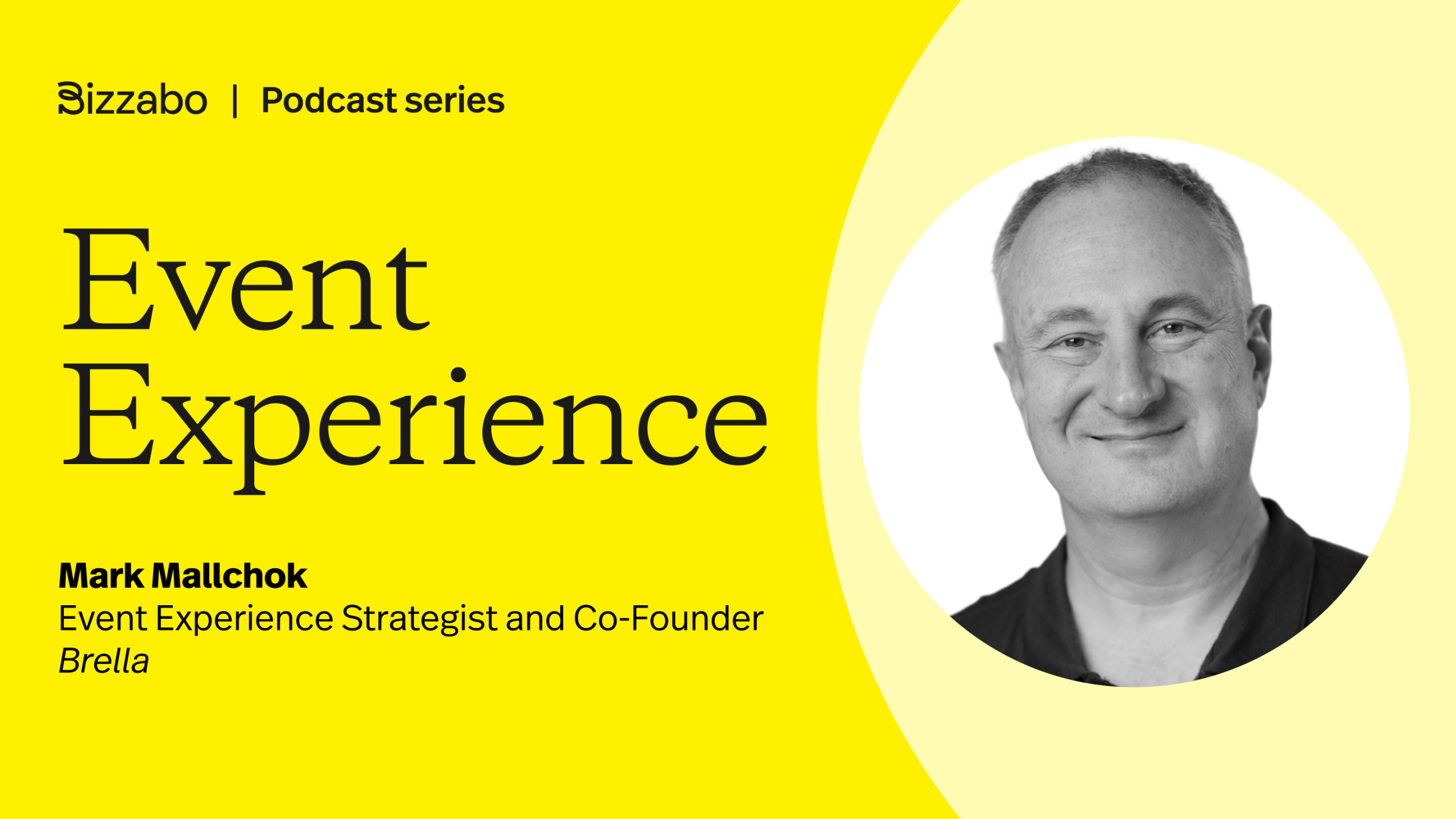
In this episode of Event Experience by Bizzabo, host Rachel Moore sits down with Mark Mallchok, event experience strategist and co-founder of Brella.
With over 30 years in the industry, Mark shares how events have evolved from traditional in-person formats to what he calls the “Virtual 2.0” era, where engagement, production quality, and accessibility take center stage.
He challenges common assumptions, including the belief that in-person events are always more effective and that virtual events inevitably lead to Zoom fatigue. Instead, Mark explains how virtual experiences have expanded access, enabling participation across geographies and budgets in ways that weren’t previously possible.
The conversation explores how event planners can create more compelling digital experiences by prioritizing audience engagement over content volume. Mark encourages planners to think like broadcasters, focusing on storytelling, pacing, and production value, while also drawing inspiration from creators outside the events industry.
He also addresses the role of AI in event production, noting that while technology can enhance execution, human connection and storytelling remain at the core of memorable experiences.
This episode is packed with practical insights for planners looking to adapt, experiment, and elevate their virtual events in a rapidly changing landscape.
Enjoyed this content? Subscribe to our newsletter and get insights like these delivered straight to your inbox.

Rachel: Welcome to Event Experience by Bizzabo, the podcast where we bring the best and brightest event experience leaders together to share stories, tips, and lessons learned from creating some of the world's biggest events. I'm Rachel Moore, your podcast host. The pendulum of the event industry is in constant motion, which is why I bring you today's guest, Mark Mallchok, an event experience strategist and co-founder of Brella Productions.
Rachel: Together we discuss the evolution of event formats, the importance of engagement in virtual events, and the misconceptions surrounding virtual meetings. If you want to know the magic number for your virtual events time link for optimal engagement, you need to lock in for this full episode of event experience.
Rachel: [00:01:00] Well welcome everyone back to a new episode of Event Experience by Bizzabo. I am your host Rachel Moore and I am about to introduce to you today's guest from Theater Kid uh, which I love 'cause I am too to co-founder and senior event strategist at Brella, a global event agency.
Rachel: Today's guest brings 33 years and then some of event experience to this very episode. He specializes in creating engagement with audiences through storytelling and the creation of sales, Marketing, and training materials for healthcare organizations, educational publishers, agencies, and in-house corporate communicators throughout the globe and the spectrum.
Rachel: And with all that, he's found the time to join us. I am so thrilled to welcome Mark Mallchok to the podcast. Welcome Mark to event experience.
Mark: Thank you, Rachel. That was a mouthful, wasn't it? Of all that stuff.
Rachel: It was but not enough. I mean, I barely like, give a, I give two [00:02:00] sentences, you know, that I'm like, oh, I still need to get a sense of you. And that's what we're gonna do right now in this segment. So, with that, I am gonna actually lob it right back over to you, Mark, because uh, can you tell us a little bit more about yourself?
Rachel: Your day to day, your world, you know, your role. Um, Give us a little bit more expansion upon who you are on the day to day.
Mark: Absolutely. Hi everyone. I'm incredibly happy to be here. So, as Rachel mentioned I'm an event experience strategist and I'm a co-founder of Brella Productions. And what I do every day at the core is I help meeting planners breathe easier. Uh, At Brella,
Rachel: Ah.
Mark: our goal is simply to remove the stress from corporate events by making them more efficient.
Mark: Making them more economical and making them more engaging. So we're by our client side through the entire life cycle of the event from the very beginning in goal setting as strategic advisors. We're technical translators during the middle part and on show site, and we are problem solvers, which is probably one of my most favorite things to do.
Rachel: Well, our [00:03:00] audience can certainly relate to a lot of that. 'cause, you know, event planners really are, you're, I always think of those like, little omni tools. Like they literally, like, it could be a card shape or even like a Swiss Army knife. You literally have so many things that you can accomplish for somebody.
Rachel: but you and your agency do all of that and more. So, we'll get to know a little bit more about that in a little bit.
Rachel: but I'm gonna get into some personal get to know you questions here.
Rachel: So something that we ask this of every single podcast guest as well as on visibo webinars because this seems like something that kind of applies very heavily to the profession that event planners are in. Um, Okay. For those days when you are spending. 10, 12, 14 hours a day on your feet. What are your go-to on the ground event day shoes you prefer to wear?
Mark: When I'm not forced to wear fancy shoes my go-to is a Merrill low top hiking shoe. I figure if they can handle a rocky trail hiking in Alaska, they can handle that. Actually, but I will throw a random one in here. My ideal. This one's wacky is would be [00:04:00] slippers or flip flops as they're called the mainland. I actually grew up In Hawaii, right? And I was wearing slippers since I was a kid. And I had this amazing experience. I did a gala dinner on a beach in Puerto Rico a long time ago. And so, I'm constantly searching for another event that I can do in either bare feet or slippers. So that's my, that's my wish.
Rachel: I cannot judge that because yes, I mean, and there's just something about being almost barefoot and especially in those situations like this is just cozy and I like it. I love too that you mentioned the hiking shoes. 'cause I have been in positions and I'm sure our audience has been this too, where, oh, I need to get back in the room where all the electronics are and pick my way through extension cords and cables and all this stuff.
Rachel: and yeah, that's a lot like hiking. So it seems like a very appropriate shoe choice. So appreciate that. Is there anything that you're listening to, watching or reading these days that you can't put down, and it doesn't have to be events related.
Mark: so I'm gonna embarrassing admission here. I'm the son of two librarians and I am currently [00:05:00] not reading. Any fiction books right now, but when I did, when I did I love science fiction and that's actually how I got started in the events industry I was doing during college and right outta college I did a lot of large science fiction conventions and I ran their film program.
Mark: Uh, So that's how I got into it. But I'm reading a lot of nonfiction right now by the side of my bed. I have three books. So the first one is The Bravery Effect by Jill Schumann. It's uh, a book on the science of bravery, conquering Fear and living, your best life. Amazing book. She was a keynote Rachel for one of our clients.
Mark: She started out as a US Marine. She did amazing stuff there. Then she went into pharma and she became a expert on, breakout stuff and being a keynote Rachel. So great one there. The second one, this kind of shows my diverse interest 'cause I'm all over the place on interests. I have one that's a business book.
Mark: It's called, what the Heck is EOS by Gino Wickman. That one is about EOS. It's how we help our business stay [00:06:00] organized, right? It's about. Level 10 meetings and keeping these organized and not losing the list of things and planning out your future and how everything works together. And the last one's a fun one.
Mark: My uh, wife and I um, we are avid sailors, love sailing. And we are currentlyhopefully gonna get certified for Bear Boat Cruising Passage, making blue water sailing on Catamaran. So right now I'm reading, reading, cruising Catamarans Made Easy by the American Sailing Association. So that's that.
Mark: Um. Wow.
Mark: Yeah. And that's kind of my media rabbit hole too right now is like YouTube, like my playlist is like anything dealing with like sailing and boats and like how to rewire our electrical system and put solar and do lithium ba. So I've gone down that rabbit hole.
Rachel: Hey, I think that's an awesome rabbit hole told to go down. I am not a sailor, but we respectively, my husband and I have been looking a lot of RV life kind of,
Mark: concept.
Rachel: Yes. And you know, and it's great to like kinda get that real take on stuff, but a lot of people get really technical too. And you learn stuff even that you're like, well actually [00:07:00] that might apply to just normal life and not just sailing or not just RVing.
Rachel: So I love that. Those are some nice spectrum, a nice uh, you know, swath of things that you're reading. Yeah. Wait, Wait up level. This, that's what this whole episode's about. So I love all that. Is there a particular social post or a piece of media or even a hot take about events that you found interesting lately?
Mark: Quite a few like interesting posts I've been reading. I just did my first in-person Club Ichi event. For those of you who don't know, Club Ichi, check it out. It's association. It's really just a social organization or club for event people? So I did one in Atlanta just a few weeks ago and I was blown away by all of the great event people I met and I'm now following all of them on like LinkedIn and we have an insider Slack channel.
Mark: So there's all these posts that I'm reading and contributing to and having conversations. I actually had a meeting with one of the people I met there yesterday just to find out more about them and what they were doing and learn. And we have so many things in common, so, most of the topics right now are around the humanization of events[00:08:00] engagement tactics neuro inclusion, big one, right?
Mark: You know, 'cause we're all different in how we react to things in some sort of way. So that's massively huge. And this trend towards smaller meetings, not these big, huge ones, but smaller, more intense, like, you know, very personal human to human sort of meetings. So a lot of really interesting posts around that.
Rachel: Awesome. that sounds great too, and great time to be talking about all that stuff and have heard of that and man, it's so interesting, like I just did in the last couple podcasts I've interviewed, which again, y'all can check out our episodes and listen to 'em. Community is such a big topic and not just about attendees of the events, we're all planning, but actually for the planners of events and really important to have those discussions.
Rachel: So thank you for that. That's really awesome. I feel like we have a better sense of you, which is really great time now to, let's get into what we're gonna talk about today. Granted, you and I were talking about several things we could touch on today and we are going to talk about. A bit of a pendulum swing.
Rachel: One that but one that has caused [00:09:00] whiplash. So we're gonna address that whiplash in the room that the entire events industry, everyone listening to this podcast experienced over the last handful of years. So. If we wanna dial back in time, I'm gonna do a little Wayne and Garth thing.
Mark: Yep.
Rachel: So there was this normal before COVID and yes, I did use air quotes in case you're just listening to this.
Rachel: Then we swung to virtual during COVID because we were forced to there was no in-person. That was not a safe thing to do at the time. You know, we were just like, yep to, err on the side of caution or just be cautious virtual during COVID. Well then, after COVID. Okay. World open, back up again.
Rachel: Swing back almost wholly to in-person after COVID where, I mean, virtual didn't go away, but oh my gosh. You know, it was just like, wow. It's in-person or bust here. Okay, so Mark, I'm gonna ask you, where's the pendulum today? Where are we? I, I think you have some strong thoughts about this particular pendulum stage.
Mark: I I absolutely do. And I, I [00:10:00] think we're in the middle ground of deciding where to go with things. So just as you said, right? So in-person, we remember all the good old days, like the pendulum was way over on this side. It was in-person, there was incentive travel, like we were all together. It was wonderful.
Mark: Right? And then it had started to creep a little bit in, because right before. In like 20 17, 20 18 or so, we started to get these points where there was something novel. It was new, right? We had like virtual presenters that we put into a meeting, like hybrid became a thing, and we were able to broadcast meetings out to the world, right?
Mark: Again, they were passive viewers, but we were able to broadcast them out to the world without a very expensive satellite truck, right? So we've got a taste of it. But without warning out of nowhere, like you said, right? COVID hits, right, and it slams all the way over to the other side. Right? And we're all alone.
Mark: We have all of this fear, right? There's all these new tools. We're suddenly on camera all the time and we're just exhausted. Right? There's just so much. Right. [00:11:00] And the problem is that when we got outta the pandemic, it was like, we're free. We can escape. It's wonderful. Like, so we had this huge rush to meet in-person post pandemic.
Mark: So like we threw everything away. We're like, virtual sucks, right? It's dead. To me, zoom is awful, right? So we pushed it aside and now we're starting to get to that point. Where're like, oh. There was some benefits, wasn't there? Right. So we're back to this sort of middle ground because virtual has been normalized.
Mark: Right. It's efficient. It breaks down barriers, both economic and geographic. Right? We can have these amazing conversations. It's not scary anymore. Right. So I think that we are in that point and what's exciting for me is actually. Virtual 2.0. Right, which is what's coming next. Like this is the future.
Mark: Right? So I think that we are going to be embracing virtual a lot more, but we have to do it really well. Right? I mean, we have to get virtual back to, you know, the good old [00:12:00] days before the pandemic. Like it needs a better wrap. Like it needs better PR right? And we need to find a really new way of doing it.
Rachel: Yeah, no I love Virtual 2.0. And talking about that, and I wanna dig into that with you. But yeah, I, my gosh, I mean, it really has been kind of a head turner. you know, we, we brought up tennis, we brought watching a tennis match a little bit.
Rachel: It's like, oh my God, back and forth, which one are we gonna do? And, And business is not knowing, you know, where all people are gonna show up. And also, you know, we'll talk probably a little bit about it too, about just geopolitical, social, you know, economic landscape, stuff like that. But let's dig into those virtual 2.0.
Rachel: What are these new ways of doing virtual that we should be tackling and saying, yes, let's actually launch into an actual new version of virtual. Tell us about those. Like what's some of those new ways?
Mark: Absolutely. Well, let me start by addressing and talking about two common misconceptions about virtual meetings. So first, this one's very controversial, right? The belief that in-person is always more effective than virtual, right? [00:13:00] So that's the first thing we can talk about. And the second is that virtual meetings always cause Zoom fatigue.
Mark: I'll use air quotes, zoom fatigue, right? And are more exhausting to an audience. So they tune out and they miss the content, right? So lemme start with number one. So number one, the idea that virtual is not effective, and I believe that's absolutely wrong, and I believe it's the exact opposite. I think virtual can be a lot more effective because it opens up learnings and participation to a greater number of people than in-person.
Mark: Right? It's the great equalizer. Yeah. So during the pandemic, right, we did a study and we compared several reoccurring meetings that we had produced, both virtually and what we had done pre-pandemic in-person, and we found that in-person meetings tended to favor more affluent teams that were in a smaller geographic region.
Mark: Now we work with a lot of pharma and financial clients, right? So the meetings tended to be in Europe. They were very expensive to attend, right? So [00:14:00] the richer and closer countries won, and the rest of the world lost.
Rachel: Yeah.
Mark: So it was interesting because during the pandemic we actually, obviously like everybody had to switch these in-person internal meetings that we were doing to be a hundred percent virtual.
Mark: And we actually discovered something actually pretty amazing by removing the time and money barriers for teams like that were in like Latin America, Africa, and Asia. More teams were able to participate. So every meeting we held during that time had in general more participants and more countries that were represented than ever before.
Mark: Like we have meetings where three times more people attended on average. One, it's six times more people show up, right? Because the teams could have their entire team attend the virtual meeting versus before one lucky person Right. Was able to go, 'cause that's all they could afford to send, right? So there was this broader reach of countries and mostly we found it [00:15:00] was actually ones that were further away from where the meeting was being held, obviously.
Mark: And the ones that had less funds, right? So again, one and a half to probably two times the number of countries. There's one example. I remember that we did this meeting in 2018, skipped a year. And in 2020 they did an increase. So before in-person it was about 150 attendees, small, little corporate mutant, right?
Mark: In the first year that we did, in 2020, there was 345 attendees, right? So it doubled, right? And the countries, it was under 20, I don't remember the exact number, but we had 45, so we doubled the number of countries. And that's like doubling in just one year. Right. And the next year, this is a really cool one.
Mark: In the next year, in 2021, we went from that original a 150 to 950 people attended. And this was training, this was information, this was how to do their job really well. And instead of under 20 countries, we had 65 countries around the world that were represented. I mean, it's amazing as you said, right?
Mark: This is geographic and economic equality.[00:16:00]
Rachel: Yeah. which we have to love, right? I mean, I just think about like standpoint, like we always want, let's expand it more. Let's get as many people to our event as possible. And man, just removing those barriers too 'cause you're absolutely right. I mean, I think we've all been in the position where we're like, well, I'd love to go to maybe a professional development thing or something.
Rachel: And you're like, okay, well I gotta go convince and battle and try to, you know, win the funds to do it. And most of the time they're like, well, virtual is a little cheaper, a little more affordable. We don't have to worry about the lodging and the travel and even the registration costs sometimes can be a little bit different too, but you also talk about the axis of it too, which is so great.
Rachel: We'll be right back with more event experience after the break.
Rachel Moore: Let's face it. Venting won't fix outdated overpriced event management software that lacks the support and features you need. But Bizzabo's Event Experience Operating System will.
Rachel Moore: Say goodbye to your frustrating legacy event software and hello to building more events that matter. Visit [00:17:00] bizzabo.com. That's B I Z Z A B O.com to learn more about the Event Experience OS, KLIK SmartBadge, and more.
Rachel: We're back with Mark Mallchok to revisit the notion of Zoom fatigue and if it's still in the room with us.
Rachel: alright, well let's, ' 'cause I, I think what I'm about to ask too, 'cause you mentioned there were two points because we can think about that and yeah. Okay, virtual obviously opened the gateway for people to, more people to attend, more countries where people from different backgrounds and experiences to attend.
Rachel: but then we talk about, okay, well yeah, but it's a screen the whole time and there is, so, lead us into number two. What's the second misconception we might have about being on the screen all the
Mark: Yeah, zoom fatigue. It, this is an incredibly timely recording of this podcast and thank you for your timing 'cause you were psychic to know this. But this week there was actually a German study that was published. I literally read about this like two days ago after we had talked, right. It was in the journal of [00:18:00] occupational health psychology, something like that. And the study was on zoom fatigue and it was called zoom fatigue revisited, right? And what it was because there was this study that they did back in it was published in 22, so it was like 2020, 2021. And they basically did the study that showed that during the pandemic zoom fatigue was a real thing, right?
Mark: But in the new study that was just published, that was done last year and it was just published last week, they discovered that while it was a real thing that it no longer is because we've evolved to adapt to virtual meetings and remote workplaces, right? So it's interesting because I actually believe that the real reason Zoom fatigue existed in 2020. 2021 is that it was actually because of the environment. Like it was new, different we all felt like isolated. We felt removed from in-person contact as part of the pandemic, and we weren't used to the technology. It [00:19:00] was scary. It was new. It was something we had to learn. And I think one of the big ones is being on camera and performing all day was a huge challenge for most people.
Mark: I was a theater major, like, right? You mentioned, right?
Mark: I'm in sales, I direct events. Like all of those require you to be on Right the entire time. Like I'm performing for my audience every single day, all day, right? And I think that's what happened for everyone during the pandemic. We didn't have the training or the endurance, right?
Mark: We didn't have the endurance for that level of workout. Like people didn't have the muscles built up for that exercise that they were going through and add to the fact that we were also asked to do it over and over all day long with no breaks. Like you remember this, like we would start a Zoom meeting.
Mark: We would end the Zoom meeting. We would close it. We would open the next Zoom meeting. We would go for another hour, and that was like eight hours or more a day,
Rachel: Yeah. Yeah.[00:20:00]
Mark: And it actually, and it wasn't even eight hours. I, I remember that, you know, we now had longer days because we had access to clients in different time zones.
Mark: Right. So we needed to start early. We needed to go like, oh my gosh, I have a meeting with clients in Europe, so I'm up at, you know, six o'clock to meet with them. And then uh, oh my gosh, you know, East Coast and now Central, and now Martin Mountain, and now you know, Pacific. Oh, Asia is awake and it's. You know, eight o'clock at night, right?
Mark: So we needed to start early. We needed to go late. We were skipping lunch and we're skipping breaks. I mean, no wonder we were all exhausted,
Rachel: absolutely. Yeah, absolutely.
Mark: it's we need to blame the environment of the time and not the tool or the technology that we're using, right? So this is part of why I think that zoom fatigue, while it was valid, is not right.
Mark: We're now, we're used to being on camera, right? We're not self-conscious. We've developed coping strategies, right, to be remote. I mean, humans adapt, learners adapt, [00:21:00] audiences adapt, right? And I think right now, virtual meetings. And this came out in the study, right? They determined that virtual meetings are no longer any more exhausting than in-person.
Mark: So the location also makes no difference. It doesn't matter if you are at home remote or working in an office, right? It's not more exhausting to be anymore on the camera. 'cause we built up our muscles, we're strong, we're able to do this right? So this kills the whole return to work myth, right? But totally separate subject.
Mark: But they did discover for everybody who's listening and watching there is a sweet spot and that sweet spot is about 44 minutes. So we have meetings that we put in that we do a 55 meeting hour, right? So we always get five minutes, probably should be 50 minutes, right? To get close to that 44, right?
Mark: But you need that break. You need that time in between to recover. So again, 44 minute sweet spot. They did I'll throw one more nugget out there. They did say that there's one thing you have to be very careful about [00:22:00] for virtual meetings. This leads to virtual 2.0 is boredom actually causes more fatigue than in virtual meetings than boredom in-person, right?
Mark: So we have to work harder to make virtual meetings not be boring, right? We have to engage with our audience. We have to create moments that inspire and we have to create moments that engage.
Rachel: you know, you're saying so many things right now that I'm like I do this for fact right now because like, okay, y'all insider talk here. So, these recording sessions I do for podcasts, 45 minutes. So I'm in the sweet spot. I'm so excited. I didn't even know the study existed, but also I also try not to do more than one podcast recording in a day because.
Rachel: Like you said, you, you have to bake in those breaks so that you're like giving yourself time. Y'all, you've been, we remember, and some of us still are in this where and fortunately again, like you said, we've adapted. I feel like we all became the X-Men of uh, of, virtual, but we've adapted to where, remember like when we first had to be on like zooms all the time, and so [00:23:00] you'd just be like, oh, I better look attentive and like, my and your face would get tired.
Rachel: You would just literally like, you're like, can I just go relax
Mark: smile anymore. My cheeks are exhausted.
Rachel: all heard, like when cheerleaders put Vaseline on their teeth sticking like, smile without your lipstick and your teeth, that was a real thing. And so, um, but it's so accurate what you're saying. so okay we're talking about now we know these things, these misconceptions that we've had you know, based on scientific study as well as just like what evidence we've seen from being through it.
Rachel: So. Okay, today we're in this virtual 2.0, or hopefully we will be. How is that different? Like how is it a 2.0 and not a 1.0, not the COVID virtual or even the pre-Covid virtual? How is it different today?
Mark: Yeah. 'cause it's so different than pre-pandemic and during pandemic. 'Cause like, again, as we talked about like pre-pandemic virtual was a brave new world, right? It was new, it was exciting. Like we were sharing in-person with an audience that wasn't there that they could then participate in for those who could attend.
Mark: Right? And obviously COVID was just pure survival. Like [00:24:00] we had no choice. Like we had to make do with what we had and we had to make the best of it. So I think Virtual 2.0 really is an opportunity for us to create something that is new, that is high-end and is very engaging. Remember, boredom, right? Like, we have to do this, otherwise we're dead.
Mark: Right? So, you know, the nice thing is that, and this is a silver lining, right? It's coming out of COVID. There was such an exponential growth in technology and the tools and our comfort right, as well. You know, so now everybody has home studios. Everyone has 4K cameras. Everybody has great microphones, right?
Mark: You know, and so we're used to it. We're doing it. And I think that gives us a leg up for the future because now the technology can support absolutely anything you want to do. Anything is possible, right? With the right talent, with the right vision, and with the right skills. So it's an interesting thing.
Mark: You know, we have to kind of change our mindset as meeting planners around virtual meetings [00:25:00] because we have to change our thought process. Our competition isn't in-person meetings, right? You are battling tv, you're battling movies, you're battling YouTube, right? And I think that's what we need to compare ourselves to and to emulate.
Mark: So going forward. Right 2.0. I think virtual meetings really need to be thought of as a broadcast television level production, right? Wow So highly focused content and messaging, much like a YouTube or content creator, right? We need to have engagement, much like live theater or musical performances, and we really need to embrace the.
Mark: Interactivity and the community building of an in-person gathering. So it's a lot different. It's going to be new skills. It's gonna be like going back and stretching again, and learning how to build some new muscles because again, if we don't do this incredible activity and provide these incredible moments for our virtual [00:26:00] audiences, they'll go someplace else.
Rachel: Well, and thank you for pointing that out too, that it's not so much, the competition is like, oh, well, you know, if this was just like an in-person thing, it's like, no and I know we're gonna dig into this too because of, I mean, gosh, y'all think of like when you aren't just like, well, and even if you are thinking about stuff you ingest for work.
Rachel: Where are you doing that? You know, and what are the formats you're doing it? Are you always going to an in-person thing? No. You know, you're doing it online and you're probably doing it through some kind of video broadcast or something like that, which is really reinforcing what you're saying. You know, and Mark, oh my gosh.
Rachel: I mean, I'm trying to empathize right now with our audience listening and watching right now, because I know for a fact that y'all, you event planners out there, you are already. Like, you're, like, I we're trying to pull out all the stops here we are trying to make virtual engaging. We are doing polls.
Rachel: We're using, we're scripting them differently. You know, we're trying to be quirky. We're doing leaderboards, we're doing contests. We're trying to figure out, you know, what do people actually want and we can like, send them or, you know, whatever. [00:27:00] So, Mark, what are we missing? How can we tap into the type of engagements engagement that other types of content creators are nailing with their audiences?
Rachel: This is us. I'm throwing up a help signal here. Um, and help our, help our planners think outside that box that we keep trying to think outside of,
Mark: Yeah. Well, I think first thing, give yourself some grace, right? You know, this stuff's not easy. It's new stuff. And I would say take baby steps, right? So one of the hardest things to do is you need to normalize some of the engagement activities, the interactivity, right? Keep doing those activities.
Mark: Sadly, the first thing that gets cut when a meeting is running late or presenters are over time. Are the engagement activities, right? The interaction goes out. We don't need to do that poll anymore. Let's not play that video, right? We'll just shorten our break, right? So, you know, that's the wrong thing to do.
Mark: That's absolutely the last thing we should do, right? So if your audience is exhausted, right? Their brains have shut [00:28:00] down and the presenter is up there, like they see the clock counting down, right? Like it's already blinking red, right? You know, and they're rushing to cram. All of those slides and all of the content in like half the time they have nobody wins.
Mark: Right? So here's one of the recommendations and talk to your presenters about this, but like I'd suggest you're actually better off stopping the presenter, like even if all the content hasn't presented. You know, because you need to salvage the content they already have presented, right? Otherwise it's gone.
Mark: Right? There's no retention. You also need to salvage what's going to come next, right? So you need to reengage the audience. You need to spend time waking them up, making them an active participant, right? Versus a passive viewer. So do a poll play a video, do a q and a. Or just send them to break early, right?
Mark: So if you try to like power through, right? And the audience [00:29:00] just suffers, right? Their content. Again, retention's gone. And the big thing is the rest of your agenda suffers. Not only is your agenda late, right? But every presenter and every piece of content that comes after this, your audience's brain is full.
Mark: Right. They're tuned out. Right. So you've just done a huge disservice to every presenter and every piece of content that comes after.
Rachel: I absolutely man, I, and we've all been in that position, right? 'cause you are, you're like, well, I've got this Rachel here. Maybe you compensated them or whatever. Like, that was the big draw. And you're like, well, I better, let's defer let's make sure that's prioritized versus trying to like, not keep losing the audience.
Rachel: And I like that you're really challenging that to say. Actually the engagement part of the audience is maybe should be prioritized instead of, 'cause again, it's not like this came outta nowhere. It's not like you're just like, oh, well we didn't just have already 30 to 40 minutes of content from this person.
Rachel: We had it, you know, let, okay, great, let's let that strength have, you know, live on its [00:30:00] own. And guess what? Opportunity to have them back another time. Or like extend this into something that can happen afterward, right? And get creative with that. But I love those ideas. I wanna. Now I wanna kind of dig into something you mentioned too, and we did touch on it with the previous question, not to consider in-person events as the competition, but maybe we're considering the things that are being broadcast on YouTube or movies or tv, I mean freaking squid games on Netflix.
Rachel: Is that what we're kind of trying to compete with? How do we compete with that kind of stuff?
Mark: Well, and, and I think it's learning, right? Like content creators know how to engage an audience, right? So they do short video content in lots of small little clips to allow people to take breaks, right. And to come back when they want. Right? So they create videos that are.
Mark: Highly engaging through their visuals, through the audio, and they are on. Very interesting topics [00:31:00] that draw people in sailing videos, right? Like I can binge on so many of those because they're short, they're like under 20 minutes, they're usually 10 amazing locations, right? Great stories from people that I'm interested in.
Mark: And that's the content people really want to engage with, right? So we need to find ways to do that and again, it's so much easier now with the technology we have, right? To throw up some examples like. You know, you can recreate a multi pip, you know, LED wall experience for a live audience. Now in vMix for audience, you can do lower thirds.
Mark: You can do picture and picture. You can do, you know, things where you're bringing in the engagement polls and then bringing 'em out and have competitions. Like, it's so much easier now than it ever has been. But again, it's not just about. The cool tool. It's about how you use that tool, how you connect with your audience.
Mark: So there's a lot there, I think.
Rachel: Oh my gosh. well, and this [00:32:00] hearkens back to, we hear so much from our odd guests on here. I am teasing out a little bit. I'm gonna be asking you for for a piece of advice here for our event planners in a minute. But so many of them have said, get out of the microcosm of the types of events you put on and go.
Mark: Yes.
Rachel: Go experience other kinds. And then what can you take away from those? and it can be something like, okay, maybe you're used to putting on a B2B trade show. Why don't you go watch something that's put on by a beauty channel and see what they're doing. There's nothing saying that there's not an aspect of that you like.
Rachel: Can we incorporate that into what we're doing over here for this B2B trade show? Probably, you know, don't think of it just like, well, that industry's different. It's like, yeah, but people aren't, you know, they're very similar across the board. And so with all this virtual 2.0 and you just like mentioned vMix, which was a great example of that.
Rachel: What can our event planners do to make sure they're equipped and have those kind of resources to get themselves to this virtual 2.0? What can we
Mark: Yeah. Yeah. And that's hard, right? I, I would say, here's my biggest recommendation is feel comfortable talking to your partners. [00:33:00] Talk to your partners who are experts in this area of, I mean, first find partners you trust, right? And have them guide you through this constantly evolving process.
Mark: Like all the planners. I know you, you alluded to this, right? All the planners I know are like just overloaded. They're just trying to keep above water and. Ahead of the next event. I've planners I work with who have like six events before the one I'm working with them and trying to get their time is hard and I understand that.
Mark: And they're experts in so many things, but you can't be an expert in everything. So, my big recommendation, gather a support system to handle the technical production complexities, ask their advice. Here are their recommendations on how to elevate your events virtual game, right? How to keep the audience engaged and how to keep them coming back for more.
Mark: I mean, that's their passion. That's what they do every single day. So, you know, open yourself up to learning from them. You'll learn a ton. About what's possible and [00:34:00] how all of those other events can be, and to your point, right? This is the beautiful thing about what we do is we work across so many different industries, right?
Mark: So I get to steal things from like finance for pharma and heavy industry and food, like, you know, all of these things. We have a training conference right? I'm going down there not just to produce the keynote and the gala and we're doing a talk, but like, I'm gonna attend every single session.
Mark: I absolutely can because what those trainers are talking about and learning about right, is directly applicable to all of the internal corporate events that I do. They do amazing things to connect with their audience, whether it's K through 12 or higher ed, you know, so I get to learn about those. We luckily do training as well.
Mark: Like for a long time we did training for a lot, all of the top educational publishers, and it was amazing because I could sneak in and be nosy and hear about their secrets and what they do, and then immediately use that on the corporate side of things. So definitely find partners. Embrace them.
Mark: Understand, you know from them what [00:35:00] might work and what doesn't. Listen to them. Bring them in super early. Like the earlier you bring them in, absolutely. The better it is. And then also, like you said, like look at different opportunities. Go to conferences, go to Congress, go to the sessions, like see how other people do stuff and steal it.
Mark: It's wonderful.
Rachel: That's right. It's flattery. You know, you're basically just like, that was such a great idea. I'm gonna flatter you by using it over here and making it even better, raising the tide for all the ships as you were.
Mark: Sailing metaphor. There you go.
Rachel: oh, I try, see, I try to work it in. I have one more question before we get to the advice part.
Rachel: This is gonna relate to the the topic that we all are talking about all the time. AI, are you, and I'm kind of, again, trying to empathize with our audience here 'cause I'm sure that they're, they've asked themselves this question, Mark, are you worried about AI taking your job or anyone else's job here?
Mark: Nope,
Rachel: Really? Right.
Mark: not at all. So don't get me wrong. And I know recent broadcast here is like, you know, you talked about AI, but like AI can [00:36:00] absolutely do a lot of really great stuff. Like it can speed up a lot of research, it can speed up processes and tasks, but some things just have to be human to human right either in a room or virtually like this, right?
Mark: Where we're having conversations with other people, we're telling stories, we're hearing stories, we're building relationships, we're building connections, and that is what live events do. That's what I get to create and guide clients through every single day. It's those in-person connections and it's an absolute blast.
Mark: I love it. And that part of being human and being part of a community can't be replaced by AI.
Rachel: That's right. You know, man, that is the honest to God's truth, that is really good. And yeah, there's only so much that AI can do and ever will be able to do. And the rest y'all is up to us humans. And I have one final question for you. Easiest question of all, where can our listeners find and follow you online?
Mark: Well, connect with me on LinkedIn, [00:37:00] right? I would love to connect on LinkedIn. You can visit brella.com or this is our website, right? It has linked to other webinars and blogs and information and so forth and examples of some of the stuff I've talked about. So it's got great thoughts or honestly, you know what?
Mark: Email me, like, reach out like [email protected]. B-R-E-L-L-A. It's like umbrella, but no. Right, so [email protected] I, as you can tell, love talking about this stuff. Like I, I get random calls from people that I talk to all the time and we have these amazing conversations. And they learn as much from me. I learn as much from them as they learn from me.
Mark: Right. You know, I love having those conversations. I love, that's why I love Club Ichi. I love this idea of community and building conversations and learning from each other. I had amazing mentors, right? So email me, ask me your questions. I love doing that stuff. That's the training background. So LinkedIn, brella.com.
Mark: [email protected].
Rachel: Love it. I think you are the one of the third guest I've ever interviewed [00:38:00] that has given their email out. You know, you're serious when you do that. So th thanks so much for that, Mark. That's awesome.
Rachel: We are skilling up with Mark by circling back to when I asked him about his favorite event, day shoes.
Mark: So here's the big thing that I will probably say. Put yourself in your audience's shoes. Or in my case, put yourself in my slippers. Right. Flip flops, right?
Mark: Bare feet. Right. I, there's this, I'll go back to Club Ichi one of the founders, so there's Liz and Nicole. Nicole like, goes to all these shows in bare feet. I love her to death, right? You know, and it's, they have these barefoot business seminars and stuff like, it's amazing. So again, put yourself in your audience's shoes.
Mark: Look at what engages you. What engages your family, your friends, and emulate that. So what are theirfavorite TV shows? What are their favorite performances? What are their content creators like? [00:39:00] How do they suck you into that experience and keep you tuned in and watching? And more importantly, like how they keep you coming back episode after episode or performance after performance.
Mark: And I'll go back with our stealing, like steal ideas from them on what it looks like both visually, how they change up shots, how they change the content, how they change Rachels, how they tell an engaging story, right? So listen to yourself, understand what it is, see what other people are out there. And then I think my most important thing really, 'cause this is what goes to the future of meetings both in-person, hybrid, and virtual is find ways to connect with your audience, right? You've got to make them active participants versus passive viewers. Like pre-pandemic we were all very passive. We sat in an audience. We enjoyed it, but we weren't participants. During the pandemic, we were asked to be on camera and be participants. Right now, we have to be active participants. People's cameras need to be on. [00:40:00] We're asking for questions. We want you to engage. We want you to do interactivity. So put yourself in your shoes. Listen to your audience, listen to what they want, have conversations with them, find out what moves them. At the end of the day, in my opinion, engagement is everything. Engagement is key.
Rachel Moore: Thanks again to Mark Mallchok for joining us on Event Experience, and thank you for listening. If you're enjoying the show, we'd love to hear about it. Connect with us on social and subscribe, rate, and review us wherever you're listening. Also, don't forget to share the show with your colleagues and friends.
Rachel Moore: You can find transcripts of each episode and key takeaways on bizzabo.com/podcast. On behalf of the team, thank you. We'll gather again soon for a new episode of event Experience.
[00:41:00]


